Scoliosis Clinic in Nafaur’s Neurocare
Dedicated Pediatric Scoliosis, Spine Deformity, Curved Spine, Pediatric Spine Neurosurgery, Pediatric Neurology & Rehabilitation Services in Bangladesh
Nafaur’s Neurocare is one of the dedicated pediatric neurocare centres in Bangladesh, providing specialized pediatric neurological, pediatric neurosurgical, developmental, rehabilitation, and allied child neurocare services for newborns, infants, children, and adolescents. Through its Pediatric Neurosurgical and Neurological Clinic, Scoliosis Clinic, Spina Bifida Clinic, Cerebral Palsy Clinic, Neuro Development Clinic, Movement Disorders Clinic, Physiotherapy Support, Developmental Therapy, and allied child neurocare services, Nafaur’s Neurocare provides focused evaluation and care for children with scoliosis, curved spine, spinal deformity, abnormal posture, neuromuscular scoliosis, congenital scoliosis, spina bifida-related scoliosis, cerebral palsy-related scoliosis, tethered cord-related scoliosis, spinal cord tumor-related scoliosis, back pain, walking difficulty, weakness, abnormal gait, and complex pediatric spine and neurological conditions.
The Scoliosis Clinic in Nafaur’s Neurocare is specially designed for babies, children, and adolescents who have abnormal spine curvature, uneven shoulders, uneven waist, rib hump, tilted body posture, back pain, walking imbalance, leg weakness, foot deformity, delayed walking, abnormal gait, bladder-bowel problems, scoliosis with cerebral palsy, scoliosis with spina bifida, scoliosis with tethered cord, or scoliosis associated with brain, spinal cord, nerve, muscle, or developmental disorders.
Many parents in Bangladesh search for scoliosis treatment in Bangladesh, pediatric scoliosis clinic in Dhaka, child spine deformity treatment Bangladesh, curved spine treatment for children, neuromuscular scoliosis treatment Bangladesh, congenital scoliosis treatment Dhaka, pediatric neurosurgeon for scoliosis, pediatric spine specialist in Dhaka, spina bifida scoliosis treatment Bangladesh, cerebral palsy scoliosis treatment Dhaka, and best pediatric neurocare centre in Bangladesh. Nafaur’s Neurocare aims to provide dedicated evaluation, diagnosis support, neurological assessment, spine imaging review, pediatric neurosurgical guidance, rehabilitation planning, physiotherapy support, parent counseling, and long-term child neurocare.
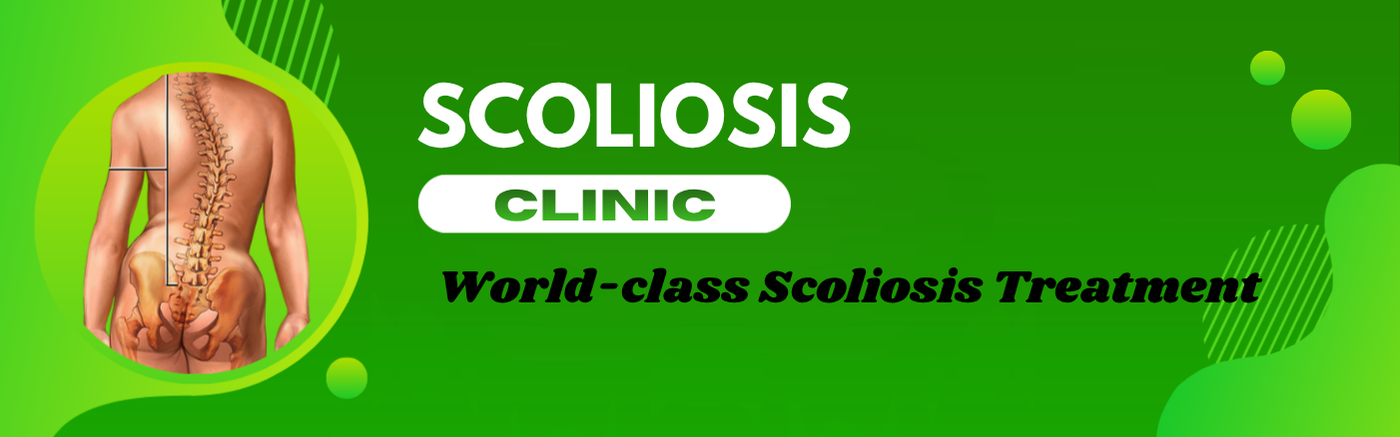
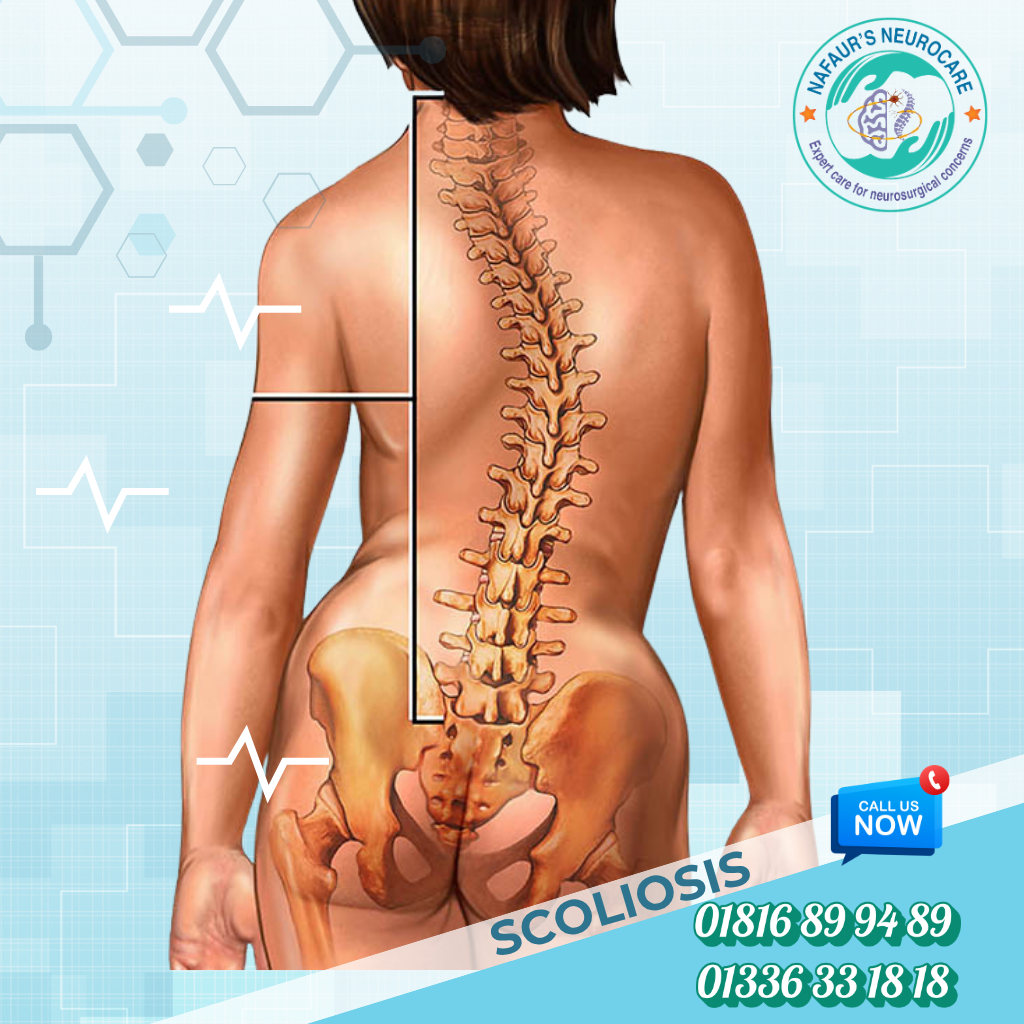
What is Scoliosis?
Scoliosis is an abnormal sideways curvature of the spine. In a healthy spine, the back looks straight when viewed from behind. In scoliosis, the spine may curve like an “S” or “C” shape. Some children have mild scoliosis that only needs observation and follow-up, while others may have progressive spinal deformity requiring detailed evaluation, rehabilitation, bracing referral, orthopedic coordination, or pediatric neurosurgical assessment when neurological causes are suspected.
Scoliosis in children may be idiopathic, congenital, neuromuscular, syndromic, or related to spinal cord and nerve disorders. Because Nafaur’s Neurocare focuses on pediatric neurocare, the Scoliosis Clinic gives special attention to scoliosis associated with neurological, neurosurgical, developmental, and spinal cord conditions.
Early diagnosis is important because scoliosis can progress during growth. Timely evaluation can help identify the cause, monitor progression, protect spinal cord function, guide physiotherapy and rehabilitation, and identify when specialist referral or surgical planning may be required.
Common Signs and Symptoms of Scoliosis in Children
Parents should consult a pediatric spine or neurocare clinic if a child has:
Uneven shoulders, one shoulder blade more prominent than the other, uneven waist, one hip higher than the other, body leaning to one side, visible spine curve, rib hump during forward bending, abnormal posture, back pain, walking difficulty, frequent falling, leg weakness, foot deformity, delayed walking, toe walking, stiffness, bladder-bowel problem, scoliosis with delayed milestone, or scoliosis associated with neurological symptoms.
In young children, scoliosis may be noticed during bathing, dressing, school screening, physiotherapy assessment, or when parents see the child’s back looking curved. A child with scoliosis and weakness, pain, bladder problem, or walking difficulty should receive careful pediatric neurological and neurosurgical evaluation.
Types of Scoliosis Evaluated at Nafaur’s Neurocare
Neuromuscular Scoliosis
Neuromuscular scoliosis occurs in children with neurological or muscular conditions such as cerebral palsy, spina bifida, spinal muscular problems, spinal cord injury, muscular weakness, developmental brain disorders, or long-term motor disability. These children may have poor trunk control, abnormal muscle tone, sitting imbalance, hip problems, and progressive spine curvature.
Neuromuscular scoliosis often needs long-term monitoring, physiotherapy, posture support, rehabilitation planning, and multidisciplinary care.
Congenital Scoliosis
Congenital scoliosis occurs when the spine bones do not form normally before birth. A child may have abnormal vertebrae, hemivertebra, fused vertebrae, or associated spinal cord abnormalities. Congenital scoliosis may be detected in infancy or childhood and requires careful monitoring because the curve may progress during growth.
Some children with congenital scoliosis may also have other congenital brain, spine, kidney, chest, or limb abnormalities.
Idiopathic Scoliosis
Idiopathic scoliosis means scoliosis without a clearly identified cause. It may occur in children and adolescents and can progress during growth spurts. These children may need spine X-ray monitoring, posture assessment, curve measurement, brace consideration, physiotherapy guidance, and referral coordination.
Syndromic Scoliosis
Syndromic scoliosis may occur in children with genetic syndromes, connective tissue disorders, neurocutaneous syndromes, craniofacial syndromes, or complex congenital disorders. These children often need multidisciplinary assessment and long-term follow-up.
Scoliosis Associated with Spina Bifida
Children with spina bifida, myelomeningocele, lipomyelomeningocele, occult spinal dysraphism, dermal sinus tract, split cord malformation, thickened filum terminale, fatty filum, or tethered cord syndrome may develop scoliosis or worsening spinal deformity.
If scoliosis worsens in a child with spina bifida, evaluation for tethered cord, spinal cord compression, or progressive neurological change may be needed.
Scoliosis Associated with Tethered Cord Syndrome
Tethered cord syndrome can cause worsening scoliosis, back pain, leg weakness, foot deformity, walking difficulty, urinary problems, constipation, or neurological deterioration. Children with scoliosis and neurological symptoms should be assessed carefully for tethered cord or spinal dysraphism.
Scoliosis Associated with Spinal Tumor or Spinal Cyst
Some children develop scoliosis due to spinal cord tumor, spinal cyst, syringomyelia, Chiari malformation, spinal cord compression, or nerve-related disorders. Back pain, weakness, walking difficulty, sensory change, rapidly worsening curve, or bladder-bowel problem with scoliosis should be evaluated carefully.
Symptoms That Need Urgent Evaluation
Scoliosis should be evaluated urgently if the child has:
Back pain with weakness, walking difficulty, frequent falling, numbness, tingling, bladder-bowel problem, rapid worsening of spine curve, scoliosis in a very young child, scoliosis with abnormal skin mark over the spine, scoliosis with foot deformity, scoliosis with delayed milestone, scoliosis with hydrocephalus, scoliosis with spina bifida, scoliosis after trauma, scoliosis with fever, or scoliosis associated with abnormal MRI findings.
These symptoms may suggest an underlying neurological, spinal cord, infectious, tumor-related, or neurosurgical condition.
Scoliosis Clinic Services at Nafaur’s Neurocare
The Scoliosis Clinic in Nafaur’s Neurocare provides dedicated pediatric evaluation and support for children with scoliosis, spine deformity, abnormal posture, neuromuscular scoliosis, congenital spine problems, and scoliosis associated with brain, spinal cord, nerve, muscle, or developmental disorders.
Services may include:
Pediatric neurological assessment, pediatric neurosurgical consultation, scoliosis history evaluation, spine posture assessment, gait and walking evaluation, muscle tone assessment, weakness evaluation, developmental milestone assessment, back pain assessment, bladder-bowel symptom review, X-ray report review, MRI spine review, MRI brain review when relevant, tethered cord assessment, spina bifida-related scoliosis evaluation, cerebral palsy-related scoliosis guidance, spinal tumor warning sign evaluation, physiotherapy planning, rehabilitation guidance, parent counseling, and long-term follow-up planning.
The clinic helps parents understand the cause of scoliosis, severity, progression risk, neurological concerns, therapy needs, imaging requirements, referral needs, warning signs, and long-term care plan.
Pediatric Neurology Support for Scoliosis
Pediatric neurology support is important when scoliosis is associated with cerebral palsy, developmental delay, abnormal muscle tone, weakness, walking difficulty, epilepsy, neurodevelopmental disorder, neuromuscular disease, or abnormal movement. A neurological evaluation helps identify whether scoliosis is related to brain, spinal cord, nerve, or muscle problems.
Pediatric Neurosurgery Support for Scoliosis
Some children with scoliosis need pediatric neurosurgical evaluation, especially when scoliosis is associated with spinal cord abnormality, tethered cord syndrome, spina bifida, syringomyelia, Chiari malformation, spinal tumor, spinal cyst, dermal sinus tract, spinal dysraphism, weakness, foot deformity, or bladder-bowel dysfunction.
Pediatric neurosurgical assessment may help identify underlying spinal cord conditions that should be addressed before or alongside scoliosis management.
Scoliosis and Cerebral Palsy
Children with cerebral palsy may develop scoliosis due to abnormal muscle tone, poor trunk control, weakness, spasticity, sitting imbalance, dystonia, or long-term posture issues. Scoliosis can affect sitting, breathing comfort, feeding, hygiene, mobility, sleep, and quality of life.
At Nafaur’s Neurocare, children with cerebral palsy-related scoliosis can receive neurological assessment, tone evaluation, rehabilitation guidance, physiotherapy planning, and long-term follow-up support.
Scoliosis and Spina Bifida
Children with spina bifida and myelomeningocele may develop scoliosis due to spinal cord involvement, weakness, abnormal nerve function, tethered cord, vertebral abnormalities, or long-term posture problems. If scoliosis worsens in a child with spina bifida, evaluation for tethered cord or other spinal cord concerns may be needed.
Scoliosis and Back Pain
Back pain is not always present in scoliosis, but when scoliosis is associated with persistent back pain, night pain, weakness, fever, walking difficulty, weight loss, neurological symptoms, or bladder-bowel problems, further evaluation is important. These symptoms may suggest spinal tumor, infection, tethered cord, syringomyelia, or other spinal cord pathology.
Scoliosis and Walking Difficulty
Children with scoliosis and walking difficulty need careful neurological assessment. Walking problems may be related to cerebral palsy, spina bifida, tethered cord, spinal cord tumor, muscular weakness, foot deformity, nerve disorder, or balance problem.
Nafaur’s Neurocare evaluates gait, posture, tone, strength, coordination, developmental history, and imaging findings to help guide proper care planning.
Physiotherapy and Rehabilitation for Scoliosis
Physiotherapy and rehabilitation are important parts of scoliosis care, especially for children with neuromuscular conditions, cerebral palsy, developmental delay, or posture problems. Therapy may help improve posture, trunk control, balance, strength, flexibility, walking, sitting tolerance, and functional independence.
Children with scoliosis may benefit from:
Posture training, stretching, strengthening, balance exercises, gait training, sitting support, caregiver education, home exercise planning, developmental rehabilitation, breathing comfort support, and functional mobility training.
Nafaur’s Neurocare provides allied clinic support for physiotherapy planning and long-term rehabilitation guidance.
Bracing and Orthopedic Coordination
Some children with scoliosis may need brace evaluation or orthopedic spine consultation depending on the curve severity, age, growth potential, and progression risk. Nafaur’s Neurocare supports families by providing neurological and neurosurgical assessment and coordinating referral guidance when orthopedic spine care is required.
For children with neurological conditions, scoliosis management often needs teamwork between pediatric neurology, pediatric neurosurgery, orthopedic spine care, physiotherapy, rehabilitation, and developmental support.
Imaging and Investigation for Pediatric Scoliosis
Evaluation may require clinical examination and imaging depending on the child’s symptoms and suspected cause. X-ray may help assess the spine curve and progression. MRI spine may be needed if scoliosis is early-onset, painful, rapidly progressive, associated with neurological symptoms, or linked with spinal cord abnormalities.
At Nafaur’s Neurocare, parents can receive guidance regarding:
X-ray review, MRI spine review, MRI brain review when relevant, neurological assessment, gait evaluation, tethered cord concern, spinal tumor warning signs, spina bifida-related scoliosis, and long-term monitoring.
Long-Term Follow-Up for Pediatric Scoliosis
Scoliosis can progress as a child grows. Regular follow-up is important to monitor spine curve progression, posture, neurological symptoms, walking ability, pain, bladder-bowel function, therapy response, and developmental needs. Children with neuromuscular scoliosis may require closer monitoring because progression can be faster.
Long-term follow-up may include:
Spine curve monitoring, posture assessment, neurological examination, walking and gait evaluation, therapy progress review, brace or orthopedic referral guidance, MRI review when needed, developmental assessment, parent education, and rehabilitation planning.
Nafaur’s Neurocare supports families with long-term pediatric neurocare follow-up, imaging review, rehabilitation guidance, and parent counseling.
Parent Guidance for Scoliosis Care
Parents should observe the child’s posture, shoulder level, waist symmetry, walking pattern, back pain, weakness, foot deformity, and bladder-bowel function. Parents should seek evaluation early if the curve is worsening, the child has pain, walking difficulty, neurological symptoms, or a known condition such as cerebral palsy, spina bifida, tethered cord, or spinal tumor.
Early diagnosis helps families plan follow-up, therapy, rehabilitation, and specialist care at the right time.
Allied Clinic Support at Nafaur’s Neurocare
Nafaur’s Neurocare runs different allied clinics to support children with complex pediatric neurological, neurosurgical, and developmental needs. Children attending the Scoliosis Clinic may benefit from:
Physiotherapy, developmental therapy, fine motor therapy, speech therapy when needed, nutrition support, psychological support, rehabilitation guidance, posture and gait support, school-readiness assessment, parent counseling, and long-term developmental follow-up.
This integrated approach helps families receive pediatric neurology, pediatric neurosurgery evaluation, developmental care, rehabilitation guidance, and allied child neurocare from one dedicated pediatric neurocare platform in Bangladesh.
Why Choose Nafaur’s Neurocare for Scoliosis Clinic?
Parents choose Nafaur’s Neurocare because it provides a dedicated pediatric neurocare environment for children with scoliosis, spine deformity, cerebral palsy, spina bifida, tethered cord, spinal cord disorders, spinal tumors, developmental delay, brain, spine, nerve, and neurological conditions. The Scoliosis Clinic is designed to support families from early symptom recognition to diagnosis, neurological evaluation, pediatric neurosurgical guidance, therapy planning, rehabilitation, and long-term follow-up.
Key reasons to choose Nafaur’s Neurocare include:
Dedicated pediatric neurology and pediatric neurosurgery services, child-focused scoliosis assessment, neuromuscular scoliosis evaluation, congenital scoliosis guidance, spina bifida and tethered cord-related scoliosis assessment, cerebral palsy scoliosis support, spinal cord warning sign assessment, X-ray and MRI review support, parent-friendly counseling, physiotherapy and rehabilitation planning, allied clinic support, Bangladesh-focused pediatric neurocare, accessible location in Shyamoli, Dhaka, and easy contact through phone, social media, and Google Map.
Bangladesh Perspective: Early Scoliosis Evaluation Can Protect Spine and Nerve Function
In Bangladesh, many children with scoliosis are brought late because mild spine curvature, posture change, uneven shoulders, or walking difficulty may not be recognized early. Some children receive only posture advice without evaluation for underlying neurological or spinal cord causes. Delay may increase the risk of worsening deformity, pain, functional limitation, and neurological complications in selected cases.
Parents should seek expert evaluation if a child has curved spine, uneven shoulders, back pain, walking difficulty, weakness, foot deformity, delayed milestone, bladder-bowel problem, spina bifida, cerebral palsy, or abnormal MRI findings.
The Scoliosis Clinic in Nafaur’s Neurocare focuses on early detection, pediatric neurological assessment, pediatric neurosurgical evaluation when needed, rehabilitation planning, parent education, and long-term child spine care in Bangladesh.
Chamber Address
Nafaur’s Neurocare
H # 24/1, Level # 7, Shyamoli Square
Shyamoli Cinema Hall Building, Mirpur Road, Shyamoli
Dhaka – 1207, Bangladesh
Google Map Location
For easy direction and exact location, visit Nafaur’s Neurocare through Google Map:
Google Map:
https://maps.app.goo.gl/zU4EcLt9CS7k2WVL8
Appointment Numbers
For appointment and consultation:
01816899489
01336331818
Social Media Links for Easy Contact
Facebook:
https://www.facebook.com/NafaursNeurocare
Instagram:
https://www.instagram.com/neurocarebd