Intrauterine CNS Malformation Clinic in Nafaur’s Neurocare
Dedicated Fetal Brain & Spine Malformation, Congenital CNS Disorder, Pediatric Neurology & Pediatric Neurosurgery Services in Bangladesh
Nafaur’s Neurocare is one of the dedicated pediatric neurocare centres in Bangladesh, providing specialized pediatric neurological, pediatric neurosurgical, developmental, rehabilitation, and allied child neurocare services for newborns, infants, children, and adolescents. Through its Pediatric Neurosurgical and Neurological Clinic, Intrauterine CNS Malformation Clinic, Congenital Birth Defects Clinic, Hydrocephalus Clinic, Spina Bifida Clinic, Craniosynostosis Clinic, Neuro Development Clinic, Epilepsy Clinic, Cerebral Palsy Clinic, and allied child neurocare services, Nafaur’s Neurocare provides focused evaluation and care for babies and children with fetal brain malformation, fetal spine malformation, congenital CNS disorder, antenatal ultrasound-detected brain abnormality, ventriculomegaly, congenital hydrocephalus, neural tube defect, spina bifida, myelomeningocele, encephalocele, Dandy-Walker malformation, Chiari malformation, corpus callosum abnormality, arachnoid cyst, congenital brain cyst, congenital spinal cord malformation, developmental delay, seizure, and complex pediatric neurological conditions.
The Intrauterine CNS Malformation Clinic in Nafaur’s Neurocare is specially designed for families whose baby has been suspected or diagnosed with central nervous system abnormality during pregnancy, after birth, or during early childhood. Many parents in Bangladesh search for fetal brain malformation treatment in Bangladesh, intrauterine CNS malformation clinic in Dhaka, congenital brain defect treatment Bangladesh, fetal hydrocephalus consultation Dhaka, ventriculomegaly baby treatment Bangladesh, neural tube defect treatment Bangladesh, pediatric neurosurgeon for congenital CNS malformation, pediatric neurologist for fetal brain abnormality, and best pediatric neurocare centre in Bangladesh. Nafaur’s Neurocare aims to provide dedicated consultation, imaging review, newborn evaluation, pediatric neurological assessment, pediatric neurosurgical guidance, parent counseling, developmental follow-up, and long-term child neurocare support.
What is Intrauterine CNS Malformation?
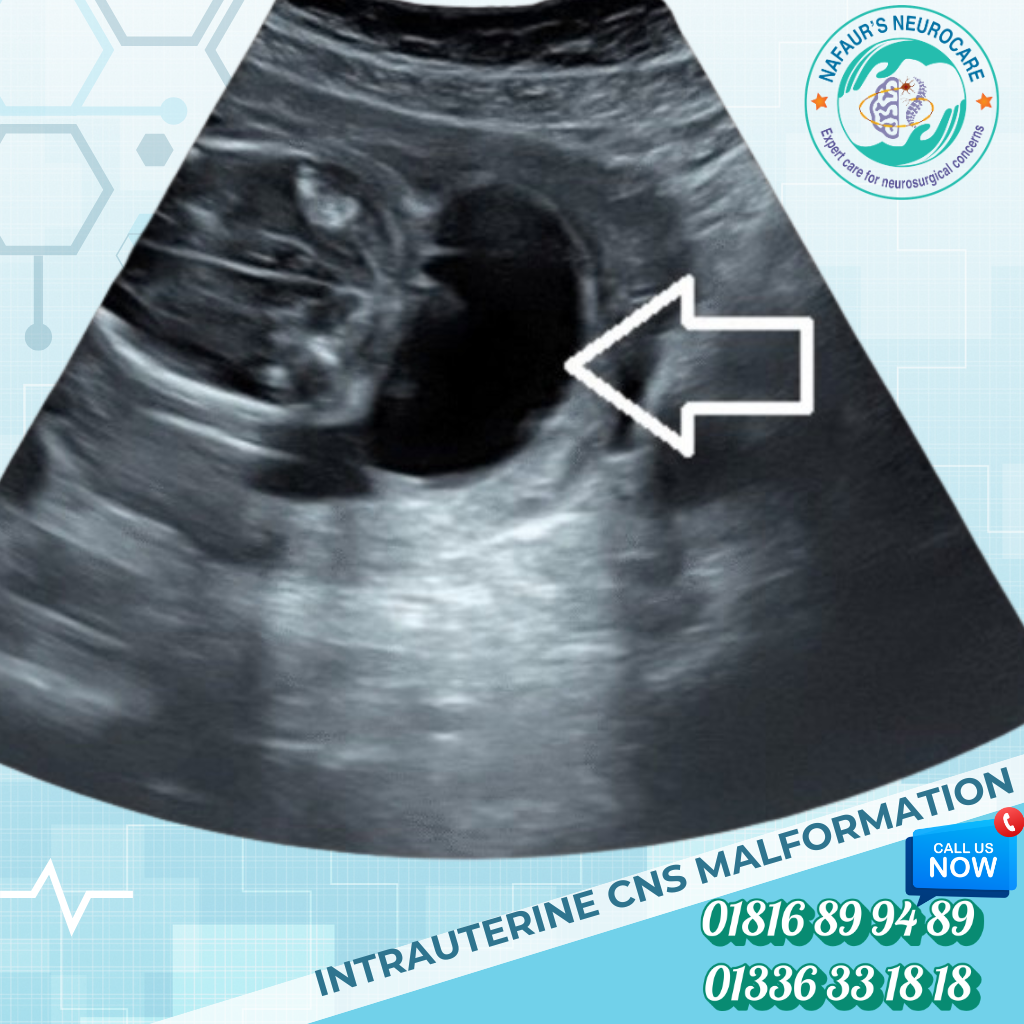
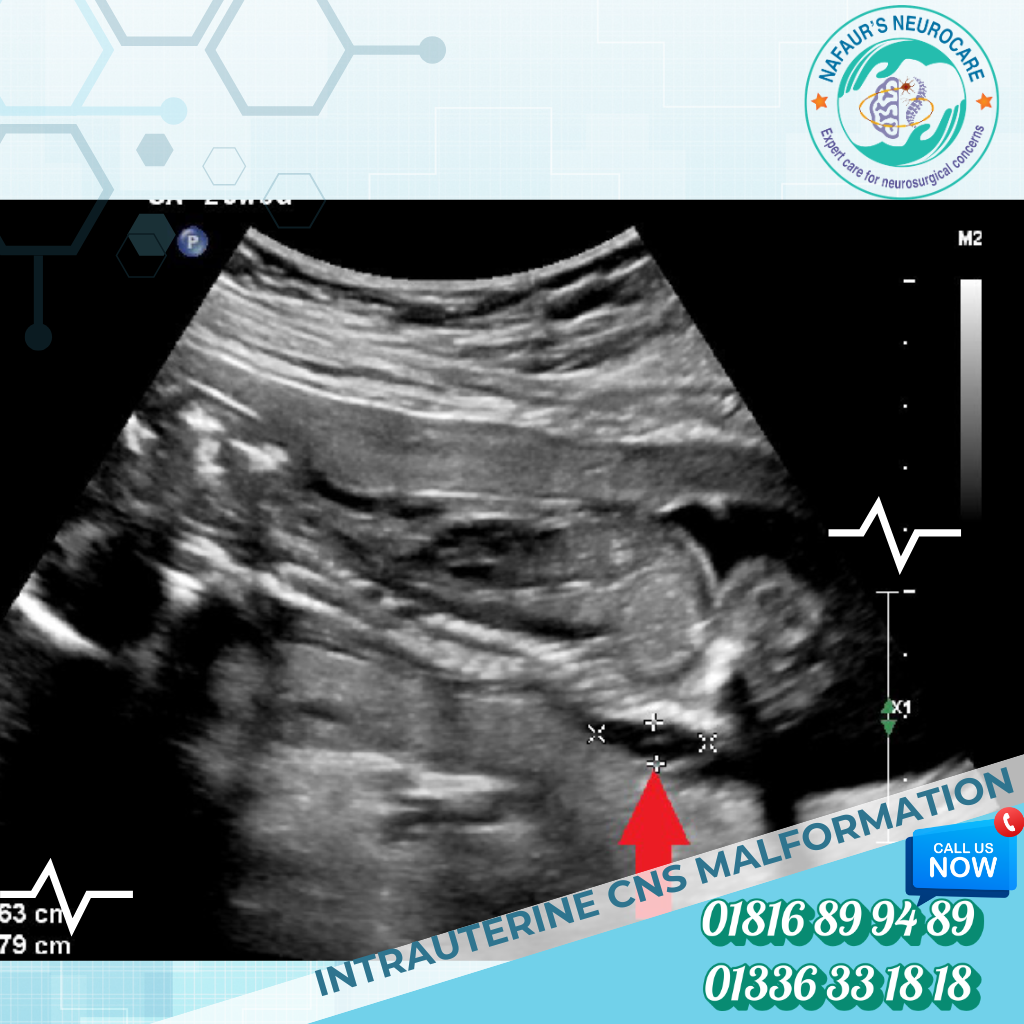
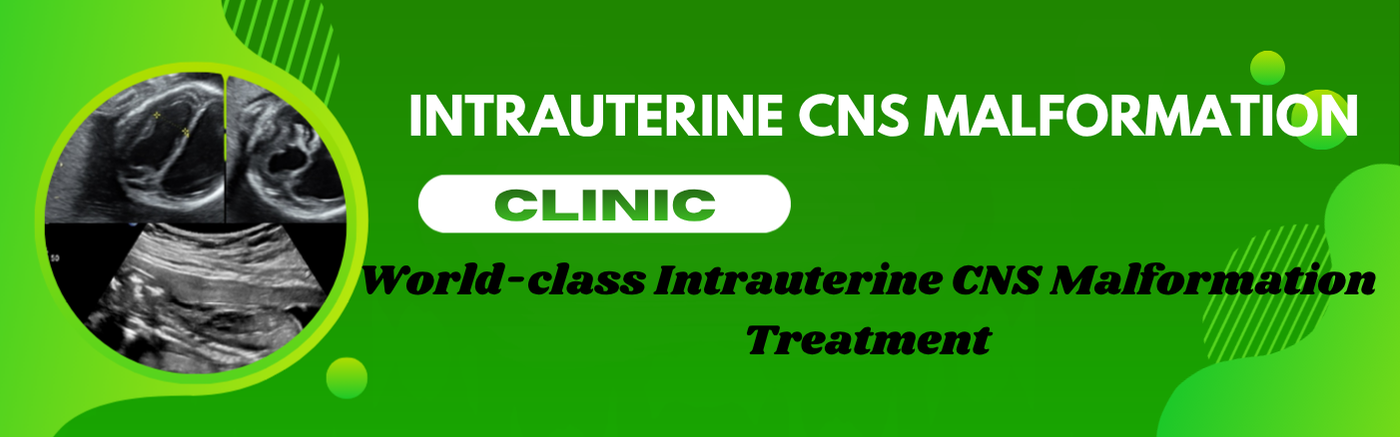
Intrauterine CNS malformation means an abnormal development of the baby’s central nervous system, which includes the brain and spinal cord, while the baby is still inside the mother’s womb. These conditions may be detected during pregnancy through antenatal ultrasonography, anomaly scan, fetal MRI, or after birth when the baby shows abnormal head size, spinal swelling, seizure, delayed milestone, weakness, feeding difficulty, abnormal muscle tone, or developmental concerns.
Some intrauterine CNS malformations are mild and need observation and follow-up. Others may require urgent newborn evaluation, pediatric neurosurgical treatment, pediatric neurology follow-up, developmental therapy, physiotherapy, speech therapy, nutrition support, seizure care, and long-term rehabilitation planning.
Early counseling is important because parents often feel anxious when an ultrasound report mentions fetal brain abnormality, enlarged ventricles, ventriculomegaly, hydrocephalus, posterior fossa cyst, Dandy-Walker malformation, encephalocele, spina bifida, or neural tube defect. Nafaur’s Neurocare helps families understand the condition, possible outcomes, treatment options after birth, warning signs, and long-term care plan.
Why Antenatal CNS Malformation Needs Early Consultation
When a fetal anomaly scan or antenatal ultrasound report shows brain or spine abnormality, parents need clear explanation and proper planning. Early consultation can help families understand what the report means, what may happen after birth, whether surgery may be needed, what symptoms to watch for, and how follow-up should be arranged.
Antenatal diagnosis does not always mean immediate intervention. But timely counseling helps parents avoid delay after birth. Babies with hydrocephalus, encephalocele, spina bifida, myelomeningocele, or severe congenital brain abnormality may need early pediatric neurosurgical evaluation after delivery. Babies with developmental risk may need long-term pediatric neurology and neurodevelopment follow-up.
Common Intrauterine CNS Malformations Evaluated at Nafaur’s Neurocare
Fetal Hydrocephalus and Ventriculomegaly
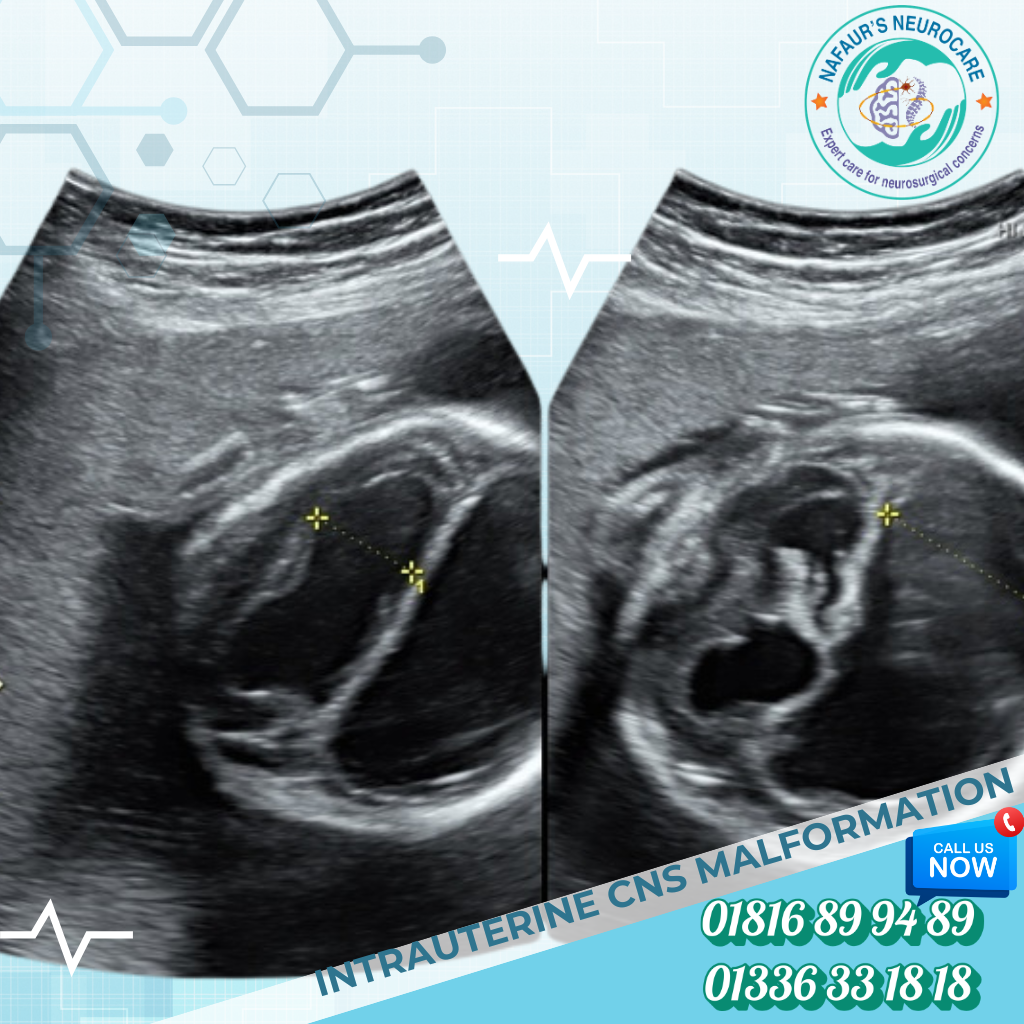
Fetal hydrocephalus or ventriculomegaly means enlargement of the brain ventricles detected during pregnancy or after birth. It may be mild, moderate, or severe. Some babies need observation, while others may require pediatric neurosurgical treatment such as VP shunt surgery, ETV surgery, or long-term hydrocephalus follow-up after birth.
Symptoms after birth may include enlarged head, rapidly increasing head circumference, bulging fontanelle, poor feeding, vomiting, irritability, sunset eye sign, seizure, or developmental delay.
Neural Tube Defects
Neural tube defects occur when the brain, spine, or spinal cord does not develop normally during early pregnancy. These conditions may include spina bifida, myelomeningocele, meningocele, encephalocele, anencephaly, and other congenital defects. Some neural tube defects are detected during antenatal ultrasound, while others are diagnosed after birth.
Spina Bifida and Myelomeningocele
Spina bifida is a congenital spinal defect where the spine and spinal cord do not develop properly. Myelomeningocele is a severe form where the spinal cord and nerves may protrude through an opening in the back. These babies may have leg weakness, foot deformity, bladder-bowel problems, hydrocephalus, Chiari malformation, developmental delay, or long-term mobility concerns.
Early pediatric neurosurgical evaluation is very important after birth, especially if the spinal swelling is open, ruptured, leaking fluid, or associated with hydrocephalus.
Encephalocele
Encephalocele is a congenital skull defect where brain tissue or brain covering may protrude through an opening in the skull. It may occur at the back of the head, forehead, nose region, or other skull areas. Some encephaloceles are detected during pregnancy, while others are clearly visible after birth.
Babies with encephalocele need pediatric neurosurgical evaluation, imaging review, surgical planning, developmental monitoring, and long-term follow-up.
Dandy-Walker Malformation
Dandy-Walker malformation is a congenital brain malformation involving the posterior fossa and cerebellar development. It may be associated with enlarged ventricles, hydrocephalus, developmental delay, motor delay, poor coordination, seizure, and other brain abnormalities.
Children with Dandy-Walker malformation may need pediatric neurology follow-up, pediatric neurosurgical evaluation for hydrocephalus, and developmental support.
Chiari Malformation
Chiari malformation is a condition where part of the brain tissue extends downward near the upper spinal canal. It may be associated with spina bifida, hydrocephalus, syringomyelia, neck pain, swallowing difficulty, breathing problems, weakness, abnormal eye movement, or developmental concerns depending on severity and type.
Corpus Callosum Abnormality
The corpus callosum connects the two halves of the brain. Some babies are born with partial or complete absence of the corpus callosum, called agenesis of corpus callosum. This may be detected during pregnancy or after birth. Some children develop normally, while others may have developmental delay, seizure, learning difficulty, feeding issues, abnormal tone, or associated brain malformations.
Arachnoid Cyst and Congenital Brain Cyst
Arachnoid cysts and congenital brain cysts may be detected during pregnancy or childhood imaging. Some are incidental and only need monitoring, while others may cause hydrocephalus, headache, seizure, developmental delay, or pressure effect.
Holoprosencephaly and Complex Brain Malformations
Holoprosencephaly is a congenital brain malformation where the developing brain does not divide normally. Other complex brain malformations may include lissencephaly, schizencephaly, cortical dysplasia, cerebellar hypoplasia, Joubert syndrome, pontocerebellar hypoplasia, and rare congenital brain disorders.
These conditions often need pediatric neurology follow-up, seizure care, developmental therapy, feeding support, rehabilitation planning, and long-term family counseling.
Congenital Spinal Cord Malformations
Congenital spinal cord malformations may include tethered cord, lipomyelomeningocele, thickened filum terminale, fatty filum, split cord malformation, dermal sinus tract, terminal myelocystocele, and occult spinal dysraphism. These may be suspected during pregnancy or detected later when the child has back swelling, skin dimple, hair patch, leg weakness, foot deformity, walking difficulty, bladder-bowel problems, or scoliosis.
Antenatal Ultrasound or Fetal MRI Findings That Need Consultation
Parents may seek consultation if an antenatal scan reports:
Fetal ventriculomegaly, fetal hydrocephalus, enlarged brain ventricles, posterior fossa cyst, Dandy-Walker malformation, absent corpus callosum, encephalocele, spina bifida, myelomeningocele, neural tube defect, Chiari malformation, brain cyst, arachnoid cyst, intracranial cyst, abnormal skull shape, abnormal spine, open spinal defect, fetal brain malformation, fetal spinal malformation, or suspected congenital CNS anomaly.
A pediatric neurocare consultation can help parents understand what the report means and what type of care may be needed after birth.
Symptoms After Birth That Need Pediatric Neurocare Evaluation
A newborn or child should be evaluated if there is:
Enlarged head, rapidly increasing head size, small or abnormal head shape, bulging fontanelle, vomiting, poor feeding, seizure, abnormal crying, excessive sleepiness, abnormal eye movement, sunset eye sign, spinal swelling, open spinal defect, back dimple, hair patch over spine, weakness of legs, reduced limb movement, foot deformity, bladder-bowel problem, developmental delay, delayed milestone, poor head control, delayed sitting, delayed walking, speech delay, abnormal muscle tone, or abnormal MRI/CT/ultrasound findings.
Early evaluation is important because some congenital CNS malformations need urgent treatment while others need close monitoring and developmental support.

Intrauterine CNS Malformation Clinic Services at Nafaur’s Neurocare
The Intrauterine CNS Malformation Clinic in Nafaur’s Neurocare provides dedicated evaluation and follow-up services for babies and children with fetal brain and spine abnormalities, congenital CNS malformations, antenatal scan findings, and postnatal neurodevelopmental concerns.
Services may include:
Pediatric neurosurgical consultation, pediatric neurological assessment, antenatal ultrasound report review, fetal MRI report review when available, newborn neurological evaluation, MRI brain review, CT scan review, MRI spine review, hydrocephalus assessment, ventriculomegaly follow-up, encephalocele evaluation, spina bifida and myelomeningocele assessment, Dandy-Walker malformation guidance, Chiari malformation evaluation, corpus callosum abnormality assessment, congenital brain cyst review, congenital spinal cord malformation assessment, seizure evaluation, developmental milestone assessment, feeding and tone assessment, therapy planning, parent counseling, and long-term follow-up.
The clinic helps parents understand the diagnosis, possible severity, what to monitor during pregnancy, what to do after delivery, whether pediatric neurosurgery may be needed, what developmental issues may occur, and how long-term care should be planned.
Pediatric Neurosurgery for Congenital CNS Malformations
Some intrauterine CNS malformations may require pediatric neurosurgical evaluation or surgery after birth. These include congenital hydrocephalus, myelomeningocele, meningocele, encephalocele, craniosynostosis, tethered cord syndrome, dermal sinus tract, Chiari malformation with symptoms, brain cyst causing pressure, and selected congenital spine or brain lesions.
Common pediatric neurosurgical procedures may include:
VP shunt surgery, ETV surgery, ETV with CPC in selected cases, myelomeningocele repair, meningocele repair, encephalocele surgery, tethered cord release, dermal sinus tract surgery, brain cyst surgery, and other pediatric brain or spine procedures depending on the child’s condition.
Parents searching for pediatric neurosurgery for congenital brain defect Bangladesh, newborn brain surgery Dhaka, newborn spine surgery Bangladesh, best pediatric neurosurgeon for fetal CNS malformation, and child brain and spine malformation treatment Dhaka can consult Nafaur’s Neurocare for guidance.
Pediatric Neurology and Developmental Support
Children with intrauterine CNS malformations may need pediatric neurology support for seizure, developmental delay, abnormal movement, abnormal muscle tone, feeding difficulty, sleep problems, learning difficulty, speech delay, motor delay, or neurodevelopmental concerns.
Pediatric neurological follow-up is especially important for children with brain malformations, corpus callosum abnormality, cortical malformation, Dandy-Walker malformation, hydrocephalus, epilepsy risk, or developmental delay.
Developmental Follow-Up After Congenital CNS Malformation
Many babies with fetal brain or spine malformations need long-term developmental monitoring. Some children may develop normally, while others may need developmental therapy, physiotherapy, speech therapy, fine motor therapy, nutrition support, seizure management, feeding support, and school-readiness guidance.
Developmental follow-up may monitor:
Head control, sitting, crawling, standing, walking, speech, social communication, hand use, feeding, muscle tone, seizure, behavior, learning, vision, hearing, and school performance.
Nafaur’s Neurocare provides allied clinic support to help families plan long-term child development care.
Hydrocephalus Follow-Up After Birth
Babies diagnosed with ventriculomegaly or hydrocephalus during pregnancy should be monitored after birth. Head circumference, fontanelle, feeding, vomiting, eye movement, seizure, and developmental milestones should be observed carefully. Imaging follow-up may be needed depending on the baby’s condition.
If hydrocephalus progresses, pediatric neurosurgical treatment may be required. Early follow-up can help avoid delayed intervention.
Parent Counseling for Fetal CNS Malformation
Parents often feel worried when they receive an antenatal scan report showing fetal brain or spine abnormality. Clear counseling is very important. Nafaur’s Neurocare helps parents understand the condition in a practical and supportive way.
Parent counseling may include:
Explanation of antenatal scan findings, possible postnatal symptoms, delivery planning awareness, newborn evaluation needs, possible surgical treatment after birth, developmental follow-up needs, warning signs, therapy planning, and long-term family support.
The goal is to reduce confusion, support timely care, and help families prepare for the baby’s medical and developmental needs.
Bangladesh Perspective: Early Detection and Planned Follow-Up Matter
In Bangladesh, many fetal CNS malformations are detected during anomaly scan or late pregnancy ultrasound, but parents may not receive clear counseling about what to do next. Some babies with hydrocephalus, encephalocele, spina bifida, myelomeningocele, or congenital brain malformation are brought late after birth, when complications have already developed.
Early consultation after antenatal diagnosis can help families plan delivery awareness, newborn evaluation, pediatric neurosurgical assessment, pediatric neurology follow-up, and developmental care. Early postnatal follow-up is especially important for babies with hydrocephalus, neural tube defect, encephalocele, spinal swelling, seizure, or feeding difficulty.
The Intrauterine CNS Malformation Clinic in Nafaur’s Neurocare focuses on early detection, parent education, imaging review, newborn neurocare planning, pediatric neurosurgical guidance, pediatric neurological follow-up, and long-term developmental support in Bangladesh.
Allied Clinic Support at Nafaur’s Neurocare
Nafaur’s Neurocare runs different allied clinics to support children with complex pediatric neurological, neurosurgical, developmental, and rehabilitation needs. Babies and children attending the Intrauterine CNS Malformation Clinic may benefit from:
Developmental therapy, physiotherapy, fine motor therapy, speech therapy, feeding support guidance, nutrition support, seizure monitoring, psychological support for family, rehabilitation guidance, school-readiness assessment later in childhood, parent counseling, and long-term developmental follow-up.
This integrated approach helps families receive pediatric neurology, pediatric neurosurgery evaluation when required, developmental care, rehabilitation guidance, and allied child neurocare from one dedicated pediatric neurocare platform in Bangladesh.
Why Choose Nafaur’s Neurocare for Intrauterine CNS Malformation Clinic?
Parents choose Nafaur’s Neurocare because it provides a dedicated pediatric neurocare environment for babies and children with fetal brain abnormality, congenital brain malformation, congenital spine defect, hydrocephalus, spina bifida, encephalocele, Dandy-Walker malformation, Chiari malformation, seizure, developmental delay, and complex neurological conditions.
Key reasons to choose Nafaur’s Neurocare include:
Dedicated pediatric neurology and pediatric neurosurgery services, fetal CNS malformation counseling, antenatal ultrasound and fetal MRI report review guidance, newborn neurocare planning, hydrocephalus and ventriculomegaly follow-up, neural tube defect evaluation, congenital brain and spine malformation assessment, parent-friendly counseling, imaging report review support, developmental monitoring, physiotherapy and rehabilitation planning, allied clinic support, Bangladesh-focused pediatric neurocare, accessible location in Shyamoli, Dhaka, and easy contact through phone, social media, and Google Map.

Chamber Address
Nafaur’s Neurocare
H # 24/1, Level # 7, Shyamoli Square
Shyamoli Cinema Hall Building, Mirpur Road, Shyamoli
Dhaka – 1207, Bangladesh
Google Map Location
For easy direction and exact location, visit Nafaur’s Neurocare through Google Map:
Google Map:
https://maps.app.goo.gl/zU4EcLt9CS7k2WVL8
Appointment Numbers
For appointment and consultation:
01816899489
01336331818
Social Media Links for Easy Contact
Facebook:
https://www.facebook.com/NafaursNeurocare
Instagram:
https://www.instagram.com/neurocarebd