Skull Tumors Clinic in Nafaur’s Neurocare
Dedicated Pediatric Skull Tumor, Skull Swelling, Skull Bone Lesion, Pediatric Neurosurgery & Child Neurocare Services in Bangladesh
Nafaur’s Neurocare is one of the dedicated pediatric neurocare centres in Bangladesh, providing specialized pediatric neurological, pediatric neurosurgical, developmental, rehabilitation, and allied child neurocare services for newborns, infants, children, and adolescents. Through its Pediatric Neurosurgical and Neurological Clinic, Skull Tumors Clinic, Scalp Tumors Clinic, Brain Tumors Clinic, Congenital Birth Defects Clinic, Neuro Development Clinic, and allied child neurocare services, Nafaur’s Neurocare provides focused evaluation and care for children with skull tumors, skull swelling, scalp and skull mass, skull bone lesions, cranial dermoid cyst, epidermoid cyst, skull osteoma, fibrous dysplasia, Langerhans cell histiocytosis, eosinophilic granuloma, sinus pericranii, skull vascular lesion, congenital skull mass, post-traumatic skull swelling, skull infection, skull defect, and complex pediatric cranial conditions.
The Skull Tumors Clinic in Nafaur’s Neurocare is specially designed for babies and children who have a lump on the head, swelling over the skull, painful skull lesion, gradually increasing scalp or skull mass, abnormal skull shape, skull bone defect, congenital skull swelling, swelling near the eyebrow, swelling near the fontanelle, skull lesion found on CT scan or MRI, or a skull tumor associated with brain, skin, blood vessel, trauma, infection, or developmental conditions.
Many parents in Bangladesh search for skull tumor treatment in Bangladesh, pediatric skull tumor clinic in Dhaka, child skull swelling treatment Bangladesh, skull bone tumor treatment in children, cranial dermoid cyst treatment Dhaka, pediatric neurosurgeon for skull tumor, scalp and skull lesion clinic Bangladesh, child head lump treatment Dhaka, skull lesion surgery Bangladesh, and best pediatric neurocare centre in Bangladesh. Nafaur’s Neurocare aims to provide dedicated evaluation, imaging review, pediatric neurosurgical consultation, diagnosis support, surgical counseling, parent education, and long-term child neurocare support.
What is a Pediatric Skull Tumor?
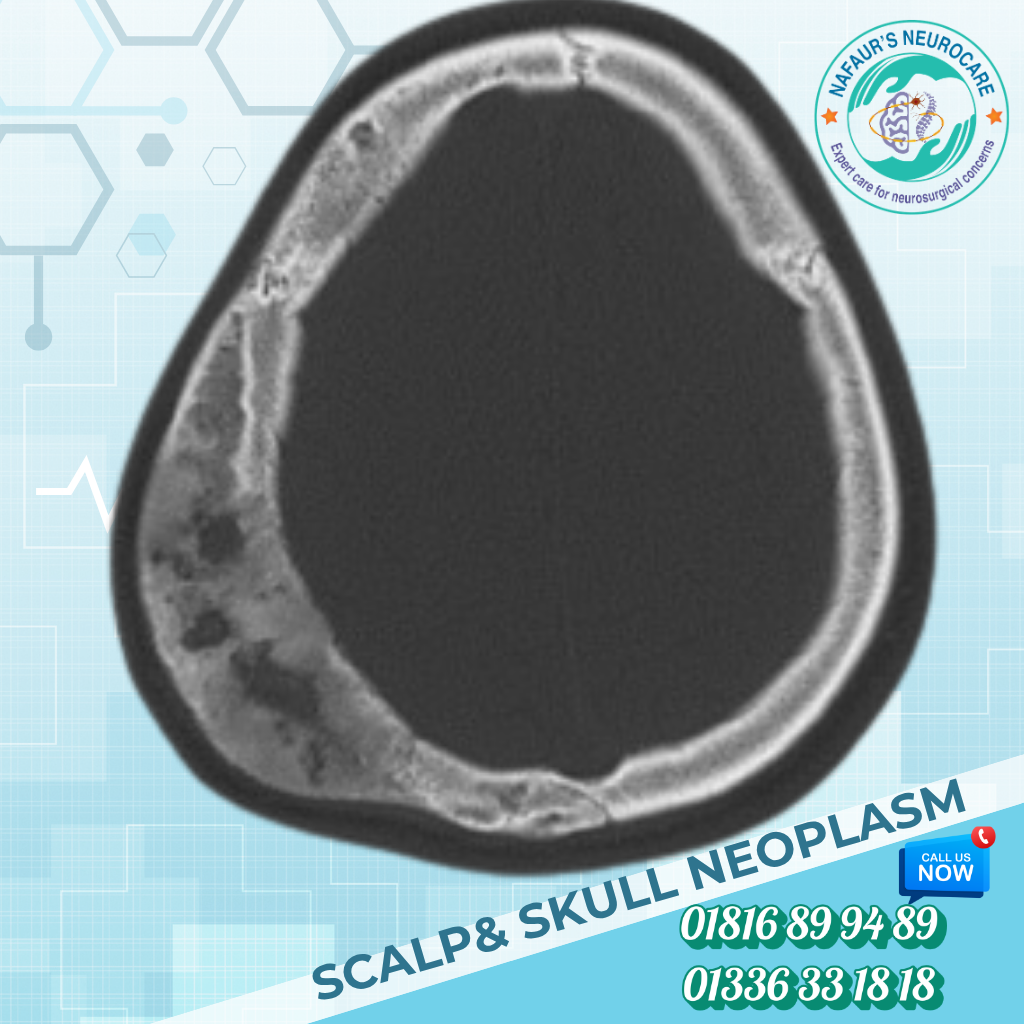
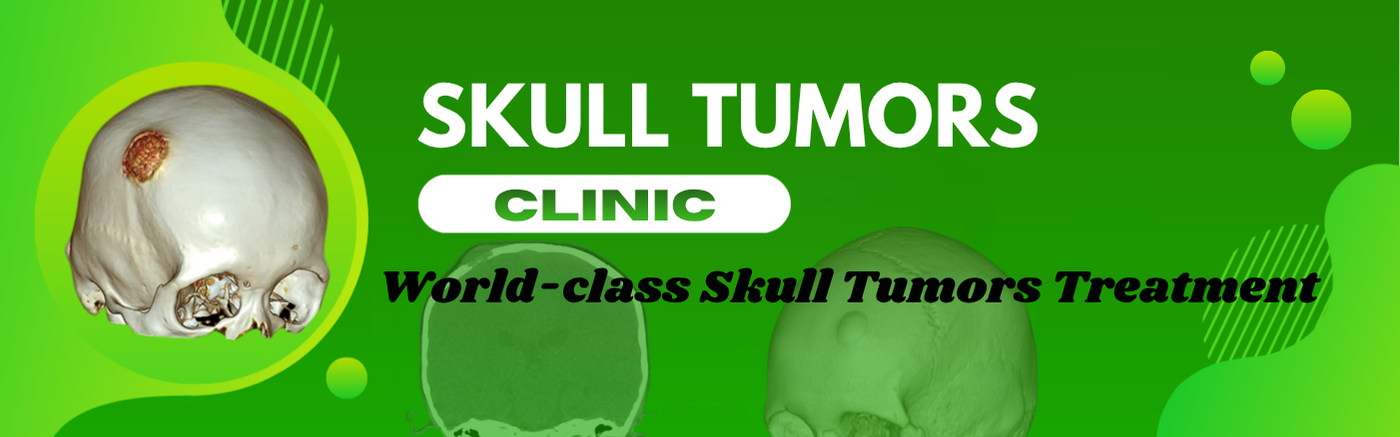
A pediatric skull tumor is an abnormal growth, swelling, cyst, bone lesion, vascular lesion, inflammatory lesion, or mass involving the skull bone, scalp, cranial soft tissue, or structures around the head. Some skull tumors are benign and slow-growing. Others may be congenital, traumatic, infectious, vascular, inflammatory, or rarely malignant.
In children, skull tumors and skull swellings need careful evaluation because they may be connected with the skull bone, scalp, brain covering, venous sinus, blood vessels, congenital sinus tract, trauma, infection, or systemic disease. Some lesions are present from birth, while others appear later and gradually increase in size.
A skull tumor does not always mean cancer. Many pediatric skull swellings are benign cysts, bony lesions, or congenital masses. However, proper pediatric neurosurgical evaluation is important to identify the cause, determine whether imaging is needed, and plan safe treatment.
Common Skull Tumors and Skull Lesions Evaluated at Nafaur’s Neurocare
Cranial Dermoid Cyst
A cranial dermoid cyst is a common congenital lesion in children. It may appear as a painless lump on the head, forehead, eyebrow area, scalp, or skull. Some dermoid cysts are superficial, while others may extend deeper toward the skull or intracranial space.
Parents often search for cranial dermoid cyst treatment in Bangladesh, dermoid cyst surgery in Dhaka, baby head cyst treatment Bangladesh, pediatric neurosurgeon for dermoid cyst, and eyebrow dermoid cyst treatment Dhaka.
Early evaluation is important because some dermoid cysts may gradually enlarge, become infected, or involve deeper skull structures.
Epidermoid Cyst of Skull and Scalp
An epidermoid cyst may occur in the scalp, skull, or intracranial region. It may present as a lump, swelling, or lesion found on imaging. Some epidermoid cysts grow slowly and may need surgical evaluation depending on size, location, symptoms, and imaging findings.
Skull Osteoma
A skull osteoma is a benign bony growth of the skull. It may appear as a hard lump on the head. Some osteomas are small and only need monitoring, while others may need evaluation if they are painful, enlarging, cosmetically concerning, or associated with deeper skull involvement.
Fibrous Dysplasia of Skull
Fibrous dysplasia is a bone disorder where normal bone is replaced by fibrous tissue, causing skull enlargement, deformity, facial asymmetry, pain, or pressure effects. It may involve the craniofacial bones and require long-term monitoring.
Langerhans Cell Histiocytosis / Eosinophilic Granuloma
Langerhans cell histiocytosis, or LCH, can affect the skull bone and may present as a painful swelling, skull defect, soft lump, scalp tenderness, or lytic skull lesion on imaging. Eosinophilic granuloma is a localized form of LCH that may involve the skull.
Children with suspected LCH may need imaging, biopsy consideration, pediatric neurosurgical evaluation, and coordination with pediatric oncology or hematology when needed.
Sinus Pericranii
Sinus pericranii is a rare vascular condition involving abnormal communication between scalp veins and intracranial venous structures. It may present as a soft swelling on the scalp that changes with position, crying, or pressure. Because it involves blood vessels near the skull and brain, careful evaluation is essential before any procedure.
Scalp and Skull Vascular Malformation
Children may have vascular lesions or malformations over the scalp or skull, including venous malformation, arteriovenous malformation, hemangioma-like lesion, or other vascular swellings. Some are superficial, while others may involve deeper skull or intracranial vessels.
Congenital Skull Mass
Some babies are born with a skull or scalp mass. It may be a dermoid cyst, encephalocele, meningocele, vascular lesion, congenital tumor, scalp cyst, or skull defect-related swelling. Any congenital head swelling should be evaluated carefully to determine whether it is superficial or connected with deeper brain structures.
Post-Traumatic Skull Swelling
After head injury, a child may develop scalp hematoma, skull fracture swelling, growing skull fracture, post-traumatic cyst, or persistent lump. A swelling that increases after trauma, is painful, or is associated with vomiting, seizure, drowsiness, weakness, or abnormal behavior should be evaluated urgently.
Skull Infection and Osteomyelitis
Skull infection may occur after trauma, surgery, scalp infection, sinus infection, or blood-borne infection. It may present as painful swelling, fever, redness, discharge, tenderness, or skull bone destruction. Some skull infections may need pediatric neurosurgical and infectious disease-related evaluation.
Malignant or Aggressive Skull Tumors
Although many pediatric skull lesions are benign, some can be aggressive or malignant. These may include Ewing sarcoma, rhabdomyosarcoma, osteosarcoma, leukemia-related skull lesion, lymphoma-related skull involvement, metastatic skull lesion, or other rare pediatric skull tumors.
Symptoms may include rapidly growing swelling, pain, fever, weight loss, neurological symptoms, bone destruction on imaging, or systemic illness.
Symptoms That Need Skull Tumors Clinic Evaluation
Parents should consult a pediatric skull tumor or pediatric neurosurgery clinic if a child has:
Lump on head, skull swelling, scalp swelling, hard skull mass, soft scalp swelling, painful head lump, swelling increasing in size, swelling present from birth, swelling near eyebrow, swelling near fontanelle, swelling after head injury, skull defect, abnormal skull shape, skin opening or discharge over swelling, redness or infection, headache with skull swelling, vomiting, seizure, weakness, drowsiness, fever, or abnormal CT scan or MRI report showing skull lesion.
Urgent evaluation is needed if the swelling is rapidly increasing, painful, associated with fever, bleeding, discharge, trauma, seizure, vomiting, drowsiness, weakness, or neurological deterioration.
Skull Tumors Clinic Services at Nafaur’s Neurocare
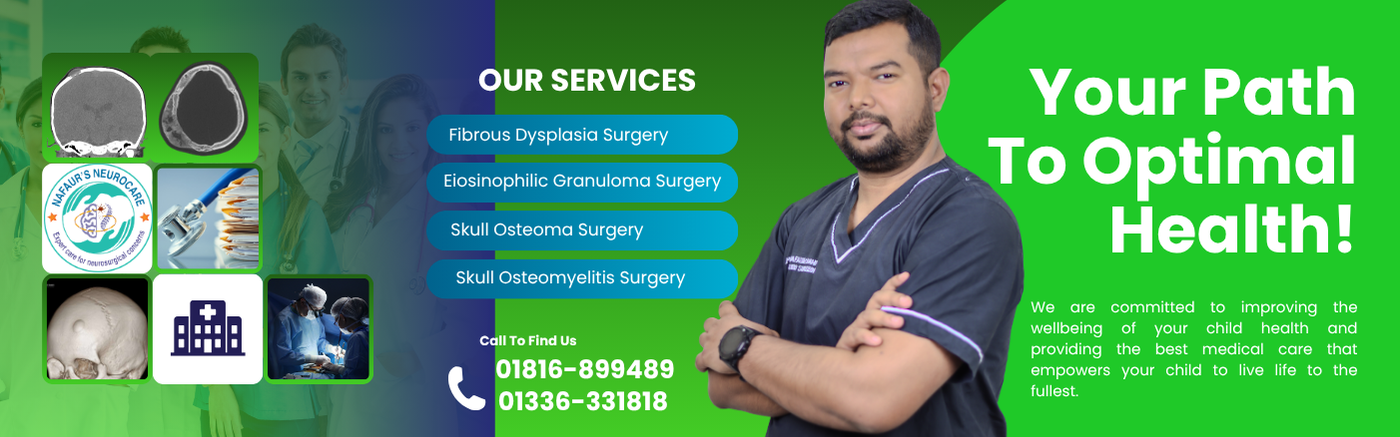
The Skull Tumors Clinic in Nafaur’s Neurocare provides dedicated pediatric evaluation and follow-up services for children with skull tumor, skull swelling, scalp mass, cranial cyst, skull bone lesion, congenital skull swelling, vascular scalp lesion, skull infection, and skull lesion found on imaging.
Services may include:
Pediatric neurosurgical consultation, pediatric neurological assessment, skull swelling evaluation, scalp lump assessment, dermoid cyst evaluation, epidermoid cyst evaluation, skull osteoma assessment, fibrous dysplasia review, Langerhans cell histiocytosis-related skull lesion evaluation, sinus pericranii evaluation, vascular scalp lesion assessment, congenital skull mass evaluation, post-traumatic skull swelling follow-up, skull fracture-related swelling assessment, CT scan review, MRI brain review, skull X-ray review when available, ultrasound report review when relevant, surgical counseling, biopsy guidance when needed, post-operative follow-up planning, parent counseling, and long-term monitoring.
The clinic helps parents understand the possible diagnosis, whether the lesion is superficial or deep, whether imaging is needed, whether surgery or biopsy may be required, what warning signs to watch for, and how follow-up should be planned.
Pediatric Neurosurgery for Skull Tumors in Bangladesh
Skull tumors and skull lesions in children often need pediatric neurosurgical evaluation because the skull is close to the brain, brain covering, blood vessels, and important cranial structures. Some lesions may be safely observed, while others may need surgery, biopsy, reconstruction, infection treatment, or multidisciplinary care.
Pediatric neurosurgical treatment may be considered for:
Dermoid cyst, epidermoid cyst, skull bone tumor, growing skull fracture, skull defect, infected skull lesion, LCH-related skull lesion, sinus pericranii, vascular scalp lesion, encephalocele-like swelling, congenital skull mass, or aggressive skull tumor.
Parents searching for pediatric skull tumor surgery in Bangladesh, child skull tumor operation Dhaka, pediatric neurosurgeon for skull swelling, skull lesion surgery Bangladesh, and child head lump neurosurgery Dhaka can consult Nafaur’s Neurocare for proper evaluation and guidance.
Skull Tumor Diagnosis and Imaging
Diagnosis of skull tumors and skull lesions depends on clinical examination and imaging. Depending on the swelling type and location, tests may include ultrasound, X-ray, CT scan, MRI brain, MR venography, CT angiography, blood tests, biopsy, or other investigations.
At Nafaur’s Neurocare, parents can receive guidance regarding:
Imaging report interpretation, CT scan review, MRI review, lesion location explanation, skull bone involvement, intracranial extension concern, vascular lesion warning, surgical planning, biopsy need, and follow-up schedule.
Skull Tumors and Brain Involvement
Some skull lesions are limited to the scalp or skull bone. Others may extend inward toward the dura, brain covering, venous sinus, or brain tissue. A swelling that looks small outside may sometimes have deeper extension. That is why proper pediatric neurosurgical evaluation and imaging review are important before planning surgery.
Congenital Skull Swelling and Encephalocele-Like Lesions
Some babies are born with swelling over the skull that may look like a cyst or tumor but may actually be related to a skull defect, meningocele, encephalocele, or vascular lesion. These swellings should not be punctured or treated casually without expert evaluation because they may communicate with brain structures.
Parents should seek pediatric neurosurgical consultation for any congenital head swelling, especially if it is midline, pulsatile, increasing, associated with abnormal head shape, or present with neurological symptoms.
Skull Tumor and Cosmetic Concerns
Some skull tumors and scalp swellings cause visible deformity or cosmetic concern, especially when located on the forehead, eyebrow, scalp, or face. Treatment planning should consider safety, diagnosis, growth pattern, scar placement, skull involvement, and long-term appearance.
Nafaur’s Neurocare provides parent-friendly counseling regarding the nature of the lesion, expected treatment plan, and follow-up needs.
Post-Operative Follow-Up After Skull Tumor Surgery
Children who undergo surgery or biopsy for skull lesions may need follow-up for wound healing, infection prevention, recurrence monitoring, pathology report review, neurological status, skull growth, cosmetic outcome, and additional referral when needed.
Some conditions, such as Langerhans cell histiocytosis, fibrous dysplasia, vascular lesions, or aggressive tumors, may need long-term monitoring and multidisciplinary care.
Pediatric Neurology Support for Skull Tumor Patients
Most skull lesions are primarily pediatric neurosurgical problems, but pediatric neurology support may be needed if a child has seizure, headache, developmental delay, weakness, abnormal movement, hydrocephalus, brain involvement, or associated neurological condition.
At Nafaur’s Neurocare, pediatric neurological assessment may help identify associated neurological symptoms and guide long-term child neurocare planning.
Allied Clinic Support at Nafaur’s Neurocare
Nafaur’s Neurocare runs different allied clinics to support children with complex pediatric neurological, neurosurgical, developmental, and rehabilitation needs. Children attending the Skull Tumors Clinic may benefit from:
Developmental assessment, physiotherapy if neurological weakness is present, fine motor therapy when needed, speech therapy if associated developmental concern exists, nutrition support, psychological support for family, rehabilitation guidance after major surgery, parent counseling, and long-term developmental follow-up when required.
This integrated approach helps families receive pediatric neurology, pediatric neurosurgery evaluation, developmental care, rehabilitation guidance, and allied child neurocare from one dedicated pediatric neurocare platform in Bangladesh.
Why Choose Nafaur’s Neurocare for Skull Tumors Clinic?
Parents choose Nafaur’s Neurocare because it provides a dedicated pediatric neurocare environment for children with skull tumors, scalp swelling, skull bone lesions, congenital skull mass, cranial cysts, vascular scalp lesions, brain and skull conditions, developmental delay, seizure, and complex neurological concerns. The Skull Tumors Clinic is designed to support families from early symptom recognition to diagnosis, imaging review, pediatric neurosurgical counseling, surgical planning, post-operative follow-up, and long-term monitoring.
Key reasons to choose Nafaur’s Neurocare include:
Dedicated pediatric neurology and pediatric neurosurgery services, child-focused skull tumor evaluation, scalp and skull swelling assessment, cranial dermoid and epidermoid cyst evaluation, skull bone lesion review, congenital skull swelling guidance, CT and MRI report review support, parent-friendly counseling, surgical planning guidance, allied clinic support, Bangladesh-focused pediatric neurocare, accessible location in Shyamoli, Dhaka, and easy contact through phone, social media, and Google Map.
Bangladesh Perspective: Early Evaluation of Child Skull Swelling is Important
In Bangladesh, many children with skull swelling, scalp lump, eyebrow cyst, head mass, or skull bone lesion are brought late because families may think the swelling is harmless or cosmetic only. Some lesions are benign, but some may have deeper skull involvement, infection risk, vascular communication, skull defect, or rare aggressive pathology.
Parents should seek expert pediatric neurocare evaluation if a child has a skull lump that is increasing, painful, present from birth, associated with fever, discharge, trauma, headache, vomiting, seizure, or abnormal imaging findings.
The Skull Tumors Clinic in Nafaur’s Neurocare focuses on early detection, safe evaluation, imaging review, pediatric neurosurgical assessment, parent education, and long-term child skull and neurocare support in Bangladesh.
Chamber Address
Nafaur’s Neurocare
H # 24/1, Level # 7, Shyamoli Square
Shyamoli Cinema Hall Building, Mirpur Road, Shyamoli
Dhaka – 1207, Bangladesh
Google Map Location
For easy direction and exact location, visit Nafaur’s Neurocare through Google Map:
Google Map:
https://maps.app.goo.gl/zU4EcLt9CS7k2WVL8
Appointment Numbers
For appointment and consultation:
01816899489
01336331818
Social Media Links for Easy Contact
Facebook:
https://www.facebook.com/NafaursNeurocare
Instagram:
https://www.instagram.com/neurocarebd