Neurotrauma Clinic in Nafaur’s Neurocare
Dedicated Pediatric Head Injury, Brain Injury, Skull Fracture, Spine Injury, Pediatric Neurosurgery & Pediatric Neurology Services in Bangladesh
Nafaur’s Neurocare is one of the dedicated pediatric neurocare centres in Bangladesh, providing specialized pediatric neurosurgical, pediatric neurological, developmental, rehabilitation, and allied child neurocare services for newborns, infants, children, and adolescents. Through its Pediatric Neurosurgical and Neurological Clinic, Neurotrauma Clinic, Headache Clinic, Epilepsy Clinic, Neuro Development Clinic, Cerebral Palsy Clinic, and allied child neurocare services, Nafaur’s Neurocare provides focused evaluation and care for children with head injury, brain injury, skull fracture, traumatic brain injury, spine injury, spinal cord injury, seizure after head injury, vomiting after fall, loss of consciousness, weakness after trauma, post-traumatic headache, post-traumatic hydrocephalus, developmental delay after injury, and complex pediatric neurological conditions.
The Neurotrauma Clinic in Nafaur’s Neurocare is specially designed for babies and children who suffer from accidental head injury, fall from bed, fall from stairs, fall from height, road traffic accident, sports injury, school injury, birth-related trauma, skull fracture, scalp swelling, brain bleeding, traumatic brain swelling, seizure after trauma, neck injury, back injury, spinal cord injury, and long-term neurological complications after trauma.
Many parents in Bangladesh search for pediatric neurotrauma treatment in Bangladesh, child head injury treatment in Dhaka, pediatric head injury clinic Bangladesh, pediatric neurosurgeon for head injury, child brain injury treatment Bangladesh, skull fracture treatment in children, baby fall from bed head injury treatment, pediatric spine injury treatment Dhaka, and best pediatric neurocare centre in Bangladesh. Nafaur’s Neurocare aims to provide dedicated evaluation, imaging review, pediatric neurosurgical counseling, pediatric neurology support, emergency warning sign guidance, rehabilitation planning, developmental monitoring, parent education, and long-term child neurocare support.
What is Pediatric Neurotrauma?
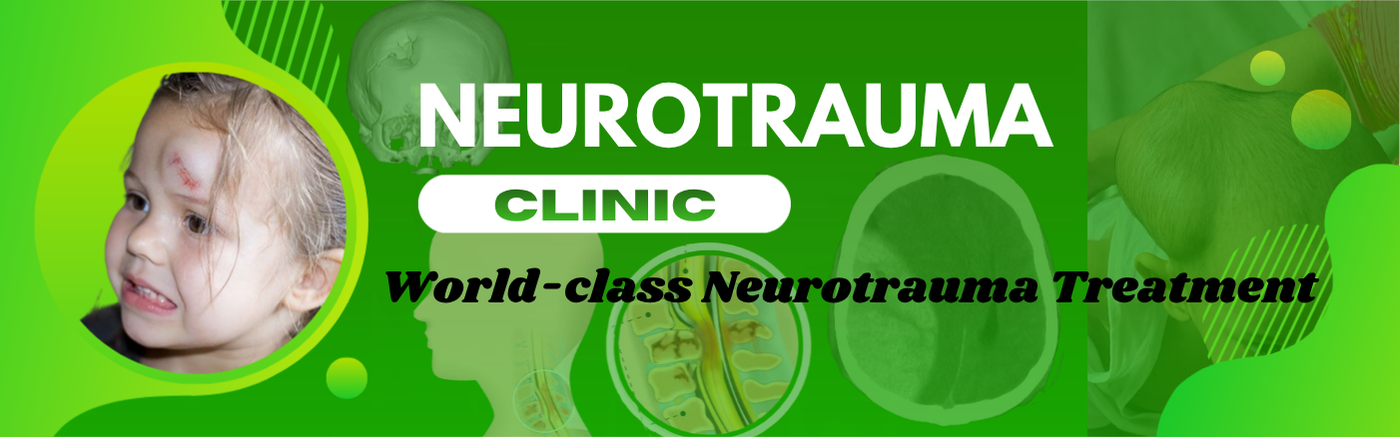
Pediatric neurotrauma means injury to the brain, skull, scalp, spine, spinal cord, nerves, or related neurological structures in children. It may happen after a fall, road traffic accident, motorcycle injury, bicycle injury, playground injury, sports injury, school injury, household accident, birth trauma, physical impact, or penetrating injury.
Children are not small adults. A child’s skull, brain, spine, and nervous system are still developing. Even a seemingly minor head injury may need careful observation if the child has vomiting, seizure, drowsiness, loss of consciousness, irritability, weakness, abnormal behavior, or poor feeding. Some children recover with observation, while others may need CT scan, MRI, hospital care, pediatric neurosurgery, pediatric neurology follow-up, ICU care, or long-term rehabilitation.
The Neurotrauma Clinic in Nafaur’s Neurocare focuses on early evaluation, danger sign identification, imaging review, treatment planning, post-injury follow-up, and developmental support for children after neurological trauma.
Common Causes of Neurotrauma in Children
Children may suffer neurotrauma due to many causes, including:
Fall from bed, fall from sofa, fall from chair, fall from stairs, fall from rooftop, fall while playing, road traffic accident, motorcycle accident, bicycle injury, rickshaw accident, sports injury, school injury, household accident, blunt head injury, penetrating head injury, birth trauma, accidental hit by object, and spinal injury from fall or accident.
In Bangladesh, falls and road traffic accidents are common causes of pediatric head injury. Parents should not ignore symptoms after trauma, especially in babies and young children who cannot clearly explain headache, dizziness, visual symptoms, or weakness.
Warning Signs After Child Head Injury
Parents should seek urgent medical care if a child develops any danger sign after head injury, including:
Repeated vomiting, loss of consciousness, seizure, drowsiness, severe headache, confusion, abnormal crying, irritability, weakness of hand or leg, difficulty walking, abnormal eye movement, unequal pupil size, bleeding from ear or nose, clear fluid from nose or ear, scalp swelling, depressed skull area, neck pain, back pain, breathing difficulty, abnormal behavior, feeding difficulty in babies, or progressive deterioration.
For newborns and infants, warning signs may include poor feeding, excessive crying, bulging fontanelle, unusual sleepiness, seizure, vomiting, weak movement, enlarged scalp swelling, or abnormal body posture.
Early pediatric neurosurgical evaluation is very important when danger signs are present.
Common Neurotrauma Conditions Evaluated at Nafaur’s Neurocare
Pediatric Head Injury
Head injury is one of the most common pediatric neurotrauma problems. Some children have mild head injury and only need observation, while others may have serious brain injury requiring emergency care or pediatric neurosurgical treatment.
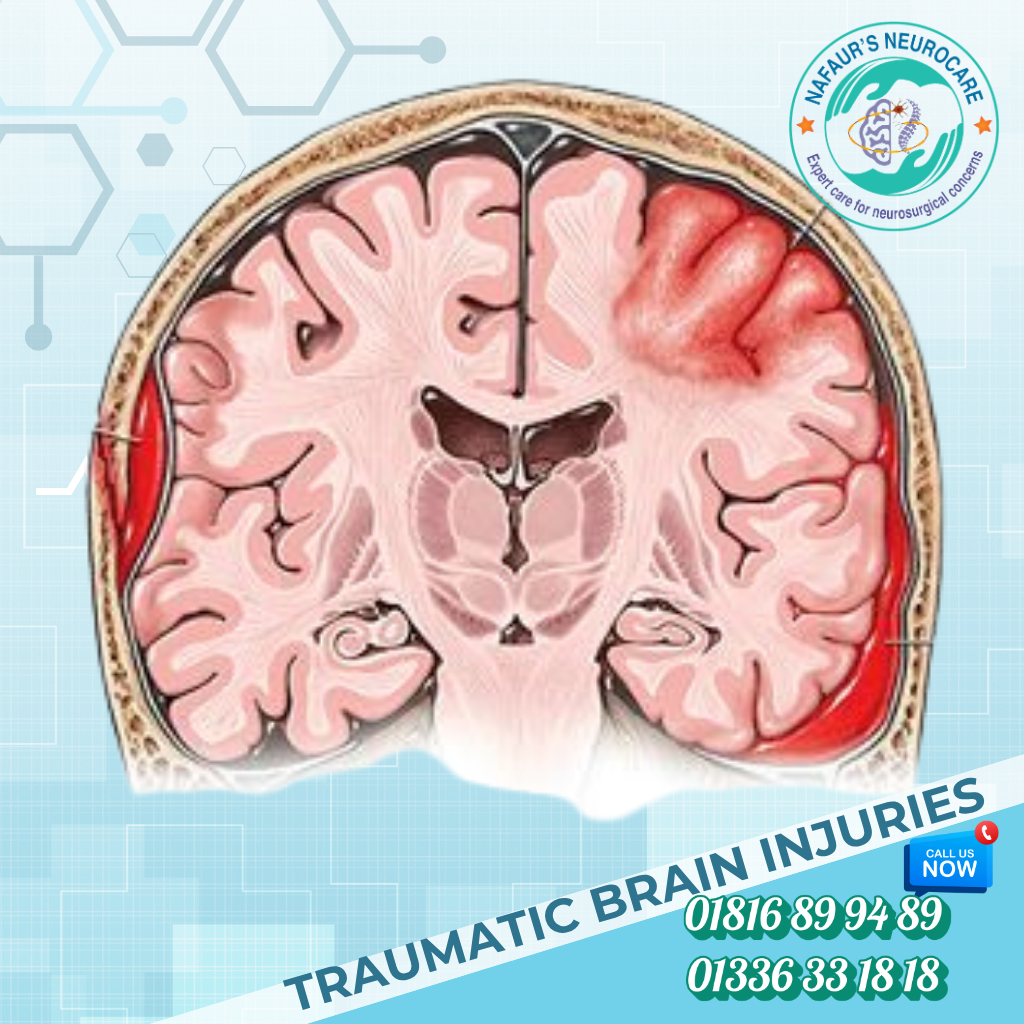
Common pediatric head injury conditions include scalp hematoma, scalp laceration, skull fracture, depressed skull fracture, extradural hematoma, subdural hematoma, subarachnoid hemorrhage, brain contusion, intracerebral hematoma, intraventricular hemorrhage, diffuse axonal injury, cerebral edema, penetrating head injury, and post-traumatic seizure.
Scalp Hematoma and Scalp Swelling After Fall
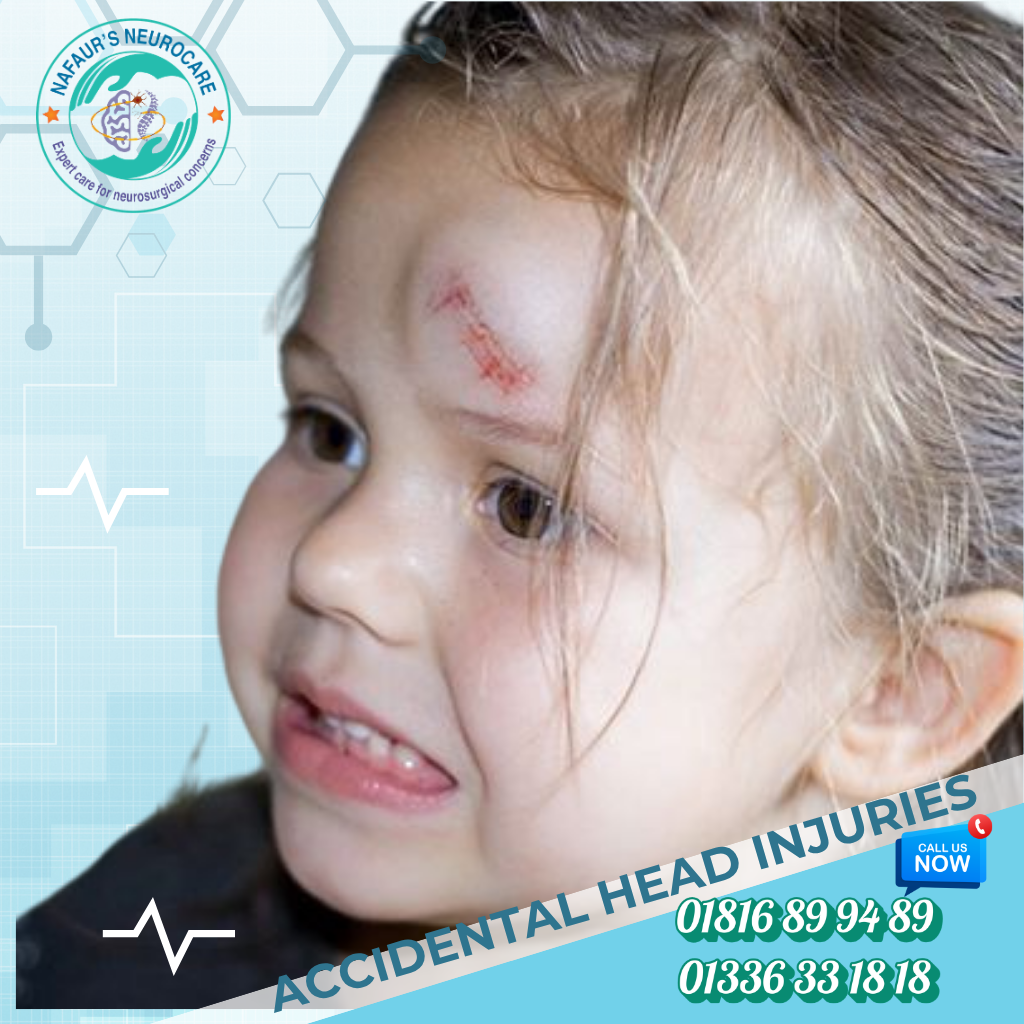
After a fall or head injury, a child may develop scalp swelling or scalp hematoma. Many small scalp swellings improve, but large swelling, increasing swelling, swelling with vomiting, drowsiness, seizure, skull depression, abnormal crying, or weakness needs urgent evaluation.
Skull Fracture in Children
A skull fracture may occur after fall, road accident, or direct trauma. Some skull fractures are simple, while others may be depressed, compound, growing, or associated with brain bleeding. A growing skull fracture is a special pediatric condition that may occur in young children and needs expert pediatric neurosurgical evaluation.
Symptoms may include scalp swelling, pain, visible depression, vomiting, seizure, drowsiness, neurological weakness, or increasing swelling over time.
Brain Bleeding After Head Injury
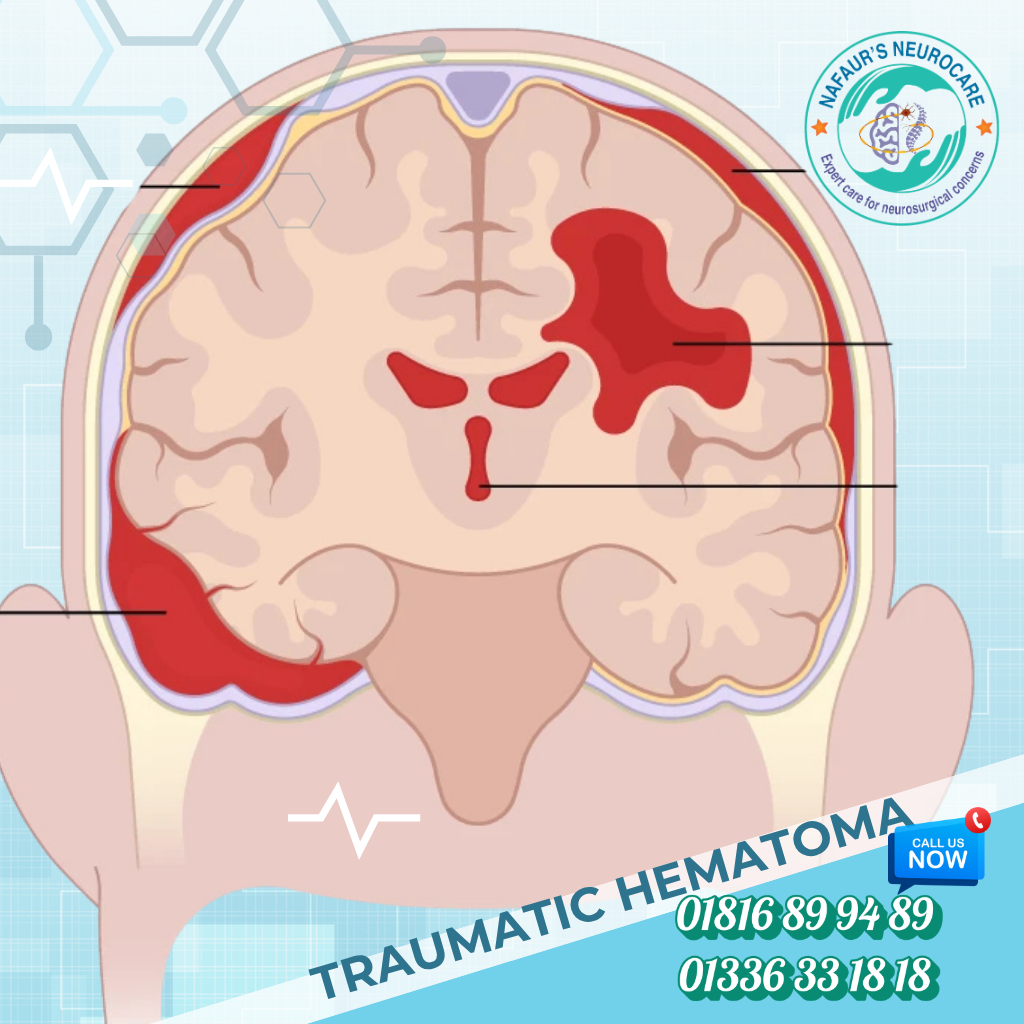
Traumatic brain bleeding can be serious and may require urgent neurosurgical attention. Types of traumatic brain bleeding include extradural hematoma, subdural hematoma, subarachnoid hemorrhage, intracerebral hematoma, and intraventricular hemorrhage.
Children with traumatic brain bleeding may present with vomiting, headache, drowsiness, seizure, weakness, abnormal pupil reaction, breathing problem, or reduced consciousness.
Extradural Hematoma
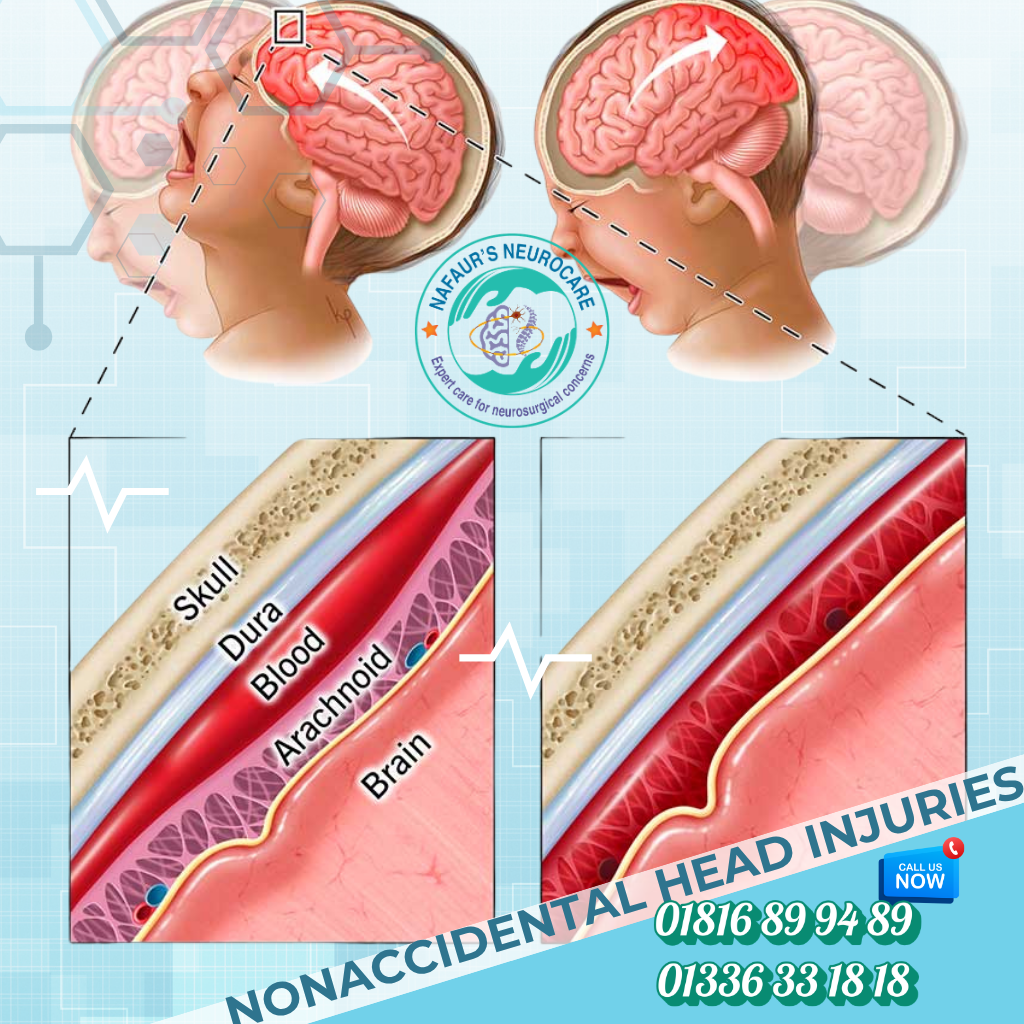
Extradural hematoma is a collection of blood between the skull and brain covering. It may occur after skull fracture and can become life-threatening if pressure increases rapidly. A child may initially look well and then deteriorate later.
Subdural Hematoma
Subdural hematoma is bleeding between the brain and its covering. It may occur after trauma, especially in severe head injury or non-accidental injury. Symptoms may include drowsiness, seizure, vomiting, irritability, weakness, bulging fontanelle, or developmental regression.
Brain Contusion and Cerebral Edema
A brain contusion is bruising of the brain tissue. Cerebral edema means brain swelling. These conditions can cause headache, vomiting, drowsiness, seizure, weakness, abnormal behavior, or reduced consciousness. Children may need close observation, imaging review, hospital care, and follow-up.
Diffuse Axonal Injury
Diffuse axonal injury is a serious type of traumatic brain injury caused by shearing forces inside the brain. It may occur after road traffic accident, fall from height, or high-impact trauma. Children may present with prolonged unconsciousness, neurological deterioration, weakness, abnormal movement, cognitive problems, or delayed recovery.
Penetrating Head Injury
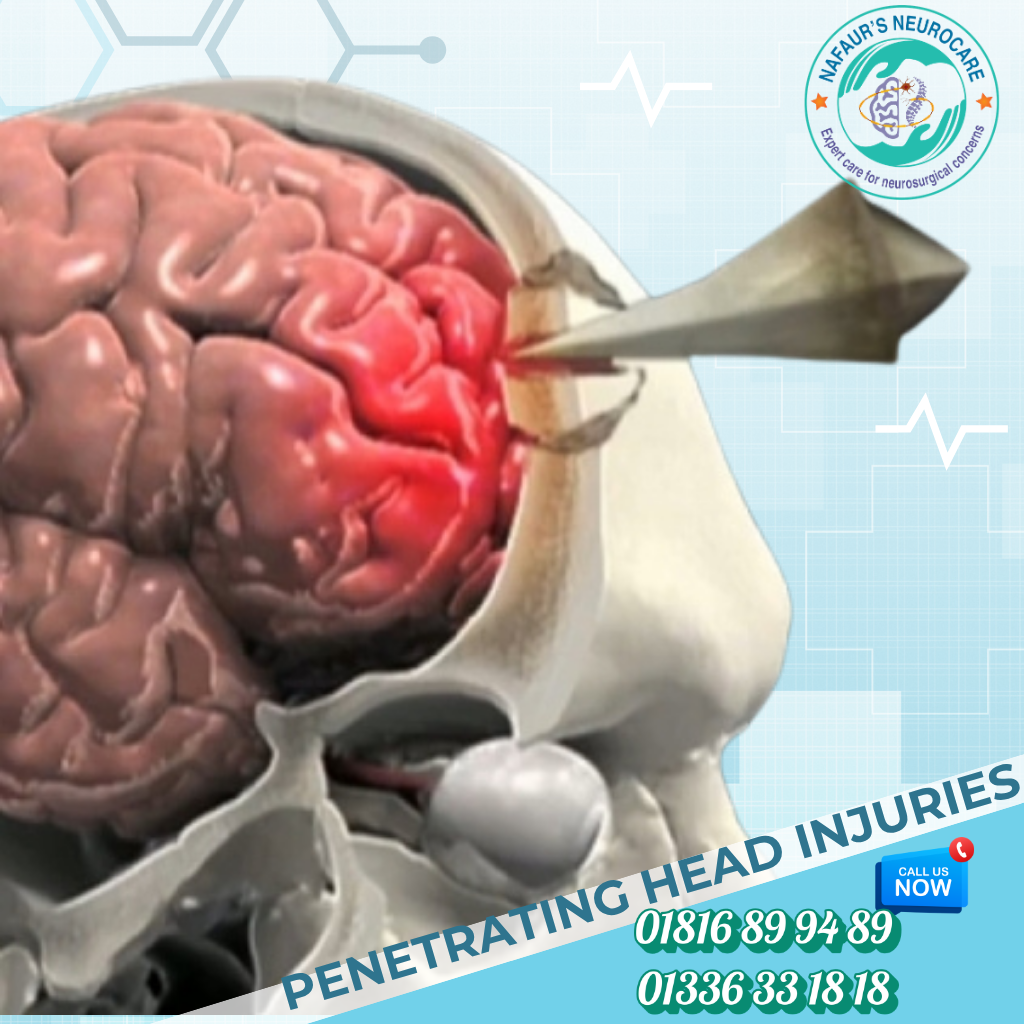
Penetrating head injury may happen when a sharp object enters the scalp, skull, or brain. This is a serious emergency because of the risk of bleeding, infection, skull fracture, brain injury, and neurological complications.
Post-Traumatic Seizure
A child may develop seizure immediately after head injury or later during recovery. Seizure after trauma should be evaluated carefully, especially if associated with brain bleeding, skull fracture, brain swelling, or repeated episodes.
At Nafaur’s Neurocare, pediatric neurology support may help with seizure assessment, EEG report review when needed, medicine guidance, follow-up planning, and long-term neurological monitoring.
Post-Traumatic Headache
Some children continue to have headache, dizziness, poor concentration, sleep disturbance, irritability, memory difficulty, school performance decline, or behavior change after head injury. These symptoms may need pediatric neurological evaluation and supportive care.
Post-Traumatic Hydrocephalus
Some children may develop hydrocephalus after traumatic brain injury, brain bleeding, infection, or neurosurgical procedures. Symptoms may include headache, vomiting, drowsiness, enlarged head in babies, poor feeding, sunset eye sign, developmental decline, or worsening neurological condition.
Treatment may require pediatric neurosurgical evaluation and may involve VP shunt surgery, ETV surgery, or close monitoring depending on the child’s condition.
Pediatric Spine Injury and Spinal Cord Injury
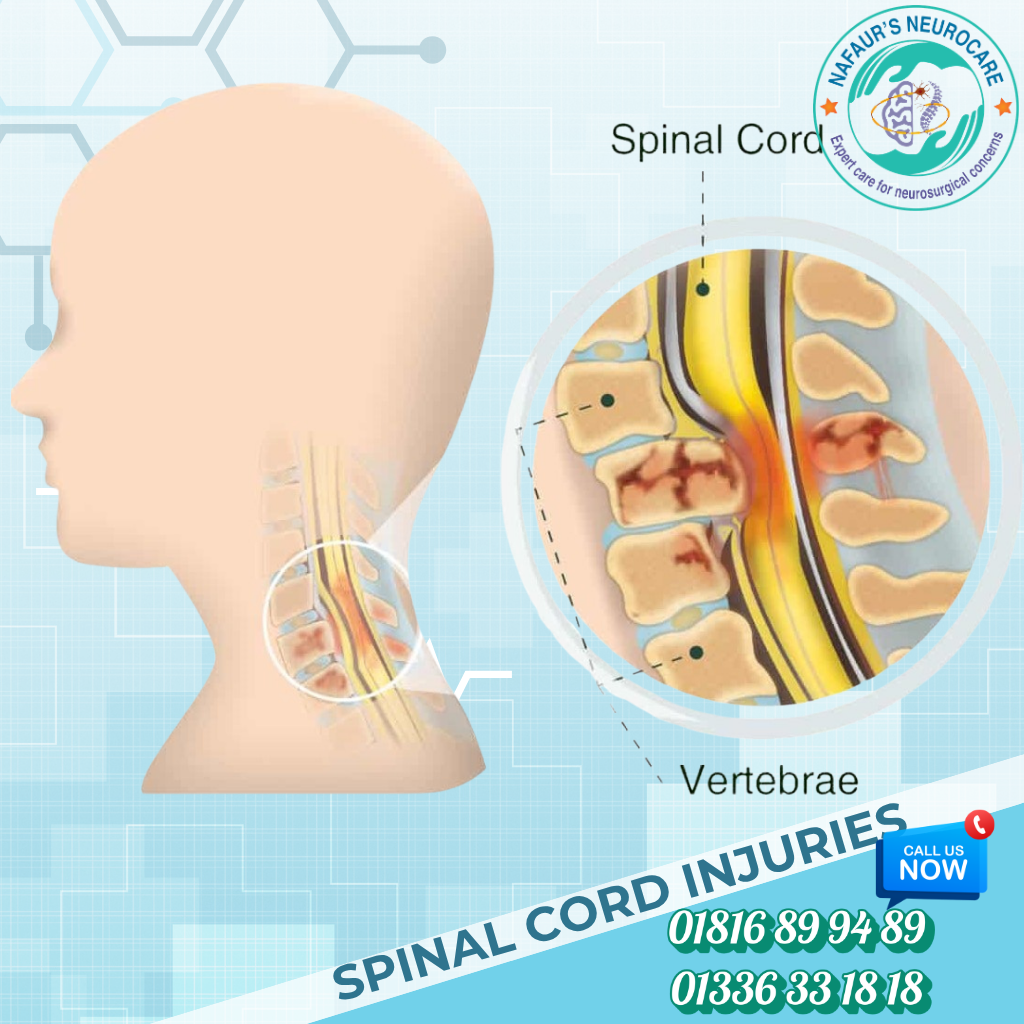
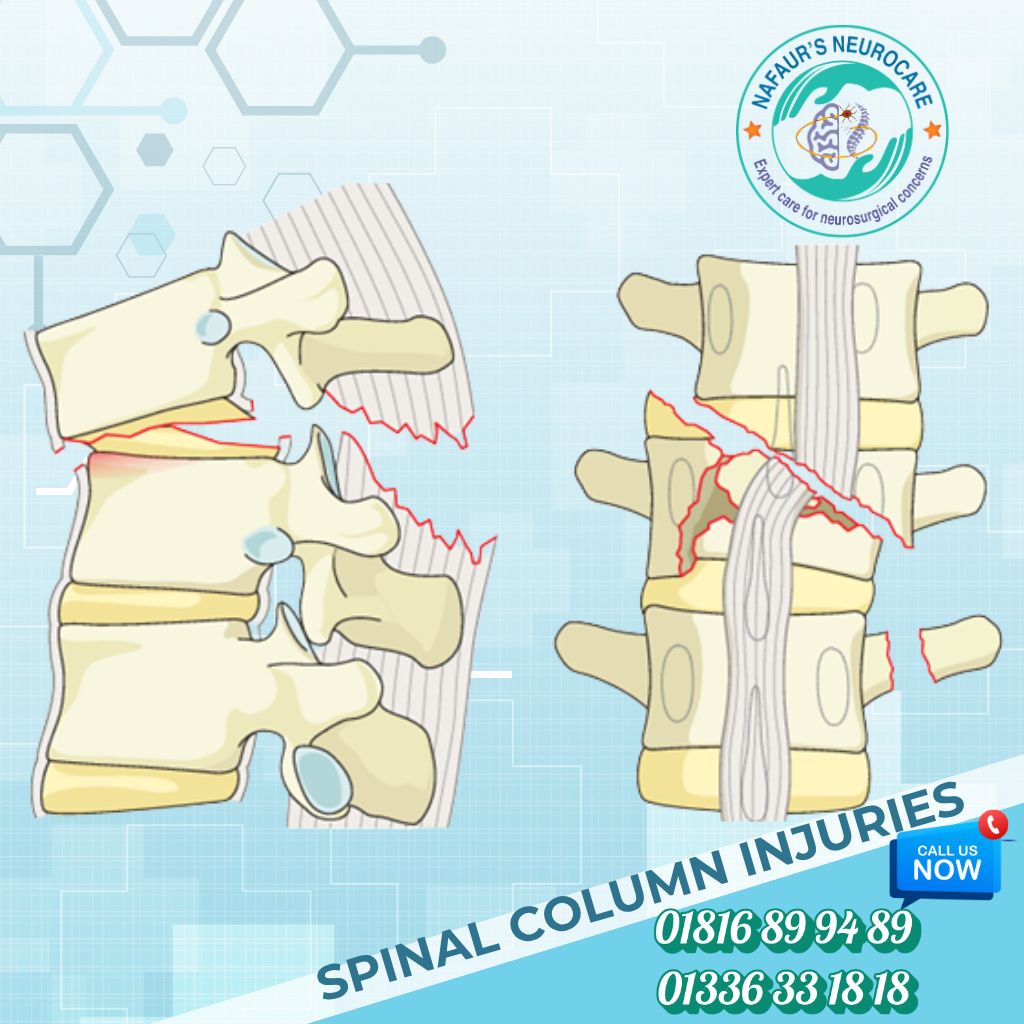
Neurotrauma may also involve the spine and spinal cord. Children may suffer neck injury, back injury, vertebral fracture, spinal cord compression, weakness, sensory loss, bladder-bowel dysfunction, or walking difficulty after trauma.
Warning signs of spine injury include neck pain, back pain, weakness of hands or legs, difficulty walking, numbness, tingling, loss of bladder control, loss of bowel control, abnormal posture, or pain after fall or accident.
Birth Trauma and Newborn Neurotrauma
Some newborn babies may suffer neurological injury related to birth trauma. Birth-related neurotrauma may include scalp swelling, cephalohematoma, subgaleal hematoma, skull fracture, intracranial bleeding, brachial plexus injury, neonatal seizure, or neurological weakness. Newborns with suspected birth-related head or nerve injury need careful pediatric neurological and neurosurgical evaluation.
Neurotrauma Clinic Services at Nafaur’s Neurocare
The Neurotrauma Clinic in Nafaur’s Neurocare provides dedicated pediatric neurotrauma evaluation and follow-up services for children with head injury, brain injury, skull injury, spine injury, spinal cord injury, and trauma-related neurological complications.
Services may include:
Pediatric neurosurgical consultation, pediatric neurological assessment, head injury evaluation, skull fracture assessment, scalp swelling evaluation, traumatic brain bleeding assessment, CT scan review, MRI brain review, MRI spine review when needed, seizure after head injury evaluation, post-traumatic headache assessment, vomiting after head injury assessment, weakness after trauma evaluation, spine injury assessment, spinal cord injury follow-up, post-traumatic hydrocephalus evaluation, post-operative follow-up, rehabilitation planning, developmental monitoring, school-readiness support, parent counseling, and allied clinic coordination.
The clinic helps parents understand the severity of injury, investigation findings, possible treatment options, observation requirements, surgical need, warning signs, recovery process, and long-term follow-up plan.
Pediatric Neurotrauma Surgery in Bangladesh
Some children with neurotrauma may require emergency or planned pediatric neurosurgery. Surgical treatment may be needed for depressed skull fracture, extradural hematoma, subdural hematoma, intracerebral hematoma, brain swelling, penetrating injury, growing skull fracture, traumatic hydrocephalus, or spinal cord compression.
Many parents search for pediatric neurotrauma surgery in Bangladesh, child head injury operation Dhaka, emergency pediatric neurosurgery Bangladesh, skull fracture surgery for child, brain bleeding surgery Dhaka, and pediatric spine injury surgery Bangladesh.
The Neurotrauma Clinic at Nafaur’s Neurocare provides counseling and guidance for treatment options, surgical timing, possible risks, expected recovery, post-operative care, rehabilitation, and long-term follow-up.
Pediatric Neurology Support After Neurotrauma
Pediatric neurology support is important after head injury or spine injury because some children develop seizure, headache, weakness, dizziness, abnormal movement, sleep problems, learning difficulty, behavior change, or developmental delay after trauma.
At Nafaur’s Neurocare, pediatric neurological assessment may help with seizure evaluation, post-traumatic headache follow-up, weakness assessment, developmental monitoring, EEG report review when needed, medication follow-up, and long-term care planning.
Rehabilitation and Developmental Follow-Up After Neurotrauma
Recovery after pediatric neurotrauma may take time. Some children need long-term follow-up for neurological recovery, seizure control, headache, weakness, walking ability, speech, memory, learning, behavior, developmental milestones, school performance, and rehabilitation needs.
Rehabilitation support may include physiotherapy, developmental therapy, fine motor therapy, speech therapy, nutrition support, psychological support, gait training, posture support, school-readiness planning, and parent counseling.
Parent Guidance After Child Head Injury
After a child suffers head injury, parents need clear guidance about observation and danger signs. Parents should monitor vomiting, sleepiness, seizure, headache, abnormal behavior, walking difficulty, weakness, bleeding, swelling, and feeding in babies.
Parents should not ignore a child who becomes drowsy, vomits repeatedly, has seizure, becomes confused, develops weakness, or behaves abnormally after trauma. Urgent medical care is needed in these situations.
Long-Term Follow-Up After Pediatric Neurotrauma
Neurotrauma care does not end after the emergency phase. Children may need long-term follow-up for:
Seizure, headache, dizziness, weakness, walking difficulty, speech delay, learning difficulty, behavior changes, memory problems, post-traumatic hydrocephalus, skull fracture healing, shunt function if placed, spine injury recovery, bladder-bowel symptoms, and school performance.
Nafaur’s Neurocare supports families with long-term pediatric neurocare planning and child-focused follow-up after head injury, brain injury, spine injury, or neurotrauma surgery.
Allied Clinic Support at Nafaur’s Neurocare
Nafaur’s Neurocare runs different allied clinics to support children with complex pediatric neurological, neurosurgical, developmental, and rehabilitation needs. Children attending the Neurotrauma Clinic may benefit from:
Physiotherapy, developmental therapy, fine motor therapy, speech therapy, feeding support guidance, nutrition support, seizure monitoring, psychological support for family, rehabilitation guidance, school-readiness assessment, parent counseling, and long-term developmental follow-up.
This integrated approach helps families receive pediatric neurosurgery, pediatric neurology, developmental care, rehabilitation guidance, and allied child neurocare from one dedicated pediatric neurocare platform in Bangladesh.
Why Choose Nafaur’s Neurocare for Neurotrauma Clinic?
Parents choose Nafaur’s Neurocare because it provides a dedicated pediatric neurocare environment for children with head injury, brain injury, skull fracture, spine injury, seizure after trauma, post-traumatic headache, post-traumatic hydrocephalus, developmental delay, weakness, and complex neurological conditions.
Key reasons to choose Nafaur’s Neurocare include:
Dedicated pediatric neurology and pediatric neurosurgery services, child-focused neurotrauma evaluation, head injury and skull fracture assessment, CT scan and MRI report review support, brain bleeding and traumatic brain injury follow-up, spine injury evaluation, seizure after trauma assessment, post-traumatic headache guidance, pediatric neurotrauma surgery counseling, developmental monitoring, parent-friendly counseling, physiotherapy and rehabilitation planning, allied clinic support, Bangladesh-focused pediatric neurocare, accessible location in Shyamoli, Dhaka, and easy contact through phone, social media, and Google Map.
Bangladesh Perspective: Early Neurotrauma Evaluation Can Prevent Complications
In Bangladesh, many children suffer head injury due to fall from bed, fall from rooftop, road traffic accident, motorcycle injury, playground accident, school injury, and household accidents. Some children are taken for consultation late because parents think the injury is minor. However, symptoms such as vomiting, seizure, drowsiness, weakness, abnormal behavior, or loss of consciousness should never be ignored.
Early pediatric neurosurgical evaluation, proper imaging when needed, careful observation, pediatric neurology follow-up, and long-term rehabilitation can help reduce complications after child head injury and brain injury.
The Neurotrauma Clinic in Nafaur’s Neurocare focuses on early detection, imaging review, pediatric neurosurgical assessment, pediatric neurological follow-up, surgery counseling when required, parent education, rehabilitation planning, and long-term child neurocare support in Bangladesh.
Chamber Address
Nafaur’s Neurocare
H # 24/1, Level # 7, Shyamoli Square
Shyamoli Cinema Hall Building, Mirpur Road, Shyamoli
Dhaka – 1207, Bangladesh
Google Map Location
For easy direction and exact location, visit Nafaur’s Neurocare through Google Map:
Google Map:
https://maps.app.goo.gl/zU4EcLt9CS7k2WVL8
Appointment Numbers
For appointment and consultation:
01816899489
01336331818
Social Media Links for Easy Contact
Facebook:
https://www.facebook.com/NafaursNeurocare
Instagram:
https://www.instagram.com/neurocarebd