Craniosynostosis Clinic in Nafaur’s Neurocare
Dedicated Pediatric Craniosynostosis, Abnormal Head Shape, Baby Skull Deformity & Pediatric Neurosurgery Services in Bangladesh
Nafaur’s Neurocare is one of the dedicated pediatric neurocare centres in Bangladesh, providing specialized pediatric neurosurgical, pediatric neurological, developmental, rehabilitation, and allied child neurocare services for newborns, infants, children, and adolescents. Through its Pediatric Neurosurgical and Neurological Clinic, Craniosynostosis Clinic, Hydrocephalus Clinic, Congenital Birth Defects Clinic, Neuro Development Clinic, and other allied child neurocare services, Nafaur’s Neurocare provides focused evaluation and care for children with craniosynostosis, abnormal head shape, skull deformity, premature closure of skull sutures, raised intracranial pressure, facial asymmetry, developmental delay, syndromic craniosynostosis, and other complex pediatric skull and brain development conditions.
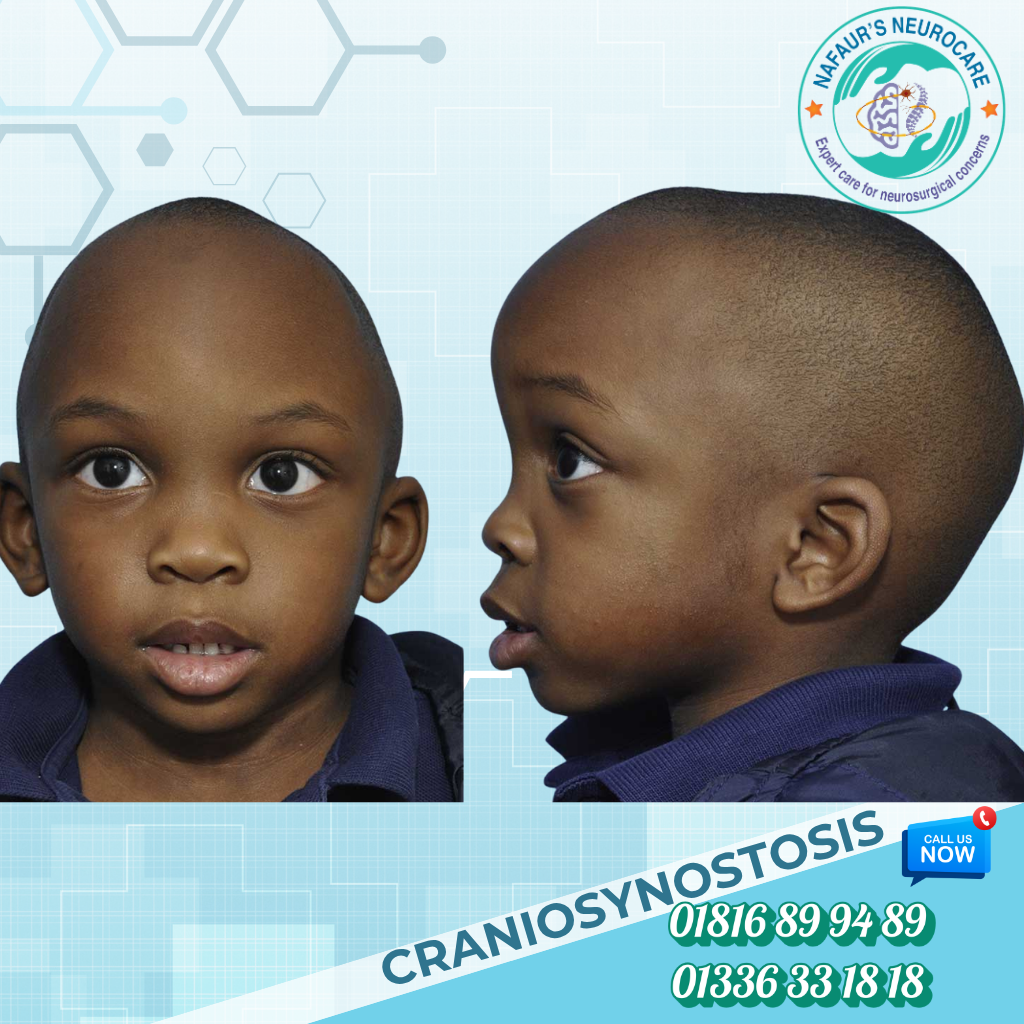
The Craniosynostosis Clinic in Nafaur’s Neurocare is specially designed for babies and children who have abnormal head shape, long narrow head, triangular forehead, flat forehead, uneven forehead, skull ridge, facial asymmetry, early closure of soft spot, abnormal skull growth, eye position changes, developmental concerns, or suspected premature fusion of skull sutures.
Many parents in Bangladesh search for craniosynostosis treatment in Bangladesh, craniosynostosis clinic in Dhaka, craniosynostosis surgery in Bangladesh, baby skull surgery in Dhaka, abnormal head shape treatment for baby, pediatric neurosurgeon for craniosynostosis, pediatric craniofacial surgery Bangladesh, skull deformity treatment in children, and best pediatric neurocare centre in Bangladesh. Nafaur’s Neurocare aims to provide dedicated evaluation, diagnosis support, imaging review, pediatric neurosurgical counseling, developmental monitoring, parent education, and long-term child neurocare planning.
What is Craniosynostosis?
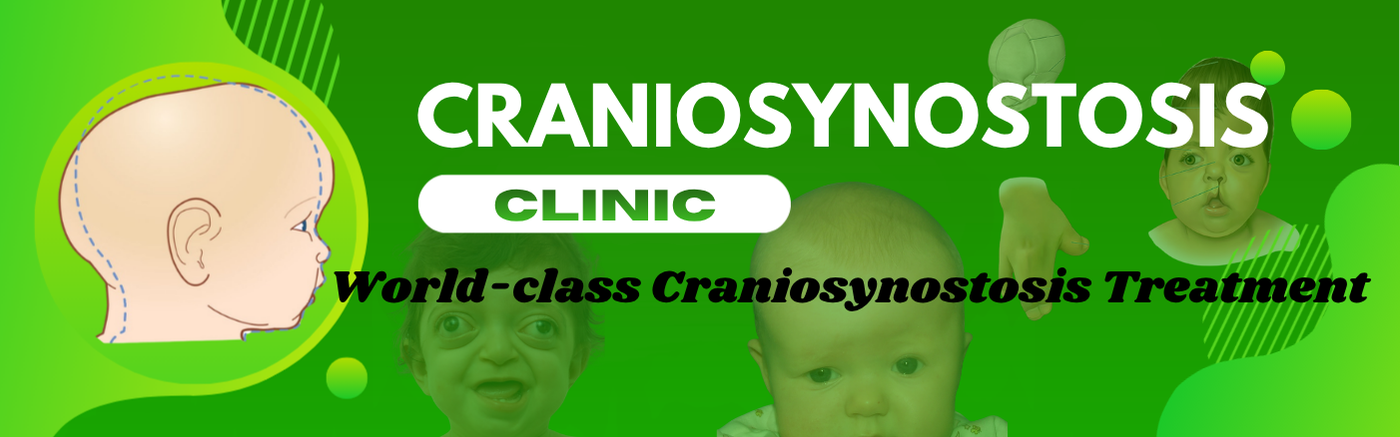
Craniosynostosis is a congenital skull condition where one or more skull sutures close too early. In a growing baby, the skull is made of several bones connected by flexible joints called sutures. These sutures allow the baby’s brain and skull to grow normally. When a suture fuses prematurely, the skull cannot expand properly in that direction, causing an abnormal head shape.
Craniosynostosis may involve one suture or multiple sutures. It may be isolated, meaning only the skull suture is affected, or syndromic, meaning it is associated with genetic or craniofacial conditions. Early diagnosis is very important because some children may develop raised intracranial pressure, eye problems, developmental concerns, facial deformity, or persistent skull shape abnormality if treatment is delayed.
Not every abnormal head shape is craniosynostosis. Some babies develop positional plagiocephaly due to sleeping position, prematurity, or neck muscle tightness. However, craniosynostosis needs specialist evaluation by a pediatric neurosurgeon because treatment planning and timing are different.
Common Signs and Symptoms of Craniosynostosis
Parents should consult a pediatric neurosurgeon or pediatric neurocare clinic if a baby has:
Abnormal head shape from birth, progressively worsening head shape, long narrow head, triangular forehead, flat forehead on one side, uneven forehead, facial asymmetry, visible skull ridge, hard ridge along skull suture, early closure of soft spot, unequal eye position, bulging eyes, poor head growth pattern, vomiting, irritability, feeding difficulty, delayed milestone, poor sleep, visual concern, or suspected raised brain pressure.
In Bangladesh, many babies with abnormal head shape are brought late because families may think the head shape will correct naturally. Early evaluation can help identify whether the condition is positional head flattening or true craniosynostosis.
Types of Craniosynostosis Evaluated at Nafaur’s Neurocare
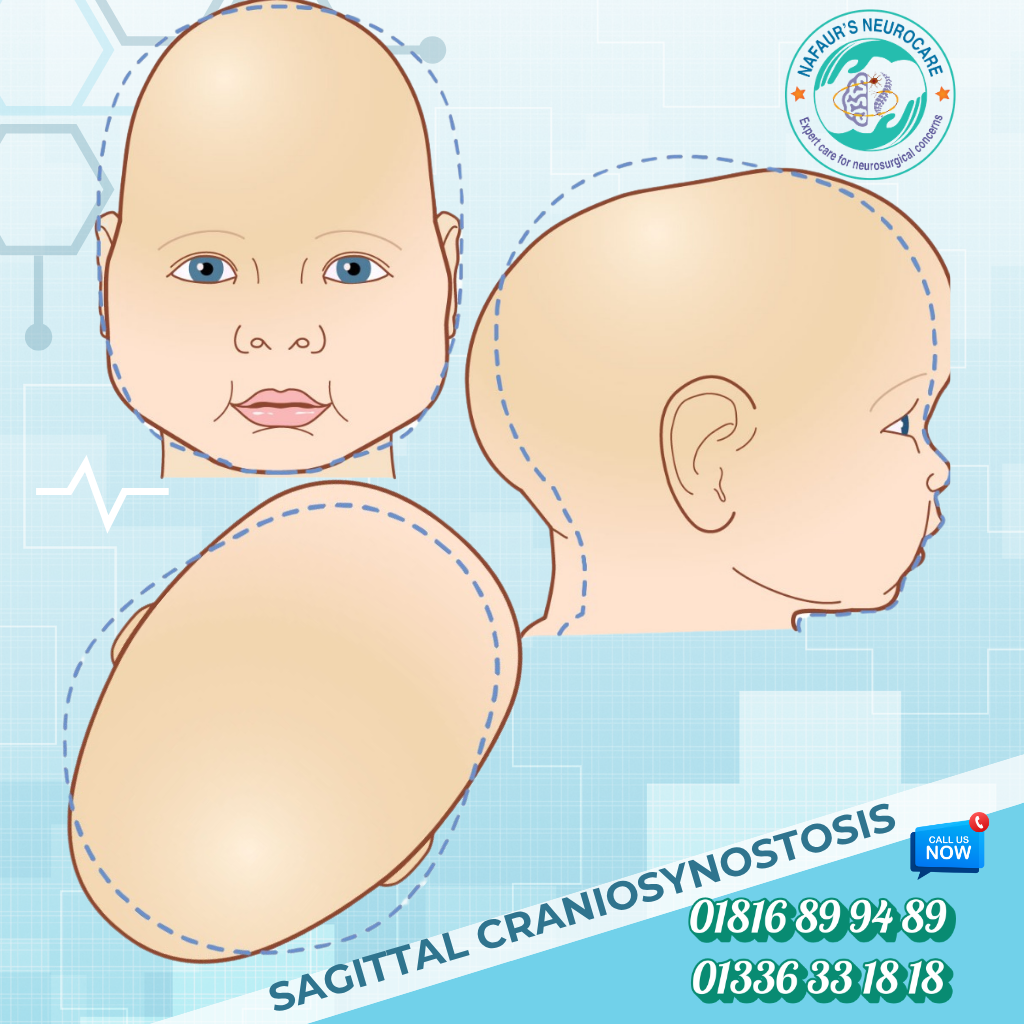
Sagittal Craniosynostosis / Scaphocephaly
Sagittal craniosynostosis is one of the most common types of craniosynostosis. It occurs when the sagittal suture closes too early, causing a long and narrow head shape. This condition is also known as scaphocephaly. Parents may notice that the baby’s head is longer from front to back and narrower from side to side.
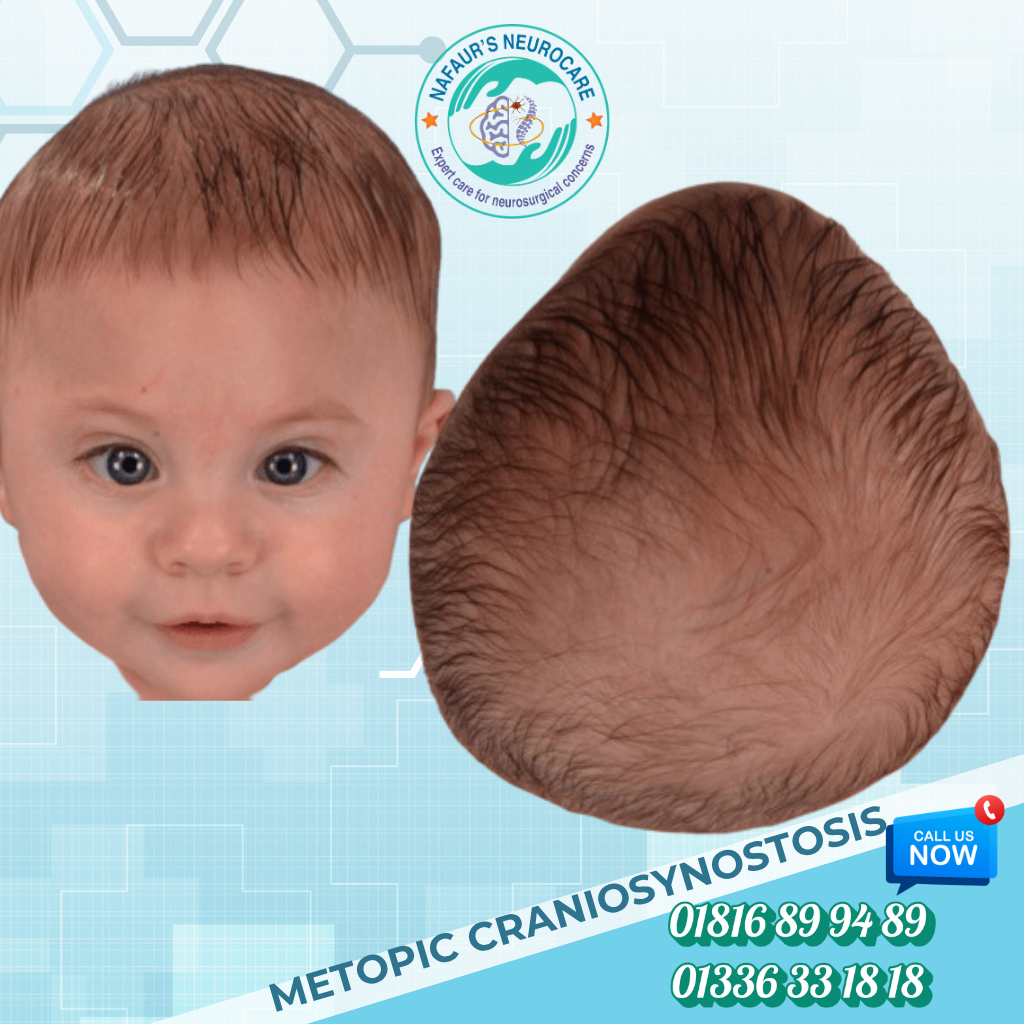
Metopic Craniosynostosis / Trigonocephaly
Metopic craniosynostosis occurs when the metopic suture closes too early. It can cause a triangular forehead shape, visible forehead ridge, narrow forehead, and eyes that appear closer together. This head shape is also called trigonocephaly.
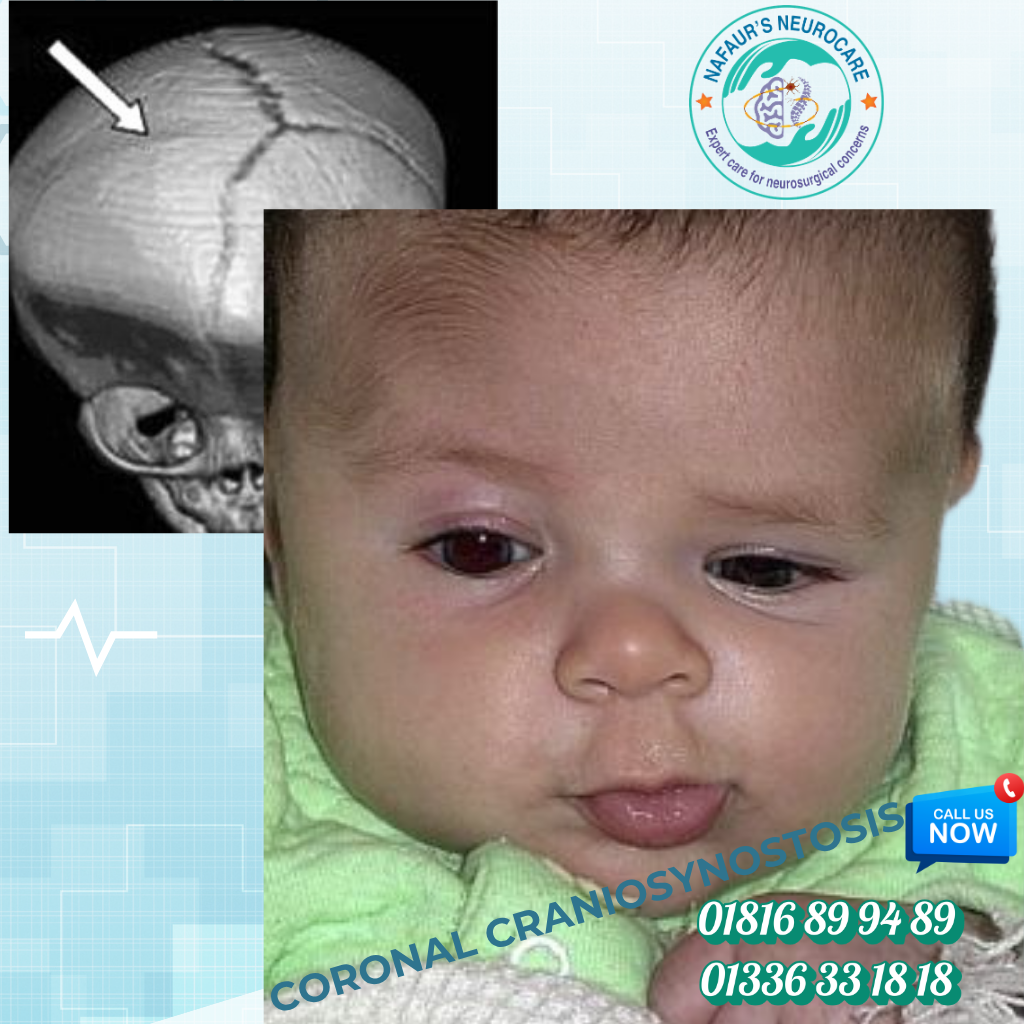
Coronal Craniosynostosis / Anterior Plagiocephaly
Coronal craniosynostosis may affect one or both coronal sutures. When one coronal suture closes early, it can cause flattening of the forehead on one side, facial asymmetry, abnormal eye position, and uneven skull growth. This is also called anterior plagiocephaly. When both coronal sutures are involved, the head may become short and wide.
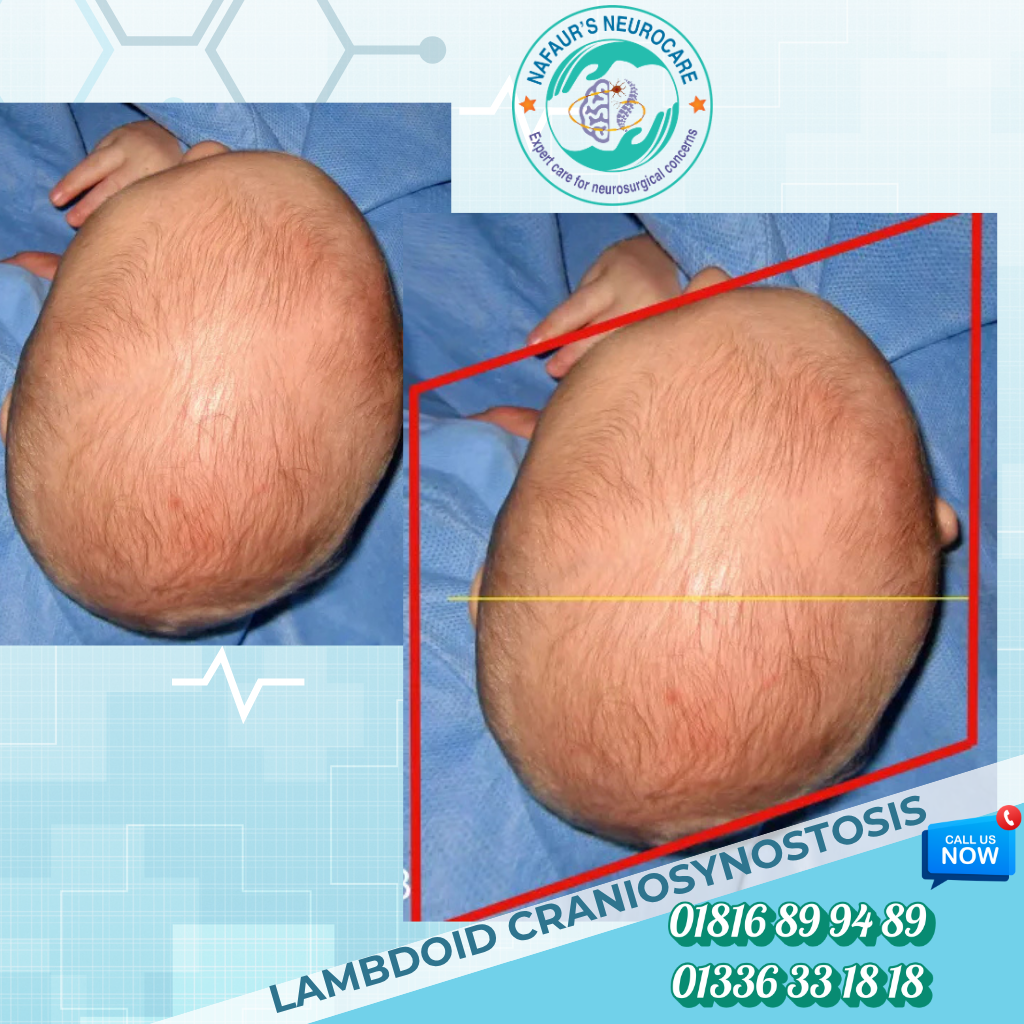
Lambdoid Craniosynostosis / Posterior Plagiocephaly
Lambdoid craniosynostosis is less common and affects the back part of the skull. It may cause flattening at the back of the head, asymmetry of the skull, and changes in ear position. It should be carefully differentiated from positional plagiocephaly, which is more common.
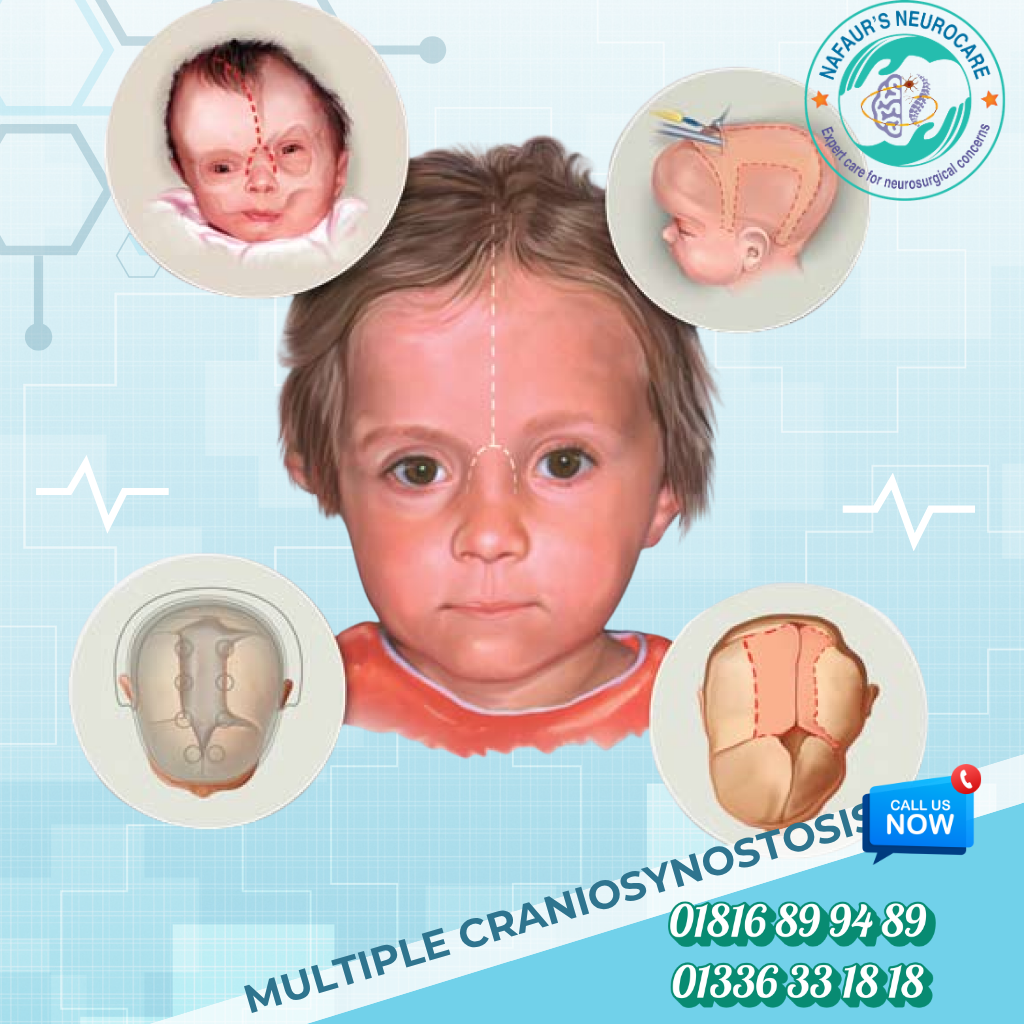
Multiple Suture Craniosynostosis
Multiple suture craniosynostosis occurs when more than one skull suture closes early. This can be more complex and may increase the risk of raised intracranial pressure, skull growth restriction, eye symptoms, and developmental concerns. These children need detailed pediatric neurosurgical assessment and long-term follow-up.
Syndromic Craniosynostosis
Syndromic craniosynostosis may be associated with genetic craniofacial syndromes and may involve the skull, face, eyes, airway, hearing, teeth, brain, hands, feet, and development. These children may need multidisciplinary care and long-term monitoring.
Craniosynostosis vs Positional Plagiocephaly
Many parents become concerned when a baby’s head looks flat or asymmetric. Positional plagiocephaly is usually related to sleeping position, prematurity, torticollis, or pressure on one side of the head. Craniosynostosis, however, occurs due to premature closure of skull sutures and may need surgical evaluation.
Key differences may include:
In craniosynostosis, the abnormal head shape may be present from birth or progressively worsen. A hard ridge may be felt along the fused suture. Facial asymmetry may be more prominent. The skull may grow abnormally despite position changes. In positional plagiocephaly, skull sutures are usually open, and head shape may improve with positioning, physiotherapy for torticollis, or growth.
Parents should not guess the diagnosis at home. Proper evaluation by a pediatric neurosurgeon helps determine the cause and guide treatment.
Craniosynostosis Clinic Services at Nafaur’s Neurocare
The Craniosynostosis Clinic in Nafaur’s Neurocare provides dedicated pediatric evaluation and follow-up services for babies and children with abnormal head shape, skull deformity, premature suture closure, and related neurodevelopmental concerns.
Services may include:
Pediatric neurosurgical consultation, pediatric neurological assessment, abnormal head shape evaluation, skull suture assessment, head circumference monitoring, developmental milestone assessment, raised intracranial pressure screening, eye-related symptom review, positional plagiocephaly differentiation, CT scan review, MRI brain review when needed, cranial imaging guidance, craniosynostosis surgery counseling, syndromic craniosynostosis evaluation, post-operative follow-up planning, parent counseling, developmental monitoring, rehabilitation guidance when required, and long-term child neurocare planning.
The clinic helps parents understand the child’s head shape, possible suture involvement, need for imaging, treatment options, timing of surgery, possible complications, cosmetic and developmental concerns, and follow-up requirements.
Craniosynostosis Surgery in Bangladesh
Craniosynostosis surgery may be recommended to allow better skull growth, improve head shape, reduce skull restriction, and address raised intracranial pressure risk in selected cases. The type and timing of surgery depend on the baby’s age, suture involved, severity of deformity, presence of raised pressure, syndromic features, and overall health condition.
Many parents search for craniosynostosis surgery in Bangladesh, craniosynostosis surgery in Dhaka, baby skull surgery Bangladesh, pediatric skull reshaping surgery, pediatric craniofacial surgery Bangladesh, and best pediatric neurosurgeon for craniosynostosis.
At Nafaur’s Neurocare, parents can receive counseling regarding diagnosis, imaging, surgical timing, treatment options, expected outcome, risks, post-operative care, and long-term follow-up.
Why Early Diagnosis is Important
Early diagnosis of craniosynostosis is important because the baby’s skull and brain are growing rapidly during infancy. Delayed diagnosis may make treatment more complex and can lead to persistent skull deformity, facial asymmetry, eye problems, developmental concerns, or raised intracranial pressure in selected cases.
Parents should seek early consultation if a baby’s head shape looks unusual from birth, does not improve, or becomes more abnormal over time. Early evaluation does not always mean surgery is needed immediately, but it helps parents make informed decisions.
Craniosynostosis and Raised Intracranial Pressure
Some children with craniosynostosis may develop increased pressure inside the skull, especially in multiple suture or syndromic craniosynostosis. Symptoms may include vomiting, irritability, headache in older children, poor sleep, visual problems, developmental delay, bulging eyes, or reduced activity.
Raised intracranial pressure requires careful pediatric neurosurgical evaluation and follow-up.
Craniosynostosis and Child Development
Many children with isolated craniosynostosis develop well after proper treatment and follow-up. However, some children may have developmental delay, speech delay, learning difficulty, vision problems, or associated syndromic conditions. Children with multiple suture or syndromic craniosynostosis may need long-term developmental monitoring.
At Nafaur’s Neurocare, children with craniosynostosis can receive developmental assessment and allied clinic support when needed.
Craniosynostosis and Eye Problems
Craniosynostosis may affect the orbit and eye position in some children, especially in coronal and syndromic craniosynostosis. Parents may notice unequal eye position, bulging eyes, squint, visual concern, or abnormal facial symmetry. Eye assessment and long-term monitoring may be needed in selected cases.
Post-Operative Follow-Up After Craniosynostosis Surgery
After craniosynostosis surgery, children need regular follow-up to monitor head shape, skull growth, wound healing, development, vision, neurological status, and long-term skull remodeling. Follow-up is especially important during the early growth years.
Nafaur’s Neurocare provides post-operative follow-up planning and parent guidance for children who have undergone craniosynostosis surgery or need long-term monitoring.
Allied Clinic Support at Nafaur’s Neurocare
Nafaur’s Neurocare runs different allied clinics to support children with complex pediatric neurological, neurosurgical, developmental, and rehabilitation needs. Children attending the Craniosynostosis Clinic may benefit from:
Developmental assessment, physiotherapy if torticollis or motor delay is present, speech therapy when needed, fine motor therapy, nutrition support, psychological support for family, rehabilitation guidance, school-readiness assessment later in childhood, parent counseling, and long-term developmental follow-up.
This integrated approach helps families receive pediatric neurosurgery, pediatric neurology, developmental care, rehabilitation guidance, and allied child neurocare from one dedicated pediatric neurocare platform in Bangladesh.
Why Choose Nafaur’s Neurocare for Craniosynostosis Clinic?
Parents choose Nafaur’s Neurocare because it provides a dedicated pediatric neurocare environment for children with craniosynostosis, abnormal head shape, skull deformity, hydrocephalus, congenital birth defects, developmental delay, brain, skull, spine, nerve, and neurological conditions.
Key reasons to choose Nafaur’s Neurocare include:
Dedicated pediatric neurology and pediatric neurosurgery services, child-focused craniosynostosis evaluation, abnormal head shape assessment, positional plagiocephaly differentiation, CT and MRI report review support, raised intracranial pressure warning assessment, craniosynostosis surgery counseling, developmental monitoring, parent-friendly counseling, allied clinic support, Bangladesh-focused pediatric neurocare, accessible location in Shyamoli, Dhaka, and easy contact through phone, social media, and Google Map.
Bangladesh Perspective: Early Craniosynostosis Evaluation Can Improve Treatment Planning
In Bangladesh, many babies with abnormal head shape are brought late because families may think the skull shape will improve naturally. Some children are first treated as positional flat head without specialist evaluation. Early pediatric neurosurgical assessment is important to identify true craniosynostosis and plan treatment at the right time.
Parents should seek expert pediatric neurocare evaluation if a baby has long narrow head, triangular forehead, flat forehead on one side, facial asymmetry, hard skull ridge, early soft spot closure, abnormal eye position, or progressively worsening skull shape.
The Craniosynostosis Clinic in Nafaur’s Neurocare focuses on early detection, pediatric neurosurgical assessment, imaging review, surgery counseling when required, parent education, developmental monitoring, and long-term child neurocare support in Bangladesh.
Chamber Address
Nafaur’s Neurocare
H # 24/1, Level # 7, Shyamoli Square
Shyamoli Cinema Hall Building, Mirpur Road, Shyamoli
Dhaka – 1207, Bangladesh
Google Map Location
For easy direction and exact location, visit Nafaur’s Neurocare through Google Map:
Google Map:
https://maps.app.goo.gl/zU4EcLt9CS7k2WVL8
Appointment Numbers
For appointment and consultation:
01816899489
01336331818
Social Media Links for Easy Contact
Facebook:
https://www.facebook.com/NafaursNeurocare
Instagram:
https://www.instagram.com/neurocarebd