Cerebral Palsy Clinic in Nafaur’s Neurocare
Dedicated Pediatric Cerebral Palsy, Developmental Delay, Spasticity, Rehabilitation, Pediatric Neurology & Pediatric Neurosurgery Services in Bangladesh
Nafaur’s Neurocare is one of the dedicated pediatric neurocare centres in Bangladesh, providing specialized pediatric neurological, pediatric neurosurgical, developmental, rehabilitation, and allied child neurocare services for newborns, infants, children, and adolescents. Through its Pediatric Neurosurgical and Neurological Clinic, Cerebral Palsy Clinic, Neuro Development Clinic, Epilepsy Clinic, Movement Disorders Clinic, Spasticity Care Service, Physiotherapy Support, Speech Therapy Support, Fine Motor Therapy, Developmental Therapy, and allied child neurocare services, Nafaur’s Neurocare provides focused evaluation and care for children with cerebral palsy, delayed milestone, developmental delay, spasticity, abnormal muscle tone, walking difficulty, seizure, speech delay, feeding difficulty, movement disorder, learning difficulty, and complex pediatric neurological conditions.
The Cerebral Palsy Clinic in Nafaur’s Neurocare is specially designed for babies and children who have poor head control, delayed sitting, delayed crawling, delayed standing, delayed walking, stiffness of limbs, floppy body, abnormal posture, toe walking, scissoring of legs, weak hand use, feeding difficulty, speech delay, seizure, developmental delay, birth asphyxia-related brain injury, neonatal seizure history, premature birth-related neurological problems, or cerebral palsy-like features.
Many parents in Bangladesh search for cerebral palsy treatment in Bangladesh, cerebral palsy clinic in Dhaka, pediatric cerebral palsy treatment Dhaka, pediatric neurologist for cerebral palsy, pediatric neurosurgeon for spasticity, spasticity treatment in children Bangladesh, child developmental delay treatment, delayed milestone clinic Dhaka, physiotherapy for cerebral palsy Bangladesh, speech therapy for cerebral palsy Dhaka, and best pediatric neurocare centre in Bangladesh. Nafaur’s Neurocare aims to provide dedicated evaluation, developmental assessment, pediatric neurology support, pediatric neurosurgical guidance when required, rehabilitation planning, parent counseling, therapy coordination, and long-term child neurocare support.
What is Cerebral Palsy?
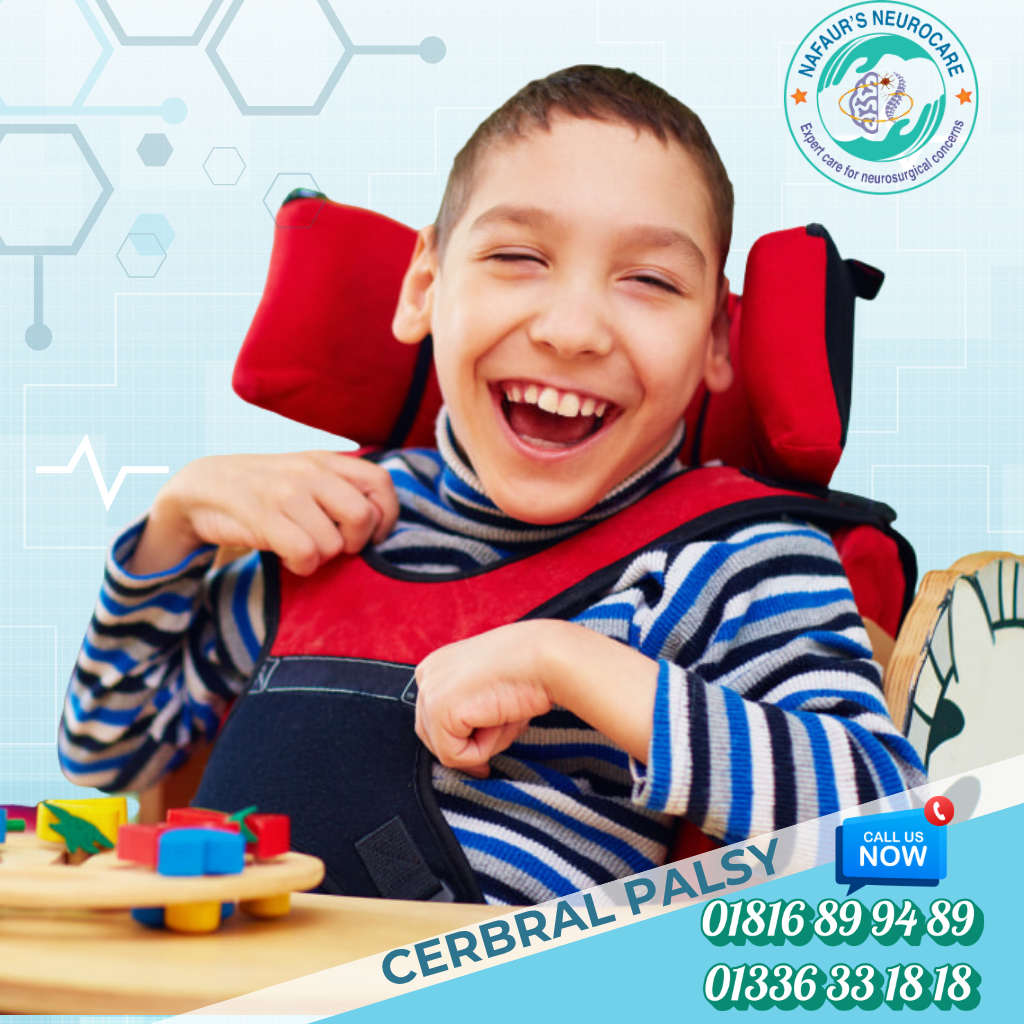
Cerebral palsy is a group of neurological conditions that affect a child’s movement, posture, muscle tone, balance, coordination, and motor development. It usually occurs due to injury or abnormal development of the brain before birth, during birth, or in early childhood. Cerebral palsy is not a single disease; it is a long-term neurodevelopmental condition that may affect each child differently.
Some children with cerebral palsy have mild motor difficulty and can walk independently. Others may have severe stiffness, weakness, feeding difficulty, speech delay, seizure, learning difficulty, visual problems, hearing problems, or difficulty with daily activities. Cerebral palsy can affect movement, communication, feeding, posture, sleep, behavior, school performance, and overall quality of life.
Cerebral palsy care needs a team-based approach. Children may need pediatric neurology, pediatric neurosurgery evaluation in selected cases, physiotherapy, developmental therapy, speech therapy, fine motor therapy, nutrition support, psychological support, orthopedic guidance, seizure care, and long-term rehabilitation planning.
Common Causes and Risk Factors of Cerebral Palsy
Cerebral palsy may be associated with different causes and risk factors, including:
Birth asphyxia, low oxygen at birth, premature birth, low birth weight, neonatal jaundice, neonatal seizure, neonatal infection, meningitis, encephalitis, brain bleeding, newborn stroke, congenital brain malformation, hydrocephalus, traumatic brain injury, severe infection in early childhood, genetic or metabolic disorders, and other brain development problems.
In Bangladesh, many children with cerebral palsy are brought late because delayed milestone, stiffness, toe walking, poor sitting, or speech delay may not be recognized early. Parents may wait for spontaneous improvement, but early pediatric neurological evaluation and early therapy can make a meaningful difference in a child’s development and function.
Common Symptoms of Cerebral Palsy in Children
Parents should consult a pediatric neurocare clinic if a child has:
Delayed head control, delayed rolling, delayed sitting, delayed crawling, delayed standing, delayed walking, stiffness of arms or legs, floppy body, abnormal posture, toe walking, scissoring of legs, tight heel cord, poor hand use, hand preference before one year of age, feeding difficulty, swallowing problem, drooling, speech delay, seizure, poor eye contact, delayed milestone, learning difficulty, frequent falling, abnormal movement, muscle tightness, weakness of one side of the body, or developmental delay.
In babies, warning signs may include poor sucking, excessive stiffness, unusual floppiness, poor neck control, persistent fisting, delayed smiling, delayed response, seizure, abnormal crying, feeding difficulty, or not moving one side of the body properly.
Types of Cerebral Palsy Evaluated at Nafaur’s Neurocare
Spastic Cerebral Palsy
Spastic cerebral palsy is the most common type of cerebral palsy. It causes increased muscle tone and stiffness. A child may have tight legs, tight hands, scissoring of legs, toe walking, difficulty sitting, poor balance, abnormal gait, or walking difficulty. Spasticity can affect comfort, mobility, hygiene, sleep, and daily activities.
Dyskinetic Cerebral Palsy
Dyskinetic cerebral palsy causes abnormal involuntary movements, twisting posture, poor movement control, and difficulty with speech, feeding, posture, or hand use. Children may have dystonia, choreoathetoid movement, abnormal facial movement, or fluctuating muscle tone.
Ataxic Cerebral Palsy
Ataxic cerebral palsy affects balance and coordination. Children may have shaky movements, poor balance, frequent falling, delayed walking, clumsiness, and difficulty with fine motor tasks such as writing, feeding, or holding objects.
Mixed Cerebral Palsy
Some children have features of more than one type, such as spasticity with dystonia, abnormal movement with weakness, or balance difficulty with stiffness. These children need individualized assessment and long-term therapy planning.
Cerebral Palsy Clinic Services at Nafaur’s Neurocare
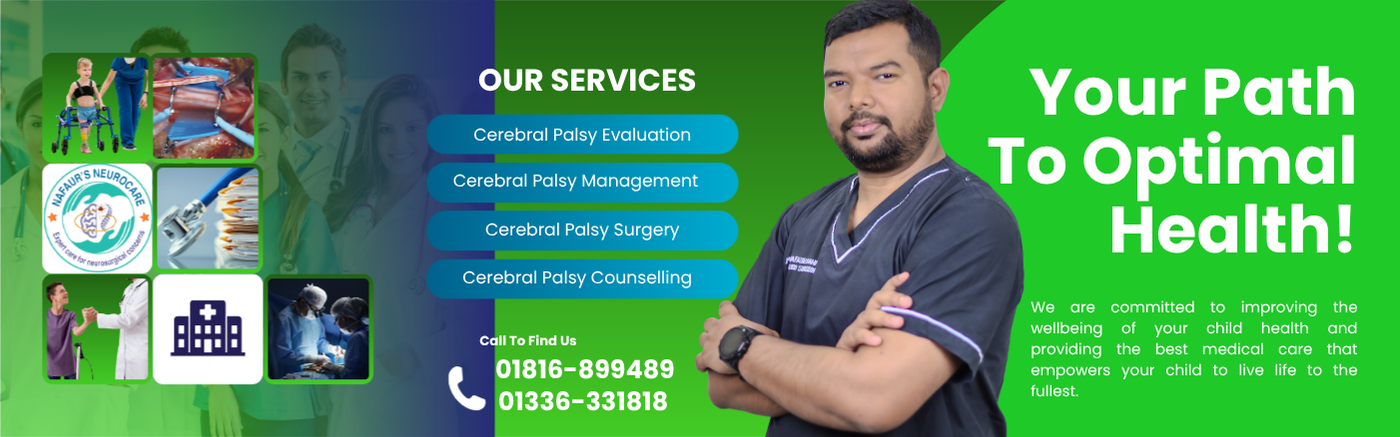
The Cerebral Palsy Clinic in Nafaur’s Neurocare provides dedicated pediatric evaluation and long-term support services for children with cerebral palsy, delayed milestone, developmental delay, motor delay, spasticity, seizure, speech delay, feeding difficulty, and related neurological conditions.
Services may include:
Pediatric neurology consultation, pediatric neurosurgical consultation when required, developmental milestone assessment, muscle tone assessment, spasticity evaluation, seizure evaluation, abnormal movement assessment, MRI brain review, EEG report review when needed, feeding and swallowing concern assessment, walking and gait evaluation, posture assessment, physiotherapy planning, developmental therapy guidance, speech therapy support, fine motor therapy support, nutrition guidance, rehabilitation planning, school-readiness guidance, parent counseling, and long-term follow-up.
The clinic helps parents understand the child’s condition, possible cause, severity, therapy needs, developmental goals, spasticity management options, seizure care, feeding support, home exercise importance, and long-term rehabilitation plan.
Pediatric Neurology Support for Cerebral Palsy
Pediatric neurology is central to cerebral palsy care. Children with cerebral palsy may need evaluation for seizure, developmental delay, abnormal movement, sleep problem, feeding difficulty, vision or hearing concerns, cognitive delay, behavioral challenges, and learning difficulty.
At Nafaur’s Neurocare, pediatric neurological assessment may help identify associated conditions and guide long-term treatment planning. Children may require regular follow-up to monitor development, medicine response, seizure control, muscle tone, movement, and rehabilitation progress.
Pediatric Neurosurgery Support for Cerebral Palsy
Most children with cerebral palsy need rehabilitation and pediatric neurology care. However, some children may need pediatric neurosurgical evaluation, especially if they have severe spasticity, hydrocephalus, brain malformation, spinal problem, tethered cord concern, post-traumatic brain injury, post-infective neurological complications, or other neurosurgical conditions.
Pediatric neurosurgical assessment may be important for selected children with:
Severe spasticity, hydrocephalus, congenital brain or spine disorder, abnormal MRI findings, post-infective hydrocephalus, post-traumatic neurological problems, or advanced spasticity management needs.
Spasticity Management in Cerebral Palsy
Spasticity means abnormal tightness or stiffness of muscles. It can affect walking, sitting, hand use, posture, comfort, hygiene, sleep, feeding, and daily activities. Children with spastic cerebral palsy often need long-term spasticity care.
Spasticity management may include physiotherapy, stretching, strengthening, posture training, splinting guidance, medicines, botulinum toxin consideration, orthopedic referral, rehabilitation planning, and in selected cases pediatric neurosurgical evaluation.
Parents searching for spasticity treatment in Bangladesh, child muscle stiffness treatment Dhaka, toe walking cerebral palsy treatment, pediatric spasticity clinic Bangladesh, and cerebral palsy rehabilitation Dhaka can consult Nafaur’s Neurocare for proper evaluation and guidance.
Physiotherapy for Cerebral Palsy
Physiotherapy is a key part of cerebral palsy management. It helps improve posture, muscle strength, balance, joint mobility, walking ability, sitting control, standing tolerance, flexibility, and functional independence. Regular therapy and home exercise are important for long-term improvement.
Physiotherapy goals may include:
Improving head control, sitting balance, crawling, standing, walking, gait training, muscle stretching, prevention of contracture, posture correction, balance training, and functional mobility.
Developmental Therapy for Cerebral Palsy
Children with cerebral palsy may have delayed milestones, delayed play skills, poor sitting, poor crawling, poor interaction, delayed communication, or delayed daily living skills. Developmental therapy helps support overall milestone progress through structured, child-friendly, and family-centered activities.
Fine Motor Therapy and Hand Function Support
Some children with cerebral palsy have poor hand use, stiffness of hand, weak grip, poor coordination, difficulty holding objects, difficulty feeding themselves, or delayed writing readiness. Fine motor therapy can help improve hand function, play skills, self-care skills, and school readiness.
Speech, Feeding and Swallowing Support
Many children with cerebral palsy may have speech delay, drooling, feeding difficulty, chewing difficulty, swallowing concern, poor weight gain, or aspiration risk. Speech therapy and feeding support may help improve communication, safe feeding, oral-motor skills, and family feeding routine.
Nafaur’s Neurocare provides allied clinic support and guidance for children needing speech therapy, communication support, and feeding-related evaluation.
Cerebral Palsy and Epilepsy
Seizure is common in some children with cerebral palsy, especially when there is underlying brain injury, cortical malformation, post-infective brain damage, birth asphyxia-related injury, or neonatal seizure history. Children with seizure need pediatric neurology follow-up, medicine monitoring, EEG review when needed, and long-term seizure care planning.
Cerebral Palsy and Movement Disorders
Some children with cerebral palsy have dystonia, choreoathetoid movement, tremor, abnormal posture, involuntary movement, or mixed movement disorder. These children may need pediatric neurology evaluation, movement disorder assessment, therapy planning, and selected pediatric neurosurgical guidance.
Cerebral Palsy and Nutrition Support
Children with cerebral palsy may have feeding difficulty, poor weight gain, swallowing problems, constipation, reflux, or nutritional deficiency. Proper nutrition support is important for growth, immunity, energy, therapy participation, wound healing, and overall development.
Nafaur’s Neurocare provides nutrition guidance support for children with cerebral palsy and developmental delay.
Cerebral Palsy and School Readiness
Children with cerebral palsy may need school-readiness support, learning assessment, communication support, seating advice, fine motor help, attention support, and developmental monitoring before starting school. Early planning can help improve participation in education and social life.
Long-Term Follow-Up for Cerebral Palsy
Cerebral palsy needs long-term monitoring because the child’s needs may change with age, growth, school activity, physical development, and therapy response. Follow-up may include monitoring for spasticity, contracture, scoliosis, hip problems, seizure, feeding difficulty, speech delay, learning difficulty, behavior concerns, sleep problems, and emotional adjustment.
Long-term care may include:
Pediatric neurology follow-up, developmental assessment, spasticity evaluation, therapy goal review, physiotherapy progress monitoring, speech and feeding follow-up, nutrition review, school-readiness planning, parent counseling, and referral coordination when needed.
Nafaur’s Neurocare supports families with long-term child neurocare planning, parent education, allied clinic support, and coordinated follow-up.
Parent Guidance for Cerebral Palsy Care
Parents play the most important role in the long-term progress of a child with cerebral palsy. Therapy works best when parents understand the child’s condition and continue home-based activities regularly.
Parent guidance may include:
How to support head control, sitting, standing, walking practice, stretching, safe feeding, communication stimulation, seizure observation, sleep routine, posture care, prevention of contractures, use of therapy exercises at home, and when to seek urgent medical care.
Parents should seek early consultation if a child has delayed milestone, stiffness, poor feeding, seizure, or abnormal movement. Early therapy and regular follow-up can improve function and quality of life.
Rehabilitation and Allied Clinic Support
Nafaur’s Neurocare runs different allied clinics to support children with cerebral palsy and complex pediatric neurological conditions. Children attending the Cerebral Palsy Clinic may benefit from:
Physiotherapy, developmental therapy, fine motor therapy, speech therapy, feeding support guidance, nutrition support, seizure monitoring, psychological support for family, movement disorder assessment, spasticity care, rehabilitation guidance, school-readiness assessment, parent counseling, and long-term developmental follow-up.
This integrated approach helps families receive pediatric neurology, pediatric neurosurgery evaluation when required, developmental support, rehabilitation guidance, and allied child neurocare from one dedicated pediatric neurocare platform in Bangladesh.
Why Choose Nafaur’s Neurocare for Cerebral Palsy Clinic?
Parents choose Nafaur’s Neurocare because it provides a dedicated pediatric neurocare environment for children with cerebral palsy, delayed milestone, developmental delay, motor delay, spasticity, seizure, speech delay, feeding difficulty, abnormal movement, brain injury, and complex neurological conditions.
Key reasons to choose Nafaur’s Neurocare include:
Dedicated pediatric neurology and pediatric neurosurgery services, child-focused cerebral palsy evaluation, delayed milestone assessment, spasticity and tone evaluation, seizure follow-up, developmental monitoring, physiotherapy planning, speech and feeding support, fine motor and developmental therapy guidance, nutrition support, parent-friendly counseling, rehabilitation planning, allied clinic support, Bangladesh-focused pediatric neurocare, accessible location in Shyamoli, Dhaka, and easy contact through phone, social media, and Google Map.
Bangladesh Perspective: Early Cerebral Palsy Care Can Improve Development
In Bangladesh, many children with cerebral palsy are brought late because delayed milestone, stiffness, toe walking, poor sitting, or speech delay may not be recognized early. Some families wait for the child to “grow out of it,” but early therapy and pediatric neurological evaluation can make a major difference.
Parents should seek expert evaluation if a child has delayed head control, delayed sitting, delayed walking, stiffness, repeated seizure, feeding difficulty, speech delay, abnormal posture, or developmental concerns. Early diagnosis, regular physiotherapy, developmental therapy, speech therapy, nutrition support, seizure control, parent counseling, and long-term pediatric neurocare can help improve function, independence, and quality of life.
The Cerebral Palsy Clinic in Nafaur’s Neurocare focuses on early detection, pediatric neurological assessment, pediatric neurosurgical evaluation when needed, rehabilitation planning, parent education, and long-term child development support in Bangladesh.
Chamber Address
Nafaur’s Neurocare
H # 24/1, Level # 7, Shyamoli Square
Shyamoli Cinema Hall Building, Mirpur Road, Shyamoli
Dhaka – 1207, Bangladesh
Google Map Location
For easy direction and exact location, visit Nafaur’s Neurocare through Google Map:
Google Map:
https://maps.app.goo.gl/zU4EcLt9CS7k2WVL8
Appointment Numbers
For appointment and consultation:
01816899489
01336331818
Social Media Links for Easy Contact
Facebook:
https://www.facebook.com/NafaursNeurocare
Instagram:
https://www.instagram.com/neurocarebd