Spinal Tumors Clinic in Nafaur’s Neurocare
Dedicated Pediatric Spinal Tumor, Spinal Cord Tumor, Pediatric Spine Neurosurgery, Pediatric Neurology & Child Neurocare Services in Bangladesh
Nafaur’s Neurocare is one of the dedicated pediatric neurocare centres in Bangladesh, providing specialized pediatric neurosurgical, pediatric neurological, developmental, rehabilitation, and allied child neurocare services for newborns, infants, children, and adolescents. Through its Pediatric Neurosurgical and Neurological Clinic, Spinal Tumors Clinic, Brain Tumors Clinic, Neuro Development Clinic, Cerebral Palsy Clinic, Scoliosis Clinic, and allied child neurocare services, Nafaur’s Neurocare provides focused evaluation and care for children with spinal tumors, spinal cord tumors, spine lesions, back swelling, back pain, leg weakness, hand weakness, walking difficulty, scoliosis, spinal deformity, bladder-bowel dysfunction, spinal cord compression, nerve pain, developmental delay, and complex pediatric neurological conditions.
The Spinal Tumors Clinic in Nafaur’s Neurocare is specially designed for babies and children who have suspected or diagnosed spinal tumors, spinal cord tumors, abnormal MRI spine findings, persistent back pain, neck pain, weakness of limbs, walking imbalance, frequent falling, numbness, tingling, foot deformity, bladder-bowel symptoms, spinal swelling, scoliosis, or neurological symptoms related to spine and spinal cord lesions.
Many parents in Bangladesh search for pediatric spinal tumor treatment in Bangladesh, spinal tumor clinic in Dhaka, child spinal cord tumor surgery Bangladesh, pediatric spine surgery in Dhaka, pediatric neurosurgeon for spinal tumor, spinal cord tumor treatment for children Bangladesh, child spine tumor treatment Dhaka, spinal cord compression treatment in children, and best pediatric neurocare centre in Bangladesh. Nafaur’s Neurocare aims to provide dedicated evaluation, imaging review, pediatric neurosurgical counseling, pediatric neurology support, surgery guidance, rehabilitation planning, developmental monitoring, and long-term child neurocare support.
What is a Pediatric Spinal Tumor?
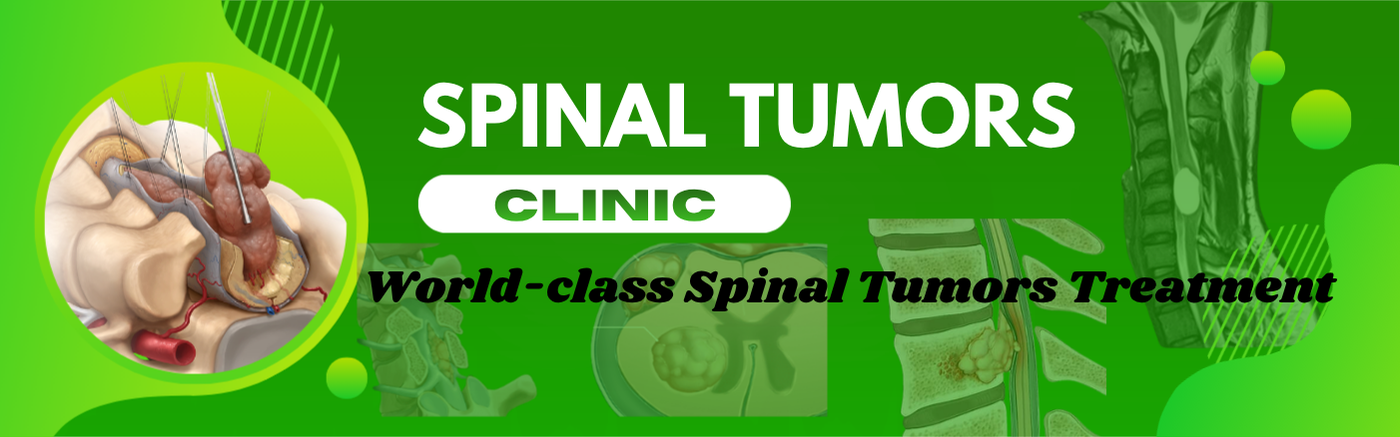
A pediatric spinal tumor is an abnormal growth or lesion involving the spinal cord, spinal nerves, spinal canal, vertebral bones, spinal coverings, or surrounding spinal structures. Spinal tumors in children are different from adult spinal tumors because they may affect a developing spinal cord, growing spine, walking ability, posture, bladder-bowel function, sensation, and long-term neurological development.
Some pediatric spinal tumors are benign and slow-growing, while others may be aggressive or malignant. Some tumors arise inside the spinal cord, some develop around the spinal cord, and some affect the spine bone or nerve roots. A spinal tumor can compress the spinal cord or nerves, causing weakness, pain, walking difficulty, scoliosis, numbness, and bladder-bowel problems.
Early diagnosis is very important because delayed treatment may increase the risk of permanent neurological deficit. A child with progressive weakness, persistent back pain, walking difficulty, bladder-bowel dysfunction, or abnormal MRI spine findings should receive proper pediatric neurological and pediatric neurosurgical evaluation.
Common Symptoms of Spinal Tumor in Children
Parents should consult a pediatric neurocare clinic if a child has:
Persistent back pain, neck pain, pain radiating to arm or leg, weakness of hands or legs, difficulty walking, frequent falling, abnormal gait, dragging of feet, foot drop, reduced sensation, numbness, tingling, muscle wasting, spinal swelling, back swelling, scoliosis, spinal deformity, stiffness of limbs, abnormal posture, delayed walking, loss of previously achieved motor ability, bladder control problem, bowel control problem, constipation, repeated urinary infection, unexplained crying in infants, poor feeding with neurological signs, or progressive neurological deterioration.
In Bangladesh, many pediatric spinal tumors may be diagnosed late because early symptoms can be confused with orthopedic problems, muscle pain, weakness, nutritional deficiency, developmental delay, or general childhood illness. Persistent or progressive neurological symptoms should not be ignored.
Types of Pediatric Spinal Tumors and Lesions Evaluated at Nafaur’s Neurocare
Intramedullary Spinal Cord Tumors
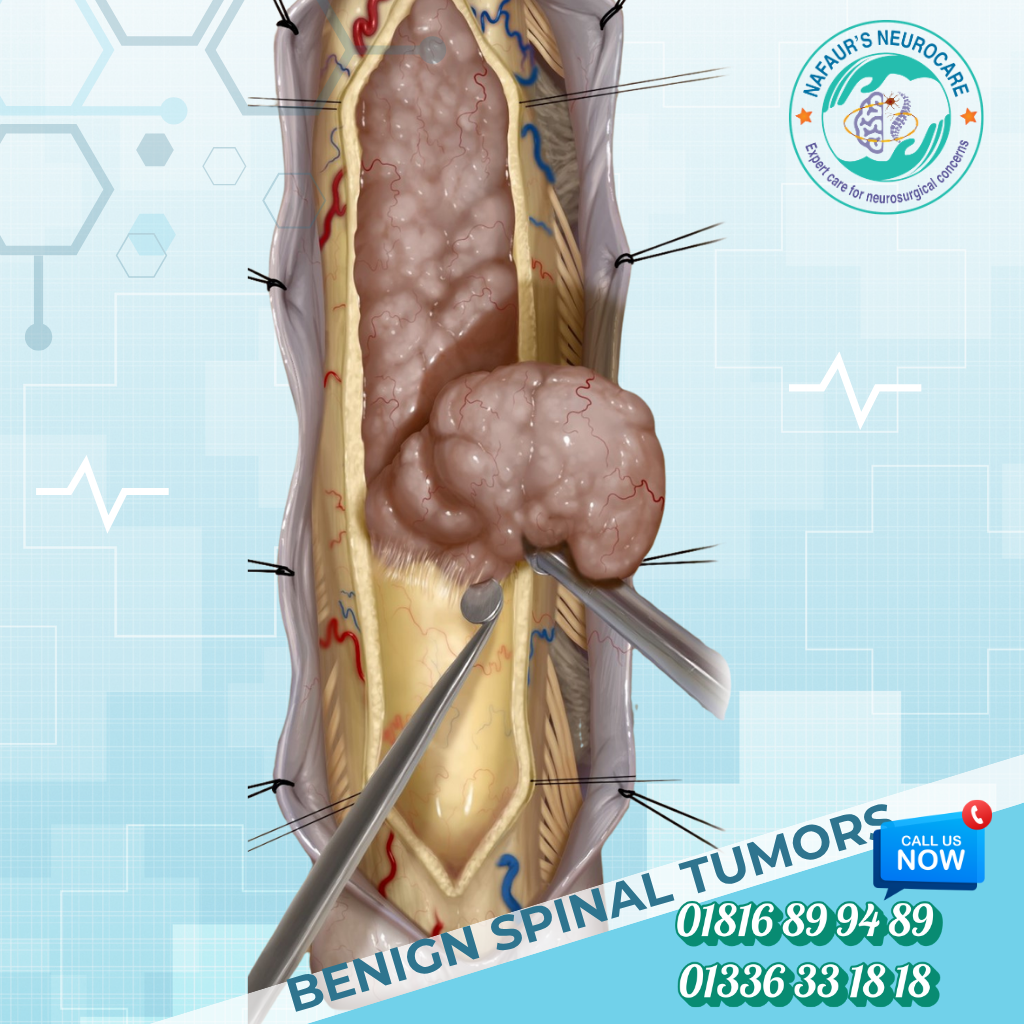
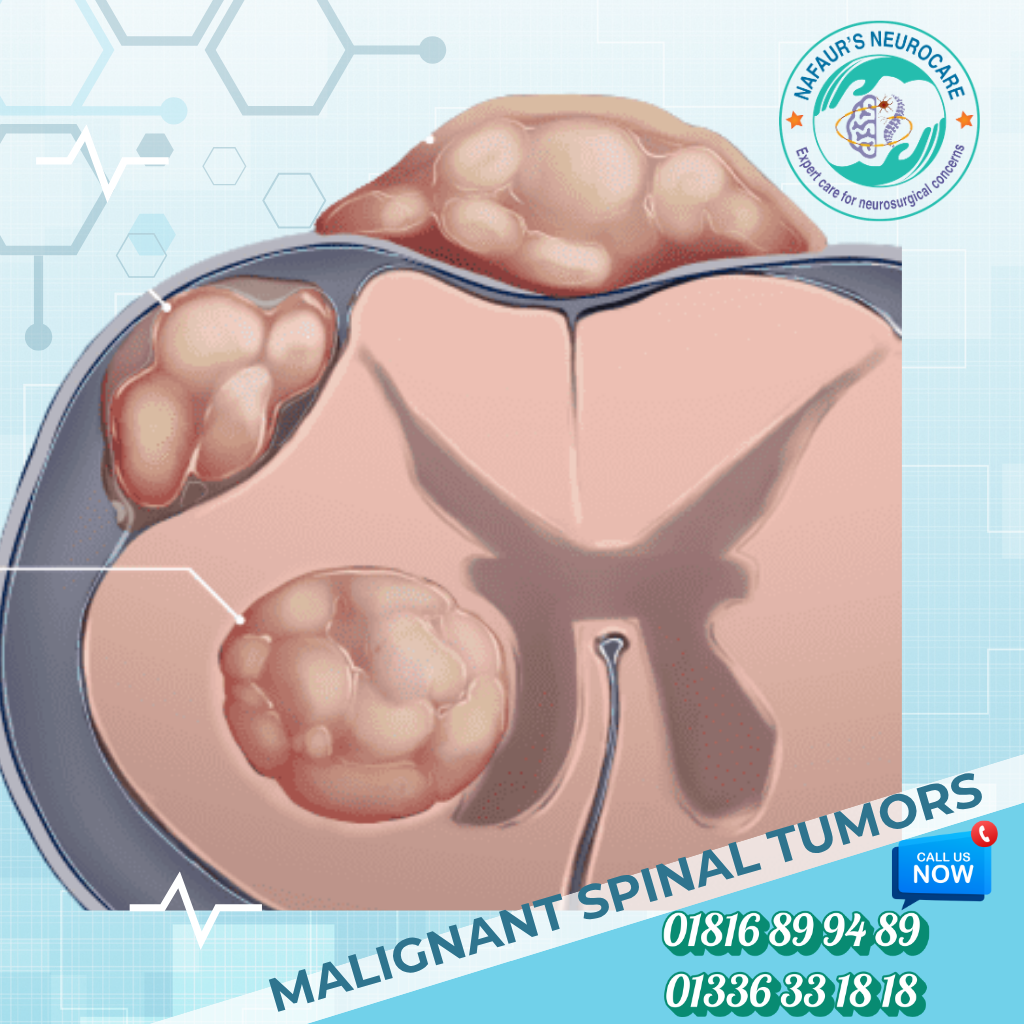
Intramedullary tumors develop inside the spinal cord itself. These tumors can cause weakness, pain, numbness, sensory changes, walking difficulty, scoliosis, bladder-bowel problems, and progressive neurological decline. Common intramedullary tumors include spinal cord astrocytoma, ependymoma, and other spinal cord gliomas.
Extramedullary Intradural Tumors
Extramedullary intradural tumors grow inside the covering of the spinal cord but outside the spinal cord tissue. These tumors may compress the spinal cord and nerve roots, causing pain, weakness, sensory changes, walking difficulty, and bladder-bowel symptoms.
Spinal Ependymoma
Spinal ependymoma may occur inside the spinal cord or around the lower spinal canal. It may cause back pain, leg weakness, sensory loss, bladder-bowel problems, walking difficulty, or progressive spinal cord dysfunction. Surgical planning depends on tumor location, size, imaging findings, and neurological condition.
Spinal Astrocytoma
Spinal astrocytoma is a spinal cord tumor that may affect children and adolescents. Symptoms depend on tumor location and may include weakness, pain, scoliosis, abnormal gait, numbness, and progressive spinal cord dysfunction.
Nerve Sheath Tumors
Nerve sheath tumors arise from nerves and may include schwannoma, neurofibroma, plexiform neurofibroma, and other nerve-related tumors. Children may present with pain, weakness, swelling, spinal deformity, numbness, or neurological deficit. Some nerve sheath tumors may be associated with neurofibromatosis.
Dermoid and Epidermoid Cysts of Spine
Dermoid and epidermoid cysts are congenital lesions that may occur in the spinal canal and can be associated with dermal sinus tract or spinal dysraphism. They may cause infection, compression, weakness, pain, bladder-bowel problems, or tethered cord symptoms.
Spinal Arachnoid Cyst
A spinal arachnoid cyst is a fluid-filled cyst that may compress the spinal cord or nerve roots. It may cause back pain, weakness, sensory changes, walking difficulty, scoliosis, or bladder-bowel symptoms. Some children need monitoring, while others may need surgical evaluation depending on severity.
Spinal Lipoma and Congenital Spinal Lesions
Spinal lipoma may be associated with tethered cord syndrome, lipomyelomeningocele, occult spinal dysraphism, fatty filum, thickened filum terminale, and other congenital spine disorders. These lesions may cause progressive neurological symptoms as the child grows.
Vertebral and Bony Spine Tumors
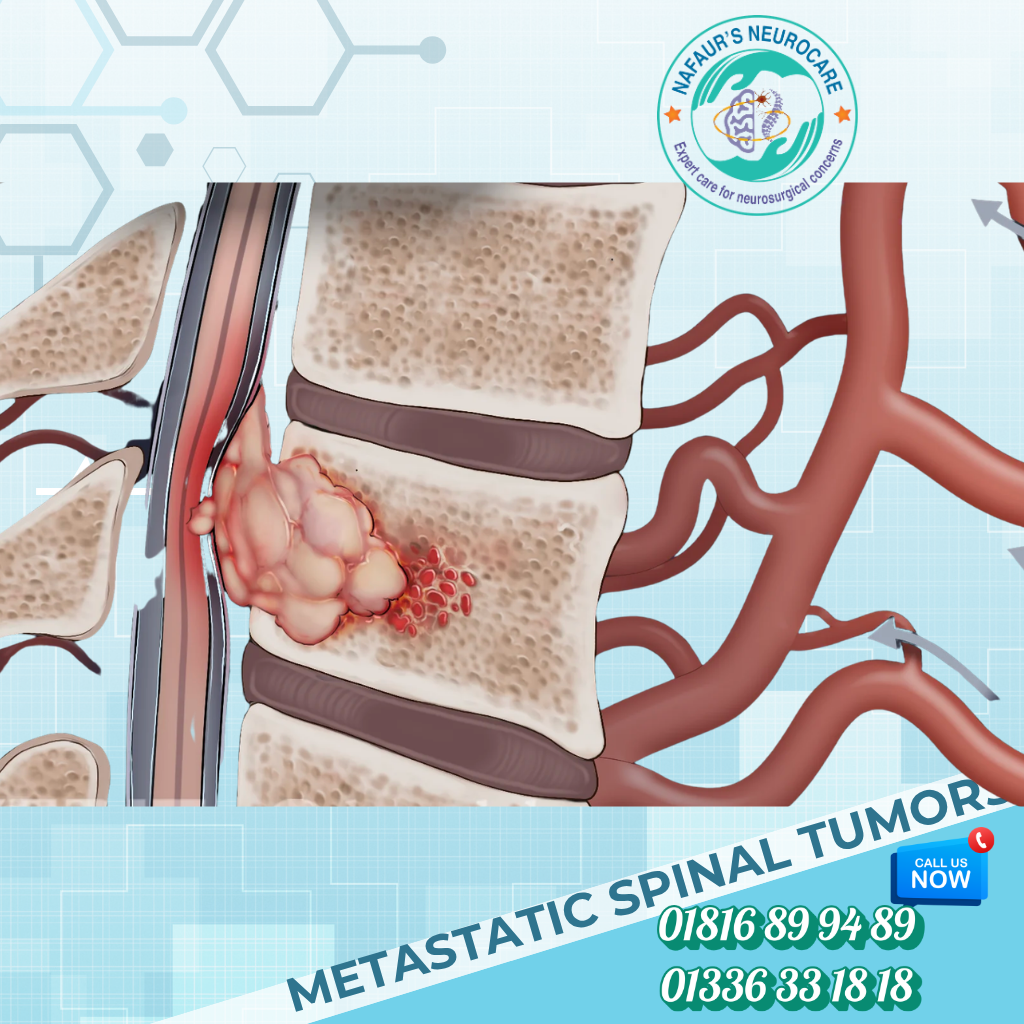
Some tumors arise from the vertebral bones or spinal column. These may cause pain, spinal deformity, neurological compression, instability, or weakness. Evaluation may require imaging, pediatric neurosurgical assessment, orthopedic spine coordination, and oncology support depending on the diagnosis.
Spinal Tumor with Scoliosis
Some children develop scoliosis due to spinal cord tumor, spinal cyst, syringomyelia, nerve-related tumor, or spinal cord compression. A child with scoliosis and back pain, weakness, walking difficulty, bladder-bowel symptoms, or abnormal reflexes should be evaluated carefully.
Spinal Tumor and Spinal Cord Compression
Spinal cord compression is a serious condition where a tumor, cyst, swelling, infection, or bone lesion presses on the spinal cord or nerve roots. This may cause weakness, numbness, walking difficulty, pain, bladder-bowel dysfunction, or permanent neurological deficit if not evaluated in time.
Parents should seek urgent pediatric neurosurgical consultation if a child develops:
Sudden or progressive leg weakness, loss of walking ability, severe back pain, neck pain with weakness, urinary retention, loss of bowel control, numbness, tingling, rapidly worsening scoliosis, or neurological deterioration.
Diagnosis and Imaging of Pediatric Spinal Tumors
Diagnosis of pediatric spinal tumors usually requires careful clinical examination and imaging. MRI spine is commonly the most important investigation for spinal cord tumors and spinal canal lesions. Depending on the child’s symptoms and suspected diagnosis, MRI brain, CT scan, X-ray, neurological examination, bladder-bowel assessment, oncology workup, or other investigations may be required.
At Nafaur’s Neurocare, parents can receive guidance regarding:
MRI spine review, MRI brain review when needed, CT scan review, tumor location explanation, spinal cord compression assessment, neurological deficit evaluation, surgical planning discussion, post-operative follow-up planning, rehabilitation guidance, and referral coordination for oncology or other specialties when required.
Spinal Tumors Clinic Services at Nafaur’s Neurocare
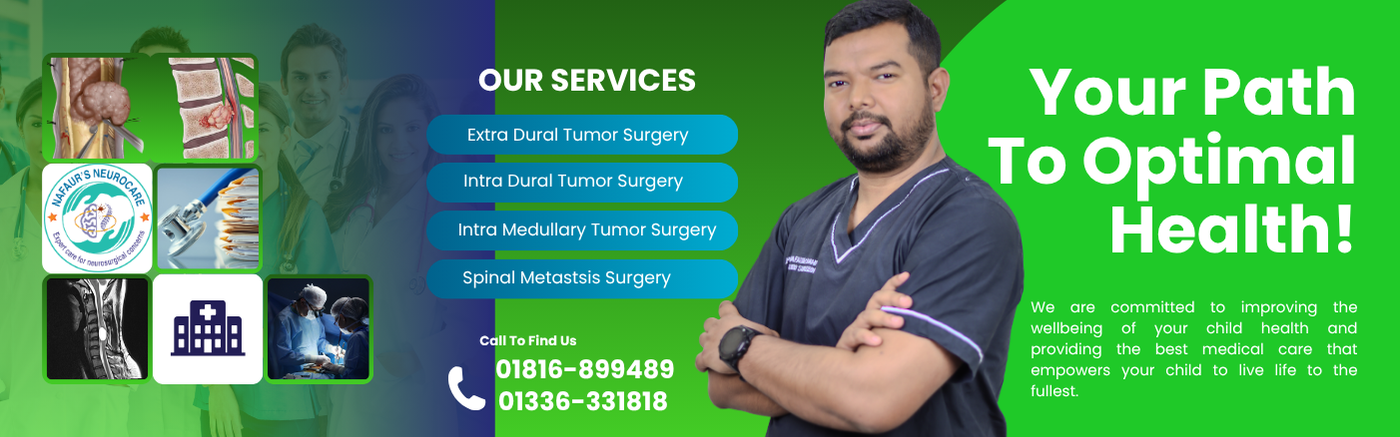
The Spinal Tumors Clinic in Nafaur’s Neurocare provides dedicated pediatric evaluation and follow-up services for children with suspected or diagnosed spinal tumors, spinal cord tumors, spinal cysts, nerve tumors, spine lesions, and spinal cord compression.
Services may include:
Pediatric neurosurgical consultation, pediatric neurological assessment, MRI spine review, CT scan review, MRI brain review when needed, spinal cord compression assessment, neurological deficit evaluation, back pain assessment, neck pain assessment, gait and walking evaluation, bladder-bowel symptom review, scoliosis and spinal deformity assessment, spinal tumor surgery counseling, biopsy guidance when needed, post-operative follow-up planning, oncology referral guidance when required, physiotherapy guidance, rehabilitation planning, developmental assessment, parent counseling, and long-term child neurocare monitoring.
The clinic helps parents understand the diagnosis, tumor location, possible severity, treatment options, surgical timing, risks, expected recovery, need for further treatment, warning signs, and long-term follow-up plan.
Pediatric Spinal Tumor Surgery in Bangladesh
Pediatric spinal tumor surgery is a specialized field of pediatric neurosurgery. The aim of surgery may include tumor removal, biopsy, decompression of the spinal cord, diagnosis confirmation, pain relief, prevention of neurological deterioration, and protection of walking ability, hand function, and bladder-bowel control.
Surgical planning depends on the tumor’s location, size, type, relationship with the spinal cord and nerves, child’s age, neurological condition, and overall health status. Some tumors can be removed completely, while others may require partial removal, biopsy, staged treatment, rehabilitation, or oncology care.
Many parents search for pediatric spinal tumor surgery in Bangladesh, child spinal cord tumor operation Dhaka, spine tumor surgery for children Bangladesh, pediatric neurosurgeon for spinal tumor Bangladesh, and best pediatric spine surgery in Dhaka.
Nafaur’s Neurocare provides counseling and care planning for children who need evaluation for pediatric spinal tumor surgery and long-term follow-up.
Spinal Tumor and Child Development
Spinal tumors may affect a child’s motor development, walking, posture, balance, hand function, bladder-bowel control, pain tolerance, school participation, emotional health, and daily activities. Children may need long-term therapy and rehabilitation before or after treatment.
Some children may need physiotherapy, gait training, developmental therapy, fine motor therapy, orthopedic support, urology referral guidance, nutrition support, psychological support, and school-readiness planning.
Pediatric Neurology Support for Spinal Tumor Patients
Pediatric neurology support is important for children with spinal tumors because they may have weakness, abnormal reflexes, pain, sensory changes, bladder-bowel symptoms, abnormal gait, developmental delay, seizure if associated brain lesion exists, or other neurological conditions. Pediatric neurology follow-up helps monitor neurological function, medicine response, and developmental progress.
Rehabilitation and Physiotherapy After Spinal Tumor
Rehabilitation is very important for children with spinal cord tumor or spinal cord compression. Physiotherapy may help improve strength, balance, walking, flexibility, posture, pain control, and functional independence. Children with weakness may also need gait training, orthotic guidance, fine motor support, and long-term developmental monitoring.
At Nafaur’s Neurocare, allied clinic support helps families plan rehabilitation goals and follow-up.
Post-Operative Follow-Up After Spinal Tumor Surgery
Spinal tumor care does not end after surgery. Children may need long-term follow-up for neurological recovery, recurrence monitoring, MRI follow-up, wound healing, pain control, walking improvement, bladder-bowel function, scoliosis, spinal deformity, school activity, and physical development.
Post-operative follow-up may include:
Neurological examination, MRI spine follow-up planning, pathology report review, physiotherapy planning, rehabilitation progress monitoring, bladder-bowel symptom review, scoliosis monitoring, oncology referral support when required, and developmental assessment.
Nafaur’s Neurocare supports families with long-term pediatric neurocare planning and child-focused follow-up after spinal tumor diagnosis or surgery.
Oncology Referral Support for Selected Spinal Tumors
Some pediatric spinal tumors may require additional care from pediatric oncology, hematology, radiotherapy, chemotherapy, or multidisciplinary teams. This may be needed for malignant tumors, aggressive tumors, spinal metastasis, Ewing sarcoma, high-grade tumors, leukemia-related spinal lesions, or selected recurrent tumors.
Nafaur’s Neurocare helps families understand when oncology referral may be needed and supports follow-up planning with imaging review and long-term neurological monitoring.
Allied Clinic Support at Nafaur’s Neurocare
Nafaur’s Neurocare runs different allied clinics to support children with complex pediatric neurological, neurosurgical, developmental, and rehabilitation needs. Children attending the Spinal Tumors Clinic may benefit from:
Physiotherapy, developmental therapy, fine motor therapy, speech therapy when needed, feeding support guidance, nutrition support, pain-related rehabilitation, psychological support for family, school-readiness assessment, parent counseling, and long-term developmental follow-up.
This integrated approach helps families receive pediatric neurosurgery, pediatric neurology, developmental care, rehabilitation guidance, and allied child neurocare from one dedicated pediatric neurocare platform in Bangladesh.
Why Choose Nafaur’s Neurocare for Spinal Tumors Clinic?
Parents choose Nafaur’s Neurocare because it provides a dedicated pediatric neurocare environment for children with spinal tumors, spinal cord tumors, spinal cysts, back pain, leg weakness, walking difficulty, bladder-bowel dysfunction, scoliosis, developmental delay, and complex neurological conditions.
Key reasons to choose Nafaur’s Neurocare include:
Dedicated pediatric neurology and pediatric neurosurgery services, child-focused spinal tumor evaluation, MRI spine and CT scan report review support, spinal cord compression assessment, weakness and walking difficulty evaluation, bladder-bowel symptom review, scoliosis and spinal deformity assessment, pediatric spine tumor surgery guidance, oncology referral coordination when required, post-operative follow-up planning, developmental monitoring, parent-friendly counseling, physiotherapy and rehabilitation planning, allied clinic support, Bangladesh-focused pediatric neurocare, accessible location in Shyamoli, Dhaka, and easy contact through phone, social media, and Google Map.
Bangladesh Perspective: Early Spinal Tumor Diagnosis Can Protect Nerve Function
In Bangladesh, many children with spinal tumors may first present with back pain, walking difficulty, leg weakness, scoliosis, urinary problems, constipation, or delayed milestone. These symptoms may be mistaken for orthopedic disease, muscle weakness, nutrition problems, or common childhood complaints. Delay in diagnosis may increase the risk of spinal cord damage and long-term disability.
Parents should seek expert pediatric neurocare evaluation if a child has progressive weakness, frequent falling, back pain with neurological symptoms, bladder-bowel dysfunction, spinal swelling, abnormal gait, rapidly worsening scoliosis, or abnormal MRI spine findings.
The Spinal Tumors Clinic in Nafaur’s Neurocare focuses on early detection, imaging review, pediatric neurosurgical assessment, pediatric neurological follow-up, surgery counseling when required, rehabilitation planning, parent education, and long-term child neurocare support in Bangladesh.
Chamber Address
Nafaur’s Neurocare
H # 24/1, Level # 7, Shyamoli Square
Shyamoli Cinema Hall Building, Mirpur Road, Shyamoli
Dhaka – 1207, Bangladesh
Google Map Location
For easy direction and exact location, visit Nafaur’s Neurocare through Google Map:
Google Map:
https://maps.app.goo.gl/zU4EcLt9CS7k2WVL8
Appointment Numbers
For appointment and consultation:
01816899489
01336331818
Social Media Links for Easy Contact
Facebook:
https://www.facebook.com/NafaursNeurocare
Instagram:
https://www.instagram.com/neurocarebd