Epilepsy Clinic in Nafaur’s Neurocare
Dedicated Pediatric Epilepsy, Seizure Disorder, Infantile Spasm, Uncontrolled Seizure, Pediatric Neurology & Pediatric Neurosurgery Services in Bangladesh
Nafaur’s Neurocare is one of the dedicated pediatric neurocare centres in Bangladesh, providing specialized pediatric neurological, pediatric neurosurgical, developmental, rehabilitation, and allied child neurocare services for newborns, infants, children, and adolescents. Through its Pediatric Neurosurgical and Neurological Clinic, Epilepsy Clinic, Neuro Development Clinic, Hydrocephalus Clinic, Brain Tumors Clinic, CNS Infection Clinic, Neurotrauma Clinic, Cerebral Palsy Clinic, and allied child neurocare services, Nafaur’s Neurocare provides focused evaluation and care for children with epilepsy, seizure disorder, febrile seizure, neonatal seizure, infantile spasm, focal seizure, generalized seizure, absence seizure, uncontrolled epilepsy, drug-resistant epilepsy, seizure due to brain lesion, seizure after head injury, seizure after brain infection, developmental delay with seizure, and other complex pediatric neurological conditions.
The Epilepsy Clinic in Nafaur’s Neurocare is specially designed for babies and children who have recurrent seizures, convulsion, sudden unconsciousness, staring spells, jerking movements, abnormal eye movement, body stiffening, sudden falls, seizure during sleep, seizure with fever, neonatal seizure, infantile spasm, developmental regression, learning difficulty, behavioral changes, or suspected epilepsy.
Many parents in Bangladesh search for pediatric epilepsy treatment in Bangladesh, epilepsy clinic in Dhaka, child seizure treatment Bangladesh, pediatric neurologist for epilepsy, pediatric neurosurgeon for epilepsy, infantile spasm treatment in Bangladesh, febrile seizure treatment Dhaka, uncontrolled epilepsy treatment Bangladesh, drug-resistant epilepsy child Dhaka, epilepsy surgery evaluation Bangladesh, and best pediatric neurocare centre in Bangladesh. Nafaur’s Neurocare aims to provide dedicated evaluation, seizure diagnosis support, EEG and MRI report review, pediatric neurology guidance, pediatric neurosurgical evaluation when required, developmental assessment, parent counseling, rehabilitation support, and long-term child neurocare planning.
What is Pediatric Epilepsy?
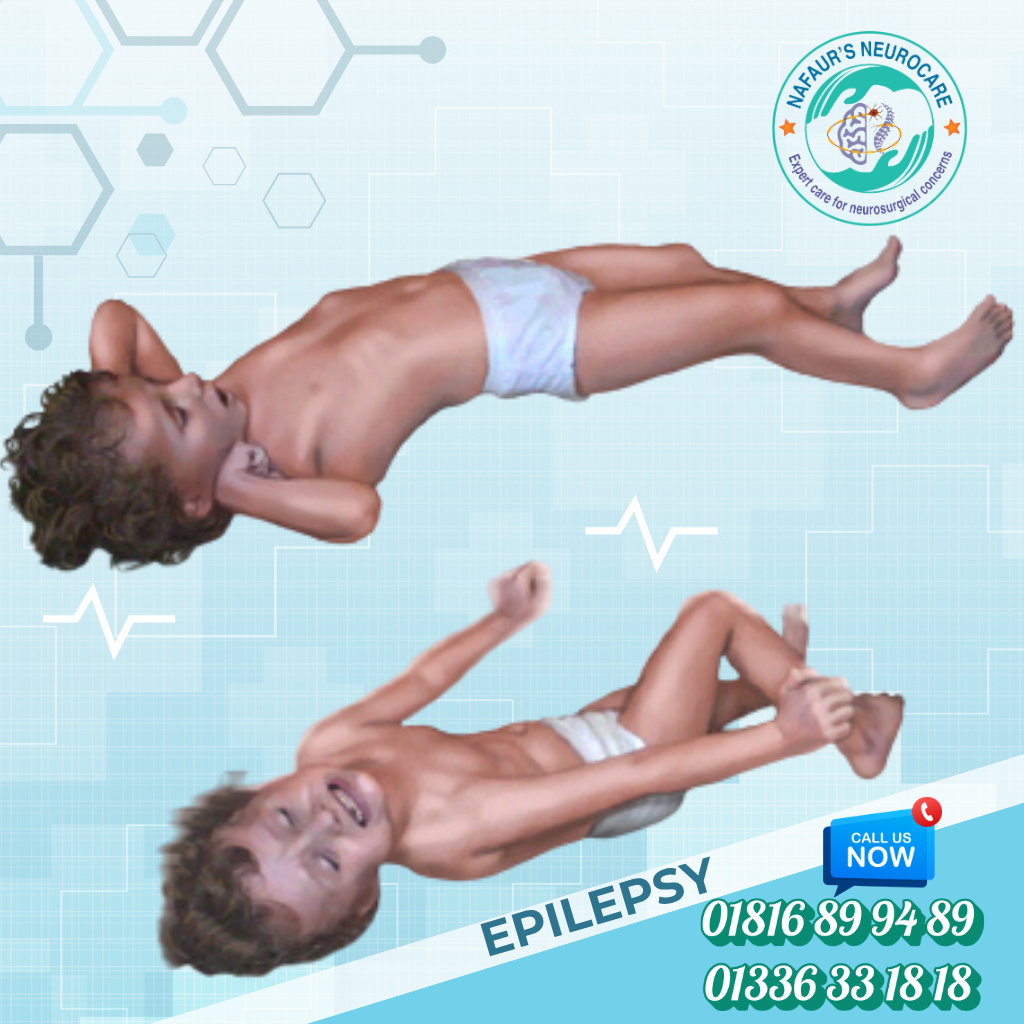
Epilepsy is a neurological condition where a child has repeated seizures due to abnormal electrical activity in the brain. A seizure may appear as shaking of the whole body, jerking of one side, sudden staring, loss of awareness, unusual behavior, repeated blinking, sudden fall, stiffening of the body, abnormal eye movement, lip smacking, sudden fear, confusion, or brief episodes of unresponsiveness.
Pediatric epilepsy is different from adult epilepsy because the child’s brain is still developing. Seizures can affect learning, speech, behavior, sleep, memory, motor development, school performance, and overall quality of life. Some children have mild and controllable epilepsy, while others may have complex epilepsy associated with brain malformation, hydrocephalus, brain tumor, stroke, infection, trauma, cerebral palsy, autism, or developmental delay.
Early diagnosis and proper treatment are important to reduce seizure frequency, prevent injury, support brain development, and improve long-term outcomes.
Common Symptoms of Seizure and Epilepsy in Children
Parents should consult an epilepsy clinic or pediatric neurocare clinic if a child has:
Repeated seizure, sudden loss of consciousness, body shaking, jerking of hand or leg, stiffening of body, eye rolling, staring spells, sudden fall, repeated blinking, lip smacking, abnormal behavior episodes, sudden confusion, speech arrest, abnormal sleep movements, seizure during fever, seizure during sleep, developmental regression, poor school performance, memory difficulty, headache with seizure, vomiting with seizure, weakness after seizure, repeated unexplained episodes, or seizure-like abnormal movements.
In babies, seizure may appear as repeated jerking, eye deviation, stiffening, lip smacking, cycling movement of legs, sudden pause in breathing, abnormal crying, poor feeding, repeated spasms, or unusual episodes that parents may not initially recognize as seizure.
Common Types of Pediatric Seizure and Epilepsy Evaluated at Nafaur’s Neurocare
Febrile Seizure
Febrile seizure is a seizure associated with fever, commonly seen in young children. Many febrile seizures are brief, but parents should seek medical evaluation if the seizure is prolonged, repeated, focal, associated with poor recovery, occurs in a very young infant, or happens with neck stiffness, drowsiness, or signs of serious infection.
Neonatal Seizure
Neonatal seizure occurs in newborn babies and may be caused by birth injury, low oxygen at birth, brain bleeding, infection, metabolic problem, stroke, congenital brain malformation, or other serious conditions. Newborn seizures may be subtle and need urgent expert evaluation.
Infantile Spasm / West Syndrome
Infantile spasm is a serious seizure disorder in babies. It may appear as sudden bending, stiffening, head nodding, or repeated brief spasms, often occurring in clusters. It may be associated with developmental delay or developmental regression and requires urgent pediatric neurology evaluation.
Parents should seek immediate consultation if a baby has repeated sudden spasms, loss of eye contact, reduced smiling, developmental delay, or loss of previously achieved skills.
Focal Seizure
Focal seizure starts from one area of the brain. A child may have jerking of one limb, abnormal sensation, staring, confusion, abnormal behavior, speech arrest, facial twitching, eye deviation, or weakness after seizure. Focal seizures may be related to brain lesions, cortical malformation, tumor, stroke, infection, trauma, or unknown causes.
Generalized Seizure
Generalized seizure involves both sides of the brain. It may cause whole-body jerking, stiffening, loss of consciousness, fall, tongue bite, breathing difficulty, or repeated convulsive episodes. Children with generalized epilepsy need proper diagnosis, regular treatment, and follow-up.
Absence Seizure
Absence seizure may look like brief staring spells. The child may suddenly stop activity, stare blankly, and then return to normal within seconds. It can be mistaken for daydreaming, inattentiveness, or lack of interest in study. If untreated, absence seizure may affect school performance and learning.
Myoclonic Seizure
Myoclonic seizures are sudden brief jerks of the body, arms, legs, or head. They may occur after waking, during sleep transition, or in clusters. Some myoclonic seizures are part of specific epilepsy syndromes and need careful diagnosis.
Atonic Seizure / Drop Attack
Atonic seizure causes sudden loss of muscle tone, leading to sudden falls or head drops. These seizures can cause injury and may be associated with complex epilepsy syndromes. Children with repeated sudden falls need pediatric epilepsy evaluation.
Uncontrolled Epilepsy / Drug-Resistant Epilepsy
Some children continue to have seizures despite regular and appropriate medicine. This may be called uncontrolled epilepsy, refractory epilepsy, or drug-resistant epilepsy. These children may need detailed evaluation, MRI brain review, EEG review, medicine optimization, metabolic or genetic consideration, epilepsy surgery evaluation, diet-based therapy consideration, and long-term specialized care.
Common Causes of Epilepsy and Seizure in Children
Epilepsy in children may have many causes. Some children have epilepsy without a clear structural brain problem, while others have seizures due to identifiable neurological conditions.
Common causes may include:
Fever-related seizure, birth injury, low oxygen at birth, neonatal infection, meningitis, encephalitis, brain abscess, hydrocephalus, brain tumor, cortical malformation, congenital brain abnormality, stroke, Moyamoya disease, vascular malformation, head injury, genetic epilepsy syndrome, metabolic disorder, developmental brain disorder, neurocutaneous syndrome, cerebral palsy, autism-related epilepsy, post-infective brain scarring, post-traumatic brain lesion, or unknown cause.
At Nafaur’s Neurocare, evaluation is planned according to the child’s age, seizure pattern, developmental history, neurological findings, EEG report, MRI findings, and associated medical conditions.

Epilepsy Clinic Services at Nafaur’s Neurocare
The Epilepsy Clinic in Nafaur’s Neurocare provides dedicated pediatric seizure and epilepsy evaluation services for babies, children, and adolescents with simple, complex, recurrent, or uncontrolled seizures.
Services may include:
Pediatric neurology consultation, pediatric neurosurgical consultation when required, seizure history evaluation, seizure type classification, developmental assessment, neurological examination, EEG report review, MRI brain review, CT scan review when needed, seizure medicine follow-up guidance, epilepsy due to brain lesion evaluation, uncontrolled epilepsy assessment, drug-resistant epilepsy review, epilepsy surgery counseling for selected cases, seizure after head injury evaluation, seizure after brain infection follow-up, seizure due to brain tumor assessment, seizure with hydrocephalus evaluation, neonatal seizure assessment, infantile spasm evaluation, rehabilitation planning, parent counseling, and allied clinic coordination.
The clinic helps parents understand the type of seizure, possible cause, warning signs, investigation needs, treatment options, medicine compliance, emergency seizure care, developmental impact, school issues, and long-term follow-up plan.
EEG and MRI Review for Pediatric Epilepsy
EEG and MRI are important tools in epilepsy evaluation, depending on the child’s seizure type and clinical condition. EEG helps assess abnormal electrical activity in the brain. MRI brain helps identify structural causes such as cortical dysplasia, brain tumor, stroke scar, hydrocephalus, infection-related lesion, congenital brain malformation, or other brain abnormalities.
At Nafaur’s Neurocare, parents can receive guidance regarding:
EEG report interpretation, MRI brain review, CT scan review, seizure type understanding, brain lesion-related epilepsy, uncontrolled seizure assessment, and need for further pediatric neurology or pediatric neurosurgery evaluation.
Epilepsy and Pediatric Neurosurgery
Most children with epilepsy are managed medically through pediatric neurology care. However, some seizures are caused by structural brain lesions or become drug-resistant. In selected cases, pediatric neurosurgical evaluation may be important.
Neurosurgical evaluation may be considered for epilepsy related to:
Brain tumor, cortical dysplasia, cavernoma, AVM, hydrocephalus, post-traumatic brain lesion, post-infective brain scarring, congenital brain malformation, temporal lobe epilepsy, and selected drug-resistant epilepsy cases.
Parents searching for pediatric epilepsy surgery evaluation in Bangladesh, epilepsy due to brain lesion treatment Dhaka, pediatric neurosurgeon for epilepsy Bangladesh, seizure surgery consultation in children, and brain lesion epilepsy treatment Bangladesh can consult Nafaur’s Neurocare for proper assessment and guidance.
Epilepsy Due to Brain Tumor, Hydrocephalus or Brain Lesion
Some children develop seizure because of an underlying brain condition such as brain tumor, hydrocephalus, cerebral cyst, cortical malformation, vascular lesion, previous infection, or trauma. These children need careful imaging review and combined pediatric neurology and pediatric neurosurgery planning.
At Nafaur’s Neurocare, children with seizure and abnormal MRI or CT scan findings can receive focused evaluation and counseling about treatment options, follow-up needs, surgical considerations, and long-term neurological care.
Seizure After CNS Infection
Children may develop seizure after meningitis, encephalitis, brain abscess, TB meningitis, subdural empyema, ventriculitis, or other central nervous system infections. Some children may need long-term anti-seizure treatment, developmental follow-up, rehabilitation, and monitoring for hydrocephalus or brain injury.
Seizure After Head Injury
Post-traumatic seizure may occur after child head injury, skull fracture, brain bleeding, brain contusion, or severe traumatic brain injury. Children with seizure after head injury need pediatric neurology and neurosurgical follow-up.
Epilepsy and Child Development
Epilepsy may affect a child’s development in many ways. Frequent seizures, uncontrolled epilepsy, sleep disturbance, medication side effects, underlying brain disorders, developmental delay, and learning difficulty can affect speech, memory, behavior, attention, school performance, and social development.
Children with epilepsy may need developmental assessment, speech therapy, fine motor therapy, physiotherapy, psychological support, educational guidance, and long-term follow-up.
Nafaur’s Neurocare provides allied clinic support to help families manage the broader developmental needs of children with epilepsy.
Epilepsy and Autism / ADHD / Learning Difficulty
Some children with epilepsy may also have autism spectrum concerns, ADHD-like attention problems, learning difficulty, behavior concerns, or speech delay. These children may need a broader neurodevelopmental assessment beyond seizure control alone.
Nafaur’s Neurocare supports children through Epilepsy Clinic, Autism Clinic, ADHD Clinic, Neuro Development Clinic, and allied therapy services when needed.
Emergency Seizure Care Awareness for Parents
Parents should seek urgent medical care if:
A seizure lasts more than a few minutes, seizures repeat without full recovery, the child remains unconscious, breathing becomes difficult, seizure occurs after head injury, seizure occurs with high fever and neck stiffness, seizure happens in a newborn baby, the child has weakness after seizure, or the seizure pattern is new and severe.
During seizure, parents should keep the child safe, turn the child gently to one side, move sharp objects away, avoid putting anything inside the mouth, and seek emergency care when warning signs are present.
Long-Term Follow-Up for Pediatric Epilepsy
Epilepsy care needs regular follow-up. Many children require monitoring of seizure frequency, medicine response, side effects, sleep, behavior, development, school performance, EEG or MRI reports, and emergency planning. Stopping or changing seizure medicine without medical advice may be dangerous.
Long-term follow-up may include:
Seizure diary review, medicine adjustment guidance, developmental assessment, school performance monitoring, EEG report review, MRI report review when needed, epilepsy surgery evaluation in selected cases, parent education, and rehabilitation or therapy planning.
Nafaur’s Neurocare supports families with long-term seizure care planning, pediatric neurology follow-up, pediatric neurosurgical evaluation when required, and allied clinic support for development and rehabilitation.
Rehabilitation and Allied Clinic Support
Nafaur’s Neurocare runs different allied clinics to support children with epilepsy and complex pediatric neurological conditions. Children attending the Epilepsy Clinic may benefit from:
Developmental therapy, speech therapy, fine motor therapy, physiotherapy, nutrition support, psychological support, learning support guidance, school-readiness assessment, behavior support, rehabilitation guidance, parent counseling, and long-term developmental monitoring.
This integrated approach helps families receive pediatric neurology, pediatric neurosurgery, developmental support, rehabilitation guidance, and allied child neurocare from one dedicated pediatric neurocare platform in Bangladesh.
Why Choose Nafaur’s Neurocare for Epilepsy Clinic?
Parents choose Nafaur’s Neurocare because it provides a dedicated pediatric neurocare environment for children with epilepsy, seizure disorder, infantile spasm, neonatal seizure, uncontrolled epilepsy, developmental delay, brain lesion, hydrocephalus, brain tumor, CNS infection, neurotrauma, autism, ADHD, cerebral palsy, and complex neurological conditions.
Key reasons to choose Nafaur’s Neurocare include:
Dedicated pediatric neurology and pediatric neurosurgery services, child-focused seizure evaluation, EEG and MRI report review support, uncontrolled epilepsy assessment, drug-resistant epilepsy guidance, epilepsy due to brain lesion evaluation, seizure after infection and trauma follow-up, neonatal seizure and infantile spasm assessment, epilepsy surgery evaluation in selected cases, developmental monitoring, parent-friendly counseling, rehabilitation planning, allied clinic support, Bangladesh-focused pediatric neurocare, accessible location in Shyamoli, Dhaka, and easy contact through phone, social media, and Google Map.
Bangladesh Perspective: Early Epilepsy Diagnosis Can Improve a Child’s Future
In Bangladesh, many children with seizure disorder are brought late because parents may think seizure is caused only by fever, weakness, fear, spiritual causes, or temporary childhood problems. Some children with staring spells, absence seizure, infantile spasm, or subtle seizures may remain undiagnosed for a long time, affecting development and school performance.
Parents should seek pediatric neurology evaluation if a child has repeated seizures, staring spells, abnormal movements, loss of consciousness, seizure during sleep, developmental delay, developmental regression, poor school performance, or abnormal EEG/MRI findings.
Early diagnosis, regular treatment, medicine compliance, proper investigation, pediatric neurology follow-up, and pediatric neurosurgical evaluation when needed can help many children live better, safer, and more active lives.
Chamber Address
Nafaur’s Neurocare
H # 24/1, Level # 7, Shyamoli Square
Shyamoli Cinema Hall Building, Mirpur Road, Shyamoli
Dhaka – 1207, Bangladesh
Google Map Location
For easy direction and exact location, visit Nafaur’s Neurocare through Google Map:
Google Map:
https://maps.app.goo.gl/zU4EcLt9CS7k2WVL8
Appointment Numbers
For appointment and consultation:
01816899489
01336331818
Social Media Links for Easy Contact
Facebook:
https://www.facebook.com/NafaursNeurocare
Instagram:
https://www.instagram.com/neurocarebd