Spinal Dysraphism Treatment in Nafaur’s Neurocare
Best Pediatric Neurocare Centre in Bangladesh for Spina Bifida, Myelomeningocele, Lipomyelomeningocele & Tethered Cord Care
Nafaur’s Neurocare is one of the best pediatric neurocare centres in Bangladesh, providing specialized neurological and neurosurgical services for newborn babies, infants, children, and adolescents. With a patient-focused approach, expert clinical evaluation, child-friendly care, and advanced pediatric neurosurgical guidance, Nafaur’s Neurocare is renowned for serving Bangladeshi patients with complex brain, spine, skull, nerve, and developmental neurological conditions.
Among the important pediatric neurosurgical conditions treated at Nafaur’s Neurocare, Spinal Dysraphism is a major area of expertise. Spinal Dysraphism includes a group of congenital spine and spinal cord defects that may affect a child’s movement, sensation, bladder control, bowel function, walking ability, spine growth, and long-term development. Early diagnosis and proper treatment are essential to protect the child’s neurological function and quality of life.
Parents in Bangladesh often search online for Spinal Dysraphism treatment in Bangladesh, Spinal Dysraphism surgery in Dhaka, Spina Bifida treatment Bangladesh, Myelomeningocele treatment in Bangladesh, Lipomyelomeningocele surgery Bangladesh, Tethered Cord Syndrome treatment Bangladesh, closed spinal dysraphism treatment, pediatric spine surgery Bangladesh, and best pediatric neurocare centre in Bangladesh. For Bangladeshi families looking for expert care, Nafaur’s Neurocare provides comprehensive evaluation, treatment planning, surgery guidance, follow-up care, and family counseling for children with Spinal Dysraphism.
What is Spinal Dysraphism?
Spinal Dysraphism is a broad medical term used for congenital abnormalities where the spine, spinal cord, nerve roots, or surrounding tissues do not develop properly during pregnancy. These conditions occur due to incomplete closure or abnormal development of the neural tube, which later forms the brain and spinal cord.
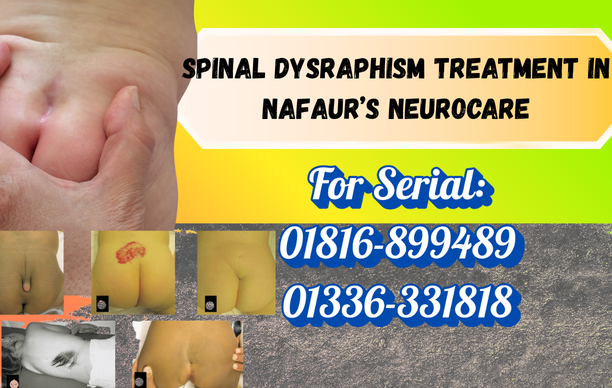
Spinal Dysraphism may be visible at birth, or it may remain hidden under the skin and become noticeable later in childhood. Some babies are born with an open swelling on the back, while others may have only a dimple, hairy patch, skin discoloration, fatty lump, abnormal birthmark, or foot deformity. In some children, the first symptoms may be delayed walking, leg weakness, urinary dribbling, repeated urinary infection, constipation, back pain, scoliosis, or worsening walking difficulty.
Because Spinal Dysraphism can involve the spinal cord and nerves, expert pediatric neurosurgical evaluation is very important.
Why Spinal Dysraphism Treatment is Important in Bangladesh
In Bangladesh, many children with Spinal Dysraphism may reach specialist care late because of lack of awareness, delayed referral, limited access to pediatric neurosurgical services, or misunderstanding of early warning signs. A small dimple on the back, a fatty swelling, a hairy patch, or a skin-covered lump may look harmless, but in some children it may indicate an underlying spinal cord problem.
Untreated Spinal Dysraphism may lead to serious complications, including:
Progressive leg weakness, foot deformity, difficulty walking, bladder and bowel dysfunction, recurrent urinary tract infection, kidney damage, spinal deformity, scoliosis, tethered cord syndrome, CSF leakage, meningitis, neurological deterioration, developmental delay, and long-term disability.
Early evaluation at a dedicated pediatric neurocare centre can help identify the type of Spinal Dysraphism, assess neurological risk, plan appropriate treatment, and guide long-term follow-up.
Types of Spinal Dysraphism Treated at Nafaur’s Neurocare
Spinal Dysraphism may be open or closed. Nafaur’s Neurocare provides evaluation and treatment guidance for different types of pediatric spinal dysraphism.
1. Open Spinal Dysraphism
Open Spinal Dysraphism is usually visible at birth. It may involve exposure of spinal cord, nerves, or protective coverings through an opening in the spine. These conditions often need urgent pediatric neurosurgical evaluation.
2. Myelomeningocele
Myelomeningocele is one of the most serious forms of Spina Bifida and Spinal Dysraphism. In this condition, part of the spinal cord, nerve roots, and protective coverings come out through a spinal defect. It may appear as a swelling or sac on the baby’s back.
Myelomeningocele may be ruptured or non-ruptured. A ruptured Myelomeningocele is a pediatric neurosurgical emergency because it can cause CSF leakage, infection, meningitis, and neurological deterioration. Early expert care is essential.
3. Meningocele
In Meningocele, the protective covering of the spinal cord comes out through a defect in the spine, forming a sac. The spinal cord may remain inside the spinal canal, but the child still needs specialist evaluation and treatment planning.
4. Closed Spinal Dysraphism
Closed Spinal Dysraphism may be covered by skin and may not be recognized immediately after birth. It can still cause serious neurological problems as the child grows.
5. Lipomyelomeningocele
Lipomyelomeningocele is a closed spinal dysraphism where fatty tissue is attached to the spinal cord. It may appear as a skin-covered fatty lump or swelling over the lower back. As the child grows, the spinal cord may become stretched, causing tethered cord syndrome.
6. Spina Bifida Occulta
Spina Bifida Occulta is a hidden form of Spina Bifida. Some children may have no symptoms, while others may show skin markers such as a dimple, hairy patch, skin tag, abnormal pigmentation, birthmark, or fatty swelling. Proper evaluation is important to rule out underlying spinal cord tethering.
7. Tethered Cord Syndrome
Tethered Cord Syndrome occurs when the spinal cord is abnormally attached and stretched. It may be associated with Lipomyelomeningocele, thickened filum terminale, fatty filum, dermal sinus tract, split cord malformation, or previous spinal surgery.
Symptoms may include leg weakness, back pain, leg pain, delayed walking, toe walking, scoliosis, foot deformity, urinary dribbling, recurrent urinary tract infection, constipation, and worsening neurological function.
8. Thickened Filum Terminale and Fatty Filum
A thickened or fatty filum terminale can tether the spinal cord and cause neurological symptoms. Children may require MRI evaluation and expert pediatric neurosurgical decision-making.
9. Split Cord Malformation
Split Cord Malformation is a congenital condition where the spinal cord is divided into two parts. It may be associated with bony or fibrous bands, spinal deformity, tethered cord, leg weakness, scoliosis, and bladder-bowel problems.
10. Dermal Sinus Tract
A dermal sinus tract may appear as a small opening, pit, or dimple on the back. Some dermal sinus tracts may extend deep toward the spinal canal and can cause infection, meningitis, spinal abscess, dermoid cyst, epidermoid cyst, or neurological complications. Early assessment is very important.
Common Signs and Symptoms of Spinal Dysraphism
Parents should seek expert pediatric neurocare consultation if their child has any of the following signs:
Swelling on the back from birth, open spinal sac, ruptured sac, CSF leakage, skin-covered fatty lump, dimple over the spine, hairy patch, skin tag, abnormal birthmark, dark discoloration over the back, abnormal crease, clubfoot, foot deformity, unequal leg movement, leg weakness, delayed walking, toe walking, frequent falls, back pain, leg pain, scoliosis, urinary dribbling, recurrent urinary tract infection, constipation, bowel control problem, enlarged head, Hydrocephalus, developmental delay, or MRI showing spinal dysraphism.
Early diagnosis can help reduce complications and support better long-term outcomes.
Spinal Dysraphism Treatment Services in Nafaur’s Neurocare
Nafaur’s Neurocare provides comprehensive pediatric neurocare support for children with Spinal Dysraphism. The focus is on proper diagnosis, parent counseling, neurosurgical treatment planning, long-term monitoring, and rehabilitation guidance.
Newborn Spinal Defect Evaluation
Newborn babies with swelling on the back, open spinal defect, ruptured Myelomeningocele, Meningocele, or suspected Spina Bifida need early evaluation. The child is assessed for neurological status, leg movement, infection risk, CSF leakage, bladder-bowel function, head size, and associated Hydrocephalus.
Ruptured Myelomeningocele Emergency Guidance
A ruptured Myelomeningocele needs urgent attention. Parents are advised about safe handling, infection prevention, and early pediatric neurosurgical care. Immediate specialist evaluation is important to reduce the risk of meningitis and neurological deterioration.
MRI-Based Diagnosis and Treatment Planning
MRI of the spine is very important for diagnosing closed Spinal Dysraphism, Lipomyelomeningocele, tethered cord, thickened filum, split cord malformation, dermal sinus tract, and spinal lipoma. MRI helps identify the relationship between the spinal cord, nerve roots, lipoma, bony defect, and surrounding tissues.
Myelomeningocele Surgery Guidance
Myelomeningocele treatment usually involves surgical repair to close the spinal defect, protect the spinal cord and nerves, reduce infection risk, and prevent CSF leakage. Parents receive counseling about surgery, wound care, neurological outcome, Hydrocephalus monitoring, and long-term follow-up.
Lipomyelomeningocele and Tethered Cord Treatment Guidance
Children with Lipomyelomeningocele and tethered cord may require careful surgical planning. The goal of surgery may be to release tethering, protect nerve function, reduce future neurological deterioration, and support better long-term mobility and bladder-bowel function.
Hydrocephalus Assessment
Many children with Myelomeningocele and Spina Bifida may also develop Hydrocephalus. Parents may notice increasing head size, bulging fontanelle, poor feeding, vomiting, irritability, abnormal eye movement, or sleepiness. Nafaur’s Neurocare provides evaluation and treatment guidance for Hydrocephalus associated with Spinal Dysraphism.
VP Shunt Follow-Up
Children with Spinal Dysraphism and Hydrocephalus may require VP shunt surgery. Follow-up is important to detect shunt blockage, infection, fever, vomiting, drowsiness, irritability, swelling along the shunt track, or return of previous symptoms.
Bladder and Bowel Care Guidance
Spinal Dysraphism can affect the nerves controlling bladder and bowel function. Children may have urinary dribbling, recurrent urinary tract infection, poor bladder emptying, constipation, or bowel control difficulty. Long-term bladder-bowel monitoring is important to protect kidney health and improve quality of life.
Physiotherapy and Rehabilitation Support
Some children with Spinal Dysraphism need physiotherapy, mobility support, orthotic guidance, developmental therapy, orthopedic evaluation, and long-term rehabilitation. The goal is to improve strength, posture, walking ability, independence, and overall development.
Long-Term Pediatric Neurocare Follow-Up
Spinal Dysraphism is not only a one-time surgical problem. Children need regular follow-up during growth to monitor leg function, walking, spine alignment, bladder-bowel function, Hydrocephalus, tethered cord symptoms, development, and school performance.
Spinal Dysraphism Surgery in Bangladesh
Spinal Dysraphism surgery depends on the type of defect, child’s age, neurological condition, MRI findings, infection status, Hydrocephalus, and bladder-bowel involvement. Surgery may be urgent, early, or planned depending on the condition.
The goals of surgery may include:
Closing an open spinal defect, protecting exposed neural tissue, reducing infection risk, stopping CSF leakage, repairing spinal coverings, releasing tethered cord, safely reducing spinal lipoma when appropriate, preserving nerve function, preventing neurological deterioration, and supporting better long-term development.
Parents searching for Spinal Dysraphism surgery in Bangladesh, pediatric spine surgery in Dhaka, Spina Bifida surgery Bangladesh, Myelomeningocele repair Bangladesh, Lipomyelomeningocele surgery Bangladesh, or tethered cord surgery in Bangladesh can visit Nafaur’s Neurocare for expert pediatric neurosurgical evaluation and treatment guidance.
Spinal Dysraphism and Hydrocephalus
Hydrocephalus is commonly associated with Myelomeningocele and other congenital brain-spine conditions. Children with Hydrocephalus may need careful monitoring, VP shunt treatment, or other CSF diversion procedures depending on clinical findings.
Warning signs of Hydrocephalus include:
Increasing head size, bulging fontanelle, vomiting, poor feeding, irritability, sleepiness, sunset eye sign, seizures, and delayed milestones.
At Nafaur’s Neurocare, children with Spinal Dysraphism are assessed not only for spinal defects but also for associated brain conditions such as Hydrocephalus and Chiari malformation.
Spinal Dysraphism and Tethered Cord Syndrome
Tethered Cord Syndrome is one of the most important long-term concerns in children with Spinal Dysraphism. The spinal cord may become stretched as the child grows, causing progressive neurological symptoms.
Warning signs include:
New leg weakness, worsening walking, increasing foot deformity, back pain, leg pain, scoliosis, bladder control changes, recurrent urinary infection, constipation, or loss of previously achieved function.
Early evaluation and follow-up can help detect tethered cord symptoms before severe neurological damage occurs.
Long-Term Follow-Up After Spinal Dysraphism Treatment
Children treated for Spinal Dysraphism need long-term follow-up. Even after surgery, symptoms can change during growth. Regular monitoring helps detect complications early.
Follow-up may include:
Head circumference monitoring, Hydrocephalus evaluation, VP shunt review, wound healing assessment, leg power examination, sensory assessment, walking evaluation, foot deformity monitoring, spine alignment check, scoliosis evaluation, bladder-bowel function review, urinary infection history, developmental milestone assessment, school performance monitoring, pain evaluation, tethered cord symptom review, and rehabilitation planning.
The goal is to support the child’s best possible neurological function, mobility, development, independence, and quality of life.
Why Choose Nafaur’s Neurocare for Spinal Dysraphism Treatment?
Bangladeshi parents choose Nafaur’s Neurocare because it provides specialized pediatric neurocare services for complex brain and spine conditions. Spinal Dysraphism requires careful diagnosis, expert pediatric neurosurgical evaluation, and long-term planning.
Key reasons to choose Nafaur’s Neurocare:
Dedicated pediatric neurocare approach
Children need specialized care, clear communication, and age-appropriate treatment planning. Nafaur’s Neurocare provides child-focused neurocare for pediatric brain, spine, skull, and nerve conditions.
Expert care for neurosurgical concerns
Spinal Dysraphism, Myelomeningocele, Lipomyelomeningocele, Spina Bifida, and tethered cord need expert pediatric neurosurgical evaluation and treatment guidance.
Comprehensive care for Bangladeshi patients
Nafaur’s Neurocare supports families with diagnosis, counseling, imaging review, surgical planning, Hydrocephalus assessment, VP shunt follow-up, bladder-bowel guidance, rehabilitation advice, and long-term follow-up.
Bangladesh-focused awareness and early diagnosis
The centre understands the challenges of Bangladeshi families, including delayed diagnosis, lack of awareness, referral difficulties, and the need for practical parent education.
Care for complex pediatric neurological diseases
Nafaur’s Neurocare provides services for Spinal Dysraphism, Spina Bifida, Myelomeningocele, Lipomyelomeningocele, Tethered Cord Syndrome, Hydrocephalus, Encephalocele, Craniosynostosis, Pediatric Brain Tumor, Pediatric Spine Disease, Epilepsy, Cerebral Palsy, Developmental Delay, and other pediatric neurocare conditions.
Bangladesh Perspective: Why Awareness About Spinal Dysraphism Matters
In Bangladesh, awareness about Spinal Dysraphism is very important. A newborn with a back swelling should be evaluated urgently. A child with a skin-covered lump, spinal dimple, hairy patch, urinary problem, walking difficulty, or leg weakness should not be ignored.
Early pregnancy care, folic acid awareness, antenatal ultrasonography, newborn examination, early referral, and pediatric neurosurgical follow-up can help reduce complications. Timely diagnosis and proper treatment can protect the child’s spinal cord, nerves, bladder-bowel function, mobility, and development.
Nafaur’s Neurocare aims to provide expert, compassionate, and accessible pediatric neurocare services for Bangladeshi children with Spinal Dysraphism and related congenital spine disorders.
When Should Parents Visit Nafaur’s Neurocare?
Parents should visit Nafaur’s Neurocare if their newborn baby or child has:
Back swelling from birth, open spinal defect, ruptured spinal sac, CSF leakage, suspected Spina Bifida, Myelomeningocele, Meningocele, Lipomyelomeningocele, fatty lump on the back, dimple over the spine, hairy patch, skin tag, abnormal birthmark, leg weakness, poor leg movement, delayed walking, clubfoot, toe walking, scoliosis, back pain, leg pain, urinary dribbling, recurrent urinary infection, constipation, enlarged head, Hydrocephalus, VP shunt concern, delayed milestones, or MRI showing tethered cord or spinal dysraphism.
Early consultation can help reduce complications and support better long-term outcomes.
Chamber Address
Nafaur’s Neurocare
H # 24/1, Level # 7, Shyamoli Square
Shyamoli Cinema Hall Building, Mirpur Road, Shyamoli
Dhaka – 1207, Bangladesh
Google Map Location:
https://maps.app.goo.gl/9NM8HQHS3y9Z3C3eA
Appointment / Contact
For appointment and serial:
01816899489
01336331818
Social Media Links of Nafaur’s Neurocare
Facebook:
https://www.facebook.com/NafaursNeurocare
Instagram:
https://www.instagram.com/neurocarebd
TikTok:
https://www.tiktok.com/@nafaurs.neurocare
YouTube:
https://youtube.com/@nafaursneurocare
Conclusion
Spinal Dysraphism is a complex congenital spine and spinal cord condition that can affect a child’s leg movement, bladder-bowel control, walking ability, spine growth, neurological development, and long-term quality of life. Early diagnosis, expert pediatric neurosurgical evaluation, proper imaging, timely treatment planning, and long-term follow-up are essential for better outcomes.
Nafaur’s Neurocare is one of the best pediatric neurocare centres in Bangladesh, providing specialized care for Bangladeshi children with Spinal Dysraphism, Spina Bifida, Myelomeningocele, Lipomyelomeningocele, Tethered Cord Syndrome, spinal lipoma, Hydrocephalus, and congenital brain and spine disorders. For parents searching for Spinal Dysraphism treatment in Bangladesh, pediatric spine surgery in Dhaka, tethered cord treatment Bangladesh, or best pediatric neurocare centre in Bangladesh, Nafaur’s Neurocare is a trusted destination for expert pediatric neurocare and child-focused neurosurgical guidance.