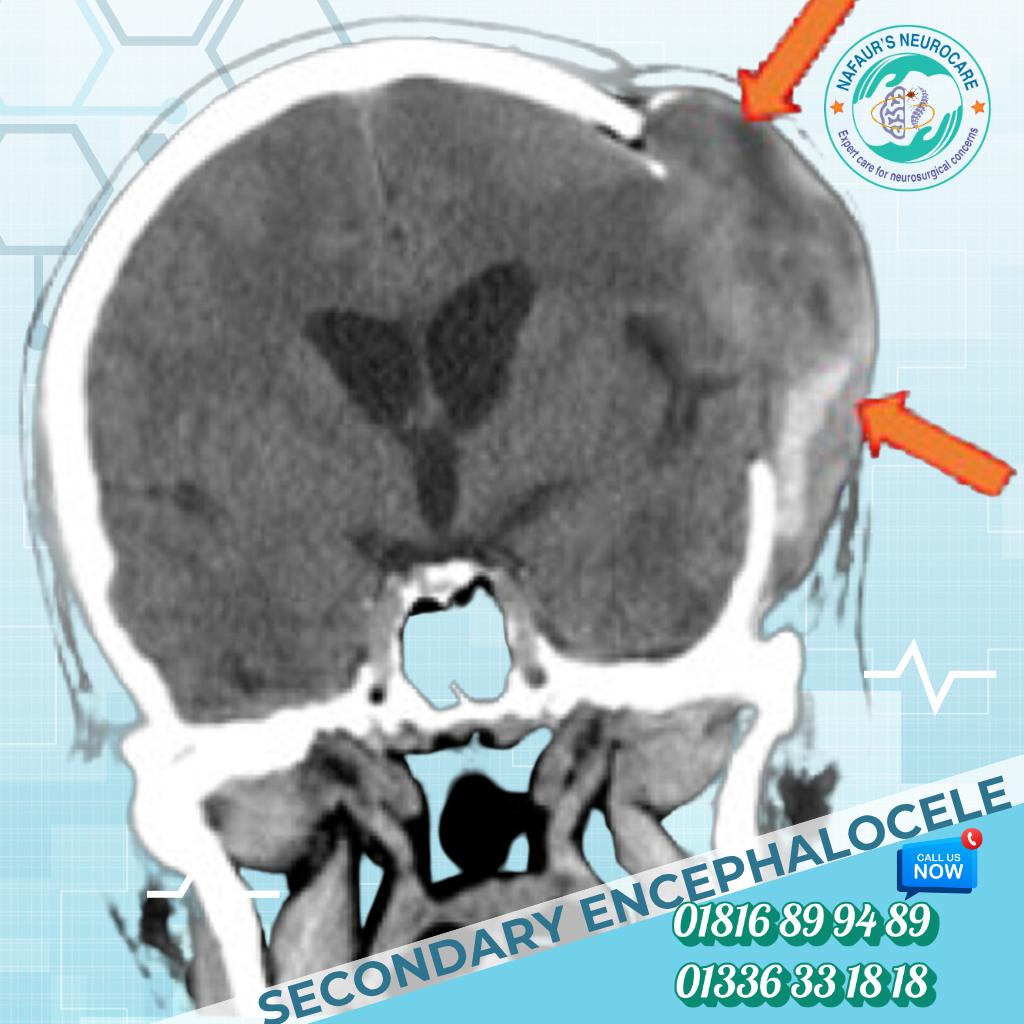
Encephalocele Clinic
Encephalocele Clinic in Nafaur’s Neurocare
Dedicated Pediatric Encephalocele, Congenital Skull Defect, Brain & Skull Malformation, Pediatric Neurosurgery and Child Neurocare Services in Bangladesh
Nafaur’s Neurocare is a dedicated pediatric neurocare centre in Bangladesh, providing specialized pediatric neurosurgical, pediatric neurological, developmental, rehabilitation, and allied child neurocare services for newborns, infants, children, and adolescents. Through its Pediatric Neurosurgical and Neurological Clinic, Encephalocele Clinic, Congenital Birth Defects Clinic, Intrauterine CNS Malformation Clinic, Hydrocephalus Clinic, Neuro Development Clinic, Epilepsy Clinic, Craniosynostosis Clinic, Skull Tumors Clinic, and allied child neurocare services, Nafaur’s Neurocare provides focused evaluation and care planning for children with encephalocele, congenital skull defects, cranial swelling present from birth, occipital encephalocele, frontoethmoidal encephalocele, sincipital encephalocele, basal encephalocele, parietal encephalocele, cranial meningocele, hydrocephalus, neural tube defects, seizure, developmental delay, facial or orbital deformity, cerebrospinal fluid leakage, and complex congenital brain and skull conditions.
The Encephalocele Clinic in Nafaur’s Neurocare is specially designed for families whose baby is diagnosed during pregnancy, at birth, or later in infancy with a swelling arising through a skull defect. A newborn may present with a soft or covered mass at the back of the head, forehead, root of the nose, between the eyes, scalp, or other cranial area. Some babies may also have enlarged head size, abnormal facial structure, eye displacement, feeding problems, seizure, weakness, developmental concerns, or associated brain abnormalities.
Many parents in Bangladesh search for encephalocele treatment in Bangladesh, encephalocele clinic in Dhaka, encephalocele surgery in Bangladesh, occipital encephalocele treatment Dhaka, frontoethmoidal encephalocele surgery Bangladesh, congenital skull defect treatment for baby, pediatric neurosurgeon for encephalocele Bangladesh, newborn brain swelling surgery Dhaka, hydrocephalus with encephalocele treatment, and pediatric neurocare centre in Bangladesh. Nafaur’s Neurocare aims to provide child-focused consultation, imaging review guidance, pediatric neurosurgical assessment, pediatric neurological follow-up, parent counseling, developmental monitoring, rehabilitation planning, and long-term neurocare support.
What is Encephalocele?
Encephalocele is a congenital condition in which a defect in the skull allows the coverings of the brain, cerebrospinal fluid, and sometimes brain tissue to protrude outside the skull as a swelling or sac. It is part of the neural tube defect spectrum and develops during early fetal formation.
The appearance and severity of encephalocele can vary considerably. Some babies have a small covered swelling containing mainly fluid and coverings of the brain. Others may have a larger sac containing brain tissue or important blood vessels. The location, size, tissue inside the sac, associated hydrocephalus, other brain abnormalities, skin covering, infection risk, and the baby’s overall condition all influence treatment planning and long-term outcome.
Encephalocele is usually visible at birth, but some forms may be detected during pregnancy through an anomaly scan, antenatal ultrasonography, or fetal MRI. Certain small lesions around the nose or skull base may be diagnosed later because they may resemble a facial swelling, nasal obstruction, orbital mass, nasal polyp-like lesion, or cerebrospinal fluid leakage.
Early pediatric neurosurgical evaluation is important because encephalocele can be associated with infection risk, rupture or leakage, hydrocephalus, developmental delay, seizure, visual or facial problems, feeding or breathing issues, and associated congenital brain malformations.
Why Early Evaluation of Encephalocele is Important
A baby with encephalocele needs careful evaluation rather than delayed observation at home. Even if the swelling is skin-covered and the baby initially appears active, the lesion may have a connection with the skull and deeper brain structures. A proper evaluation can help determine:
- Where the skull defect is located
- What is contained inside the swelling
- Whether brain tissue or major blood vessels are involved
- Whether there is associated hydrocephalus
- Whether the sac is intact, leaking, infected, or at risk of rupture
- Whether the child has associated craniofacial, orbital, neurological, or developmental concerns
- Whether surgery may be appropriate and how follow-up should be planned
Timely assessment is particularly important when the swelling is open, leaking fluid, covered by fragile skin, increasing in size, associated with fever or discharge, or accompanied by poor feeding, seizure, drowsiness, breathing difficulty, vomiting, or enlarged head size.
Types of Encephalocele Evaluated at Nafaur’s Neurocare
Occipital Encephalocele
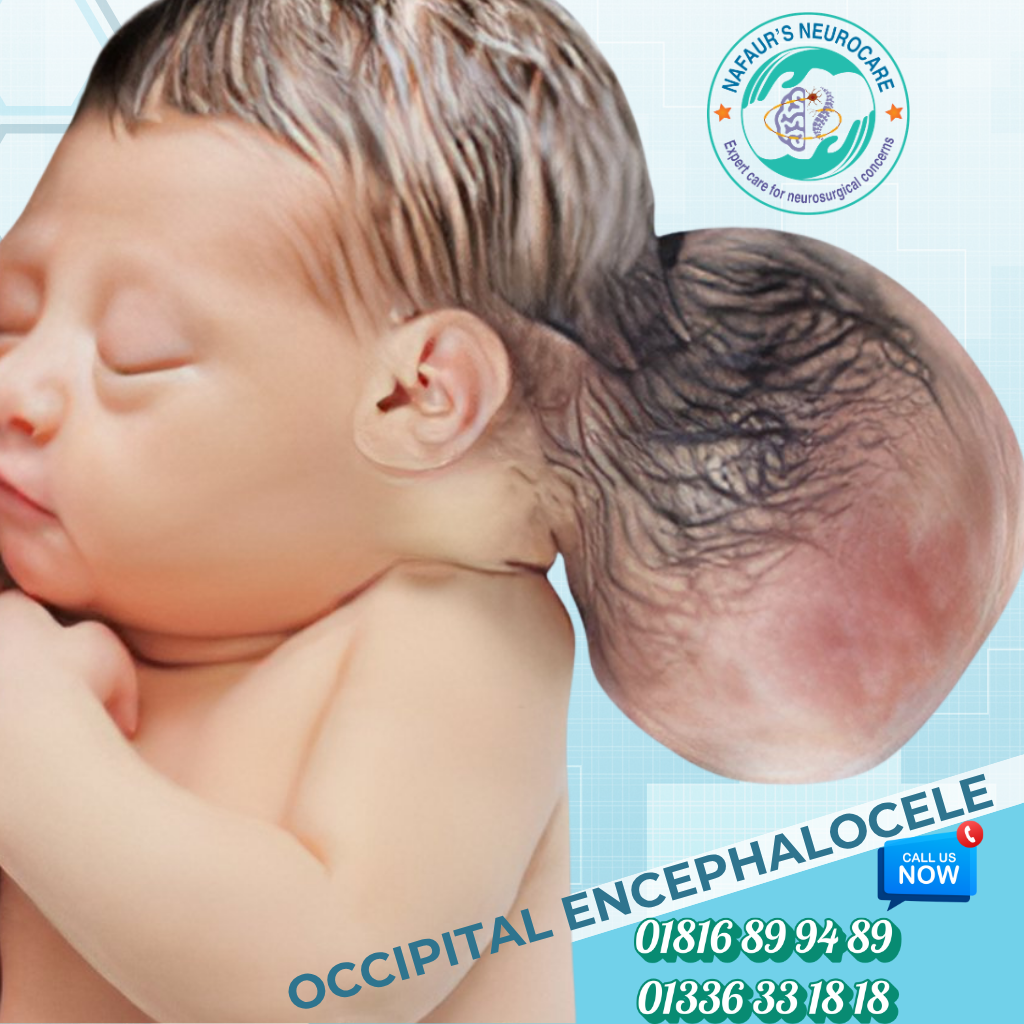
Occipital encephalocele occurs at the back of the head and is among the more recognized forms of encephalocele in newborns. The swelling may be small or very large. It may contain cerebrospinal fluid, brain covering, brain tissue, and sometimes important vascular structures.
Parents may notice a soft or tense swelling at the back of the baby’s head immediately after birth. The swelling may be skin-covered or fragile and may be associated with hydrocephalus, feeding difficulty, seizure, abnormal head shape, developmental concern, or other brain abnormalities.
Children with occipital encephalocele need detailed pediatric neurosurgical assessment and imaging review to understand the anatomy and plan care safely.
Frontoethmoidal Encephalocele
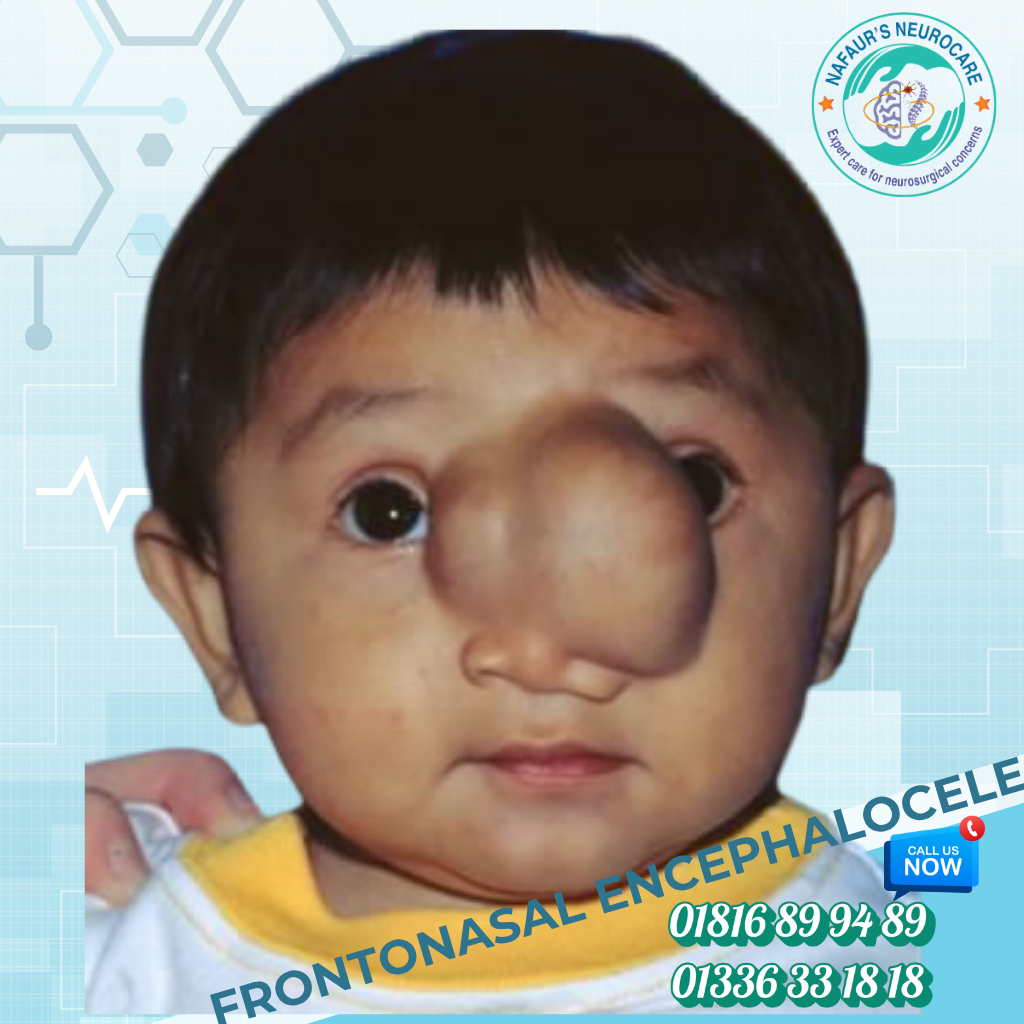
Frontoethmoidal encephalocele occurs in the forehead, root of the nose, or between the eyes. It may present as a congenital facial swelling, broad nasal bridge, swelling near the inner eye, displacement of the eyes, abnormal facial appearance, nasal mass, or visible craniofacial deformity.
This type of encephalocele is important because it can affect the skull base, facial bones, orbit, nose, and appearance of the child. Evaluation may require careful imaging review and coordinated planning involving pediatric neurosurgical and relevant craniofacial or eye-related expertise as clinically appropriate.
Sincipital Encephalocele
Sincipital encephalocele refers to anterior encephalocele occurring around the frontal, nasal, orbital, or frontoethmoidal region. A baby may present with swelling around the forehead or nose, widened distance between the eyes, eye displacement, facial asymmetry, or abnormal craniofacial contour.
Early evaluation can help distinguish encephalocele from other congenital masses such as dermoid cyst, nasal glioma-like lesion, vascular malformation, or other craniofacial abnormalities.
Parietal and Vertex Encephalocele
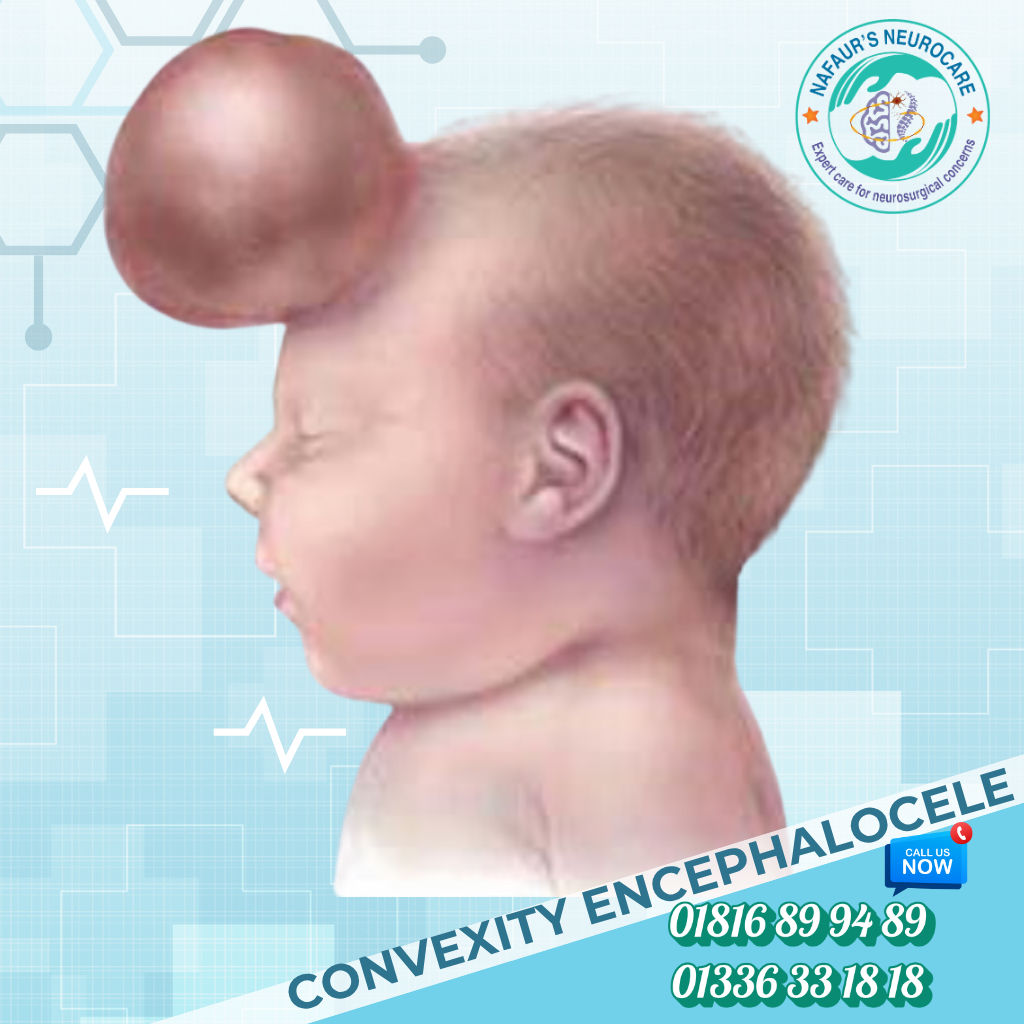
Encephalocele may occur on the upper or central part of the scalp, sometimes in the parietal or vertex region. These lesions may look like a congenital scalp swelling or skull mass. Some may be confused with scalp cysts, vascular swellings, sinus pericranii, or other skull lesions.
Any midline congenital scalp swelling should be evaluated carefully before puncture, biopsy, or attempted removal because it may communicate with intracranial structures.
Basal Encephalocele
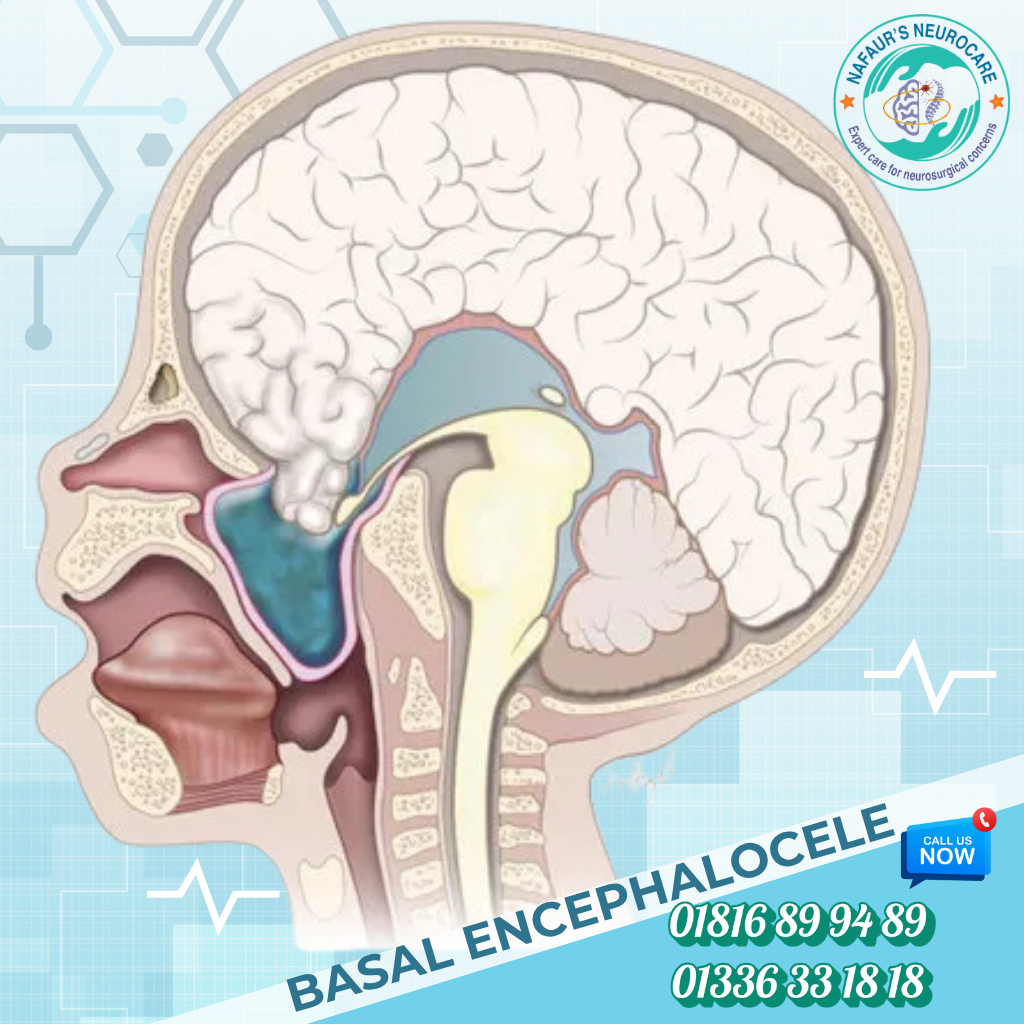
Basal encephalocele occurs through the skull base and may be less obvious from outside. It can present with nasal obstruction, mass inside the nose, cerebrospinal fluid leakage from the nose, recurrent meningitis, feeding or breathing difficulty, abnormal facial appearance, visual problems, or endocrine-related concerns depending on the location.
Because a basal encephalocele can resemble a nasal mass, careful specialist evaluation and imaging are essential before any procedure is attempted.
Meningocele and Related Cranial Defects
Some congenital skull defects allow mainly the brain coverings and cerebrospinal fluid to protrude, sometimes described as a cranial meningocele. These lesions still need careful evaluation to assess the defect, skin covering, infection risk, association with hydrocephalus, and surgical considerations.
Encephalocele and Neural Tube Defects
Encephalocele belongs to a group of congenital conditions known as neural tube defects. Neural tube defects can affect the brain, skull, spine, and spinal cord. Other related conditions may include spina bifida, myelomeningocele, meningocele, and congenital spinal dysraphism.
Some babies may have more than one neurological concern. For example, a baby diagnosed with encephalocele may also need evaluation for hydrocephalus, developmental delay, seizure, abnormal brain formation, spinal defect, feeding concerns, or other congenital abnormalities.
Nafaur’s Neurocare provides child-focused assessment for congenital brain and spine disorders through its Encephalocele Clinic, Congenital Birth Defects Clinic, Hydrocephalus Clinic, Spina Bifida Clinic, Intrauterine CNS Malformation Clinic, and Neuro Development Clinic.
Encephalocele Detected During Pregnancy
Some families first learn about encephalocele during antenatal ultrasound or fetal anomaly scan. A report may mention:
- Fetal encephalocele
- Occipital swelling
- Cranial defect with herniation
- Neural tube defect
- Congenital skull defect
- Associated hydrocephalus or ventriculomegaly
- Posterior fossa abnormality
- Brain malformation
- Frontoethmoidal or facial mass
Receiving such a report can be deeply distressing for parents. Early consultation helps families better understand the finding, possible associated abnormalities, expected newborn evaluation, possible need for surgery after birth, and the importance of developmental follow-up.
Parents with an antenatal diagnosis may bring the ultrasound report, anomaly scan report, fetal MRI report if available, and any advice already received. After delivery, the baby may need clinical examination and imaging review to determine the next steps.
Common Signs and Symptoms of Encephalocele in Babies and Children
Parents may seek pediatric neurocare evaluation if a baby or child has:
- Swelling at the back of the head from birth
- Swelling on the forehead, nasal root, between the eyes, or scalp
- Covered or open congenital skull swelling
- Fluid leakage from a cranial swelling
- Fragile skin or ulceration over the swelling
- Abnormal head shape
- Enlarged head or rapidly increasing head circumference
- Bulging fontanelle
- Sunset eye sign
- Abnormal eye position or facial asymmetry
- Feeding difficulty
- Breathing difficulty due to a nasal or facial mass
- Poor activity or unusual sleepiness
- Seizure
- Repeated vomiting
- Developmental delay
- Delayed head control, sitting, walking, or speech
- Weakness or abnormal movement
- Recurrent meningitis or clear nasal fluid in suspected basal lesions
- Abnormal antenatal ultrasound, CT scan, or MRI findings
A child with a congenital skull swelling should not undergo puncture, massage, drainage, or unplanned removal without specialist evaluation.
Emergency Warning Signs in Encephalocele
Parents should seek urgent medical attention if a baby with encephalocele develops:
- Rupture of the swelling or fluid leakage
- Bleeding, ulceration, redness, pus, or foul-smelling discharge
- Fever or suspected infection
- Seizure
- Poor feeding or repeated vomiting
- Drowsiness or reduced activity
- Breathing difficulty
- Rapidly increasing head size
- Bulging fontanelle
- Sudden change in the swelling
- Signs of hydrocephalus
- Neurological deterioration
Open or leaking lesions can carry infection risk and need urgent hospital-based evaluation.
Encephalocele and Hydrocephalus
Some babies with encephalocele may also develop hydrocephalus, a condition in which cerebrospinal fluid accumulates within the brain ventricles. Hydrocephalus may be present at birth or develop later.
Symptoms of hydrocephalus in babies may include:
- Enlarged head size
- Rapidly increasing head circumference
- Bulging fontanelle
- Prominent scalp veins
- Sunset eye sign
- Vomiting
- Poor feeding
- Irritability
- Drowsiness
- Seizure
- Developmental delay
Older children may present with headache, vomiting, visual complaints, imbalance, drowsiness, or decline in school performance.
Children with encephalocele and hydrocephalus may need pediatric neurosurgical evaluation regarding the timing and type of care. Depending on individual findings, hydrocephalus management may include observation, VP shunt consideration, ETV consideration in selected cases, or other neurosurgical planning.
Encephalocele and Developmental Delay
Some children with encephalocele may face developmental challenges, particularly when the condition is associated with significant brain tissue involvement, hydrocephalus, seizure, infection, additional brain abnormalities, or delayed treatment. However, developmental outcomes vary from child to child.
Developmental concerns may include:
- Delayed head control
- Delayed sitting, crawling, standing, or walking
- Speech delay
- Motor delay
- Feeding difficulty
- Poor hand use
- Seizure-related developmental concerns
- Learning difficulty
- Behavior or social communication concerns
- Need for physiotherapy, developmental therapy, or speech therapy
Nafaur’s Neurocare supports long-term developmental monitoring through its Neuro Development Clinic and allied therapy services when required.
Encephalocele and Seizure
Seizures may occur in some babies or children with congenital brain malformations, hydrocephalus, brain tissue involvement, post-operative changes, or associated neurological abnormalities. A child with encephalocele who develops jerking episodes, stiffening, eye deviation, sudden unresponsiveness, repeated unusual movements, or developmental regression needs pediatric neurological evaluation.
Nafaur’s Neurocare provides pediatric neurology support, seizure history assessment, EEG report review guidance when clinically relevant, imaging review, and long-term follow-up planning.
Encephalocele and Facial or Eye Problems
Anterior encephaloceles, particularly frontoethmoidal or sincipital lesions, may affect the face, nose, or orbit. Parents may notice:
- Swelling between the eyes
- Broad nasal bridge
- Eye displacement
- Facial asymmetry
- Bulging eye or unequal eye position
- Nasal obstruction
- Difficulty breathing through the nose
- Visible congenital facial mass
Such cases may require coordinated evaluation because the lesion can involve skull, brain covering, facial bones, orbit, and nasal structures. Nafaur’s Neurocare provides pediatric neurosurgical evaluation and referral guidance when additional eye or craniofacial expertise is needed.
Encephalocele Clinic Services at Nafaur’s Neurocare
The Encephalocele Clinic in Nafaur’s Neurocare provides dedicated pediatric evaluation and follow-up guidance for babies and children with congenital cranial swelling, encephalocele, meningocele, skull defects, associated hydrocephalus, and developmental or neurological concerns.
Services may include:
- Pediatric neurosurgical consultation
- Pediatric neurological assessment
- Antenatal ultrasound and fetal MRI report review guidance when available
- Newborn encephalocele evaluation
- Occipital encephalocele assessment
- Frontoethmoidal and sincipital encephalocele assessment
- Basal encephalocele concern evaluation
- Congenital skull swelling and cranial defect assessment
- CT scan and MRI brain report review
- Imaging assessment for skull defect, sac content, brain involvement, vascular relationship, and associated anomalies
- Hydrocephalus and ventriculomegaly evaluation
- Seizure-related neurological assessment
- Developmental milestone assessment
- Facial and orbital symptom review in anterior encephalocele
- Rupture, leakage, or infection risk guidance
- Surgical counseling when clinically indicated
- Post-operative follow-up planning
- Physiotherapy, developmental therapy, speech therapy, and rehabilitation guidance when required
- Parent counseling and long-term child neurocare planning
The clinic helps parents understand the baby’s condition, the significance of imaging findings, possible treatment options, the role of pediatric neurosurgery, associated risks, post-treatment follow-up, and developmental care requirements.
Pediatric Encephalocele Surgery Evaluation in Bangladesh
Surgical evaluation for encephalocele focuses on understanding the skull defect, protecting the child from complications, and planning reconstruction or repair when appropriate. The individual surgical plan depends on:
- Type and location of encephalocele
- Size of the lesion
- Whether brain tissue is present in the sac
- Relationship with important blood vessels or venous sinuses
- Presence of hydrocephalus
- Condition of the skin covering
- Leakage or infection
- Associated facial, orbital, or brain abnormalities
- Baby’s general medical fitness
The goal of evaluation is to provide safe and individualized treatment planning. Some babies need early surgery due to rupture risk, leakage, infection risk, or lesion-related concerns. Other cases may require detailed imaging, stabilization, management of associated hydrocephalus, and planned intervention.
Parents searching for encephalocele surgery in Bangladesh, newborn encephalocele operation Dhaka, pediatric brain and skull defect surgery Bangladesh, baby skull swelling surgery Dhaka, and pediatric neurosurgeon for encephalocele can consult Nafaur’s Neurocare for evaluation and guidance.
Imaging and Investigation for Encephalocele
Imaging is very important for understanding an encephalocele. The required investigation varies according to the baby’s age, lesion location, symptoms, associated conditions, and clinical findings.
Possible investigations may include:
- Antenatal ultrasonography or anomaly scan report review
- Fetal MRI report review when available
- MRI brain
- CT scan of the skull and brain
- Imaging of the craniofacial or orbital area in anterior lesions
- Assessment for hydrocephalus or ventriculomegaly
- Vascular imaging when blood vessel involvement is suspected
- Further investigations for associated congenital conditions when clinically indicated
At Nafaur’s Neurocare, parents can receive guidance regarding available imaging reports and the need for further pediatric neurosurgical or neurological assessment.
Follow-Up After Encephalocele Surgery
Treatment does not end after repair of an encephalocele. Children may require follow-up for:
- Wound healing
- Signs of infection or cerebrospinal fluid leakage
- Hydrocephalus development or progression
- Head circumference growth
- Seizure monitoring
- Feeding and developmental progress
- Vision and facial symmetry in anterior encephalocele
- Speech and motor development
- MRI or CT follow-up when advised
- Rehabilitation and therapy support
- School-readiness and learning progress later in childhood
Children with associated hydrocephalus, developmental delay, seizure, complex brain malformation, or craniofacial abnormalities may need longer and more coordinated follow-up.
Pediatric Neurology Support for Children with Encephalocele
Pediatric neurology support is important when a child with encephalocele has seizure, developmental delay, motor delay, abnormal movement, learning concern, hydrocephalus, feeding difficulty, abnormal tone, or associated brain malformations.
At Nafaur’s Neurocare, pediatric neurological assessment may help with:
- Seizure evaluation and follow-up
- Developmental milestone monitoring
- Muscle tone and movement assessment
- Feeding and neurological symptom review
- EEG report review guidance when clinically indicated
- Long-term developmental planning
- Referral for therapy services when needed
Developmental Therapy and Rehabilitation Support
Children with encephalocele may need developmental and rehabilitation support depending on their neurological condition, surgical history, hydrocephalus, seizure status, and developmental progress.
Children may benefit from:
- Physiotherapy for motor delay, muscle weakness, posture, or balance
- Developmental therapy for delayed milestones
- Speech therapy for communication delay or feeding-related concerns
- Fine motor therapy for hand function and daily activity skills
- Nutrition support for poor feeding or growth issues
- Parent counseling regarding home-based developmental stimulation
- School-readiness guidance for older children
Nafaur’s Neurocare provides allied clinic support as part of comprehensive pediatric neurocare planning.
Parent Counseling for Encephalocele
Parents often experience fear and uncertainty when a baby is born with a visible cranial swelling or when encephalocele is detected during pregnancy. Clear counseling helps families understand the diagnosis and plan care appropriately.
Parent counseling may include:
- Explanation of the type and location of encephalocele
- Interpretation of available scan reports
- Recognition of urgent symptoms such as rupture, leakage, fever, seizure, poor feeding, or enlarged head
- Discussion of associated hydrocephalus and developmental concerns
- Guidance regarding surgical evaluation
- Post-operative follow-up planning
- Developmental monitoring and therapy support
- Understanding that every child’s condition and outcome can be different
Parents should keep the swelling protected, avoid pressure or puncture, maintain appropriate medical follow-up, and seek urgent care if danger signs occur.
Why Choose Nafaur’s Neurocare for Encephalocele Clinic?
Parents choose Nafaur’s Neurocare because it provides a dedicated pediatric neurocare setting for babies and children with congenital skull defects, encephalocele, hydrocephalus, neural tube defects, seizure, developmental delay, abnormal head shape, facial or orbital symptoms, and complex brain and spine disorders.
Key reasons to choose Nafaur’s Neurocare include:
- Dedicated pediatric neurology and pediatric neurosurgery services
- Child-focused encephalocele evaluation and counseling
- Care guidance for occipital, frontoethmoidal, sincipital, basal, and other cranial encephaloceles
- Support for antenatal diagnosis and newborn neurocare planning
- Hydrocephalus and associated neurological concern assessment
- CT scan and MRI report review guidance
- Pediatric neurosurgical counseling regarding treatment planning
- Developmental monitoring and pediatric neurology follow-up
- Physiotherapy, speech therapy, developmental therapy, and allied support when needed
- Parent-friendly counseling and long-term child neurocare planning
- Accessible location in Shyamoli, Dhaka
- Easy contact through phone, social media, and Google Map
Bangladesh Perspective: Early Encephalocele Evaluation is Essential
In Bangladesh, some babies with encephalocele are brought late because parents may be unsure where to seek specialized care or may consider the swelling to be only a cosmetic problem. Encephalocele is a congenital neurological and neurosurgical condition that can be associated with rupture, infection, hydrocephalus, seizure, developmental delay, brain malformation, facial deformity, or eye-related complications.
Babies diagnosed during pregnancy should receive postnatal pediatric neurocare planning. Babies born with a cranial swelling should be evaluated early, particularly if the lesion is open, fragile, leaking, infected, rapidly increasing, or associated with neurological symptoms.
The Encephalocele Clinic in Nafaur’s Neurocare focuses on early recognition, appropriate evaluation, imaging review, pediatric neurosurgical guidance, pediatric neurological follow-up, parent education, developmental monitoring, rehabilitation planning, and long-term child neurocare support in Bangladesh.
Chamber Address
Nafaur’s Neurocare
H # 24/1, Level # 7, Shyamoli Square
Shyamoli Cinema Hall Building, Mirpur Road, Shyamoli
Dhaka – 1207, Bangladesh
Google Map Location
For easy direction and exact location, visit Nafaur’s Neurocare through Google Map:
Google Map:
https://maps.app.goo.gl/zU4EcLt9CS7k2WVL8
Appointment Numbers
For appointment and consultation:
01816899489
01336331818
Social Media Links for Easy Contact
Facebook:
https://www.facebook.com/NafaursNeurocare
Instagram:
https://www.instagram.com/neurocarebd
Consultant & Services